

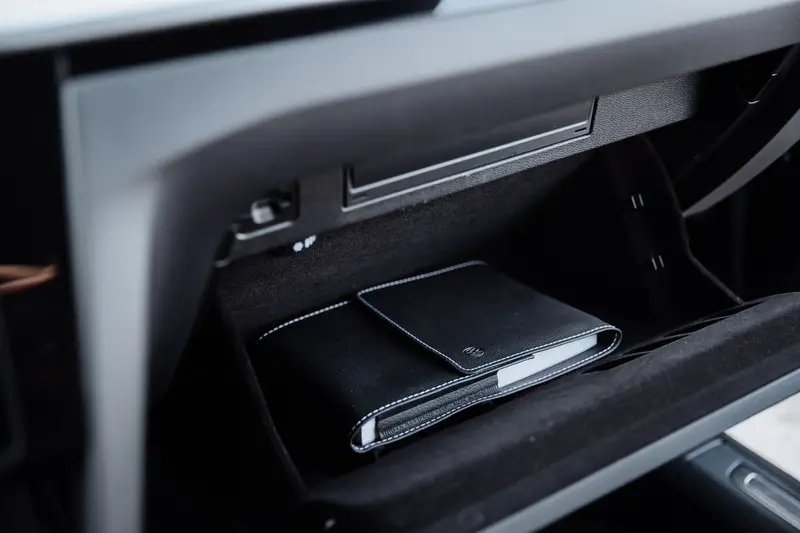
Here’s an uncomfortable truth: most of us treat our glove compartment like a tiny filing cabinet on wheels. Registration? Toss it in. Insurance card? Sure. A few old receipts, some batteries, maybe a spare house key? Why not. It’s locked inside your car, right? How much trouble could it really cause?
A lot, actually. Way more than you’d think. That little compartment is the very first place a thief checks after breaking into your vehicle, and depending on what’s in there, you might be handing them the keys to your entire life. Not figuratively. Literally.
Your Car Registration Is Basically a Treasure Map
This is the big one, and almost nobody thinks about it. Your car registration has your full name, your home address, and your vehicle identification number printed right on it. If someone breaks into your car in a parking lot and grabs that little piece of paper, they now know exactly where you live. And if you happen to have a garage door opener clipped to your visor or sitting in the console, congratulations. You’ve just given a stranger the address and the entry code.
According to the National Insurance Crime Bureau, this nightmare scenario is playing out across the country. Car thieves have stolen vehicles, driven them straight to the owner’s home, and burglarized the house before the owner even realized the car was gone. Think about that for a second. You’re still at dinner while someone is walking through your living room.
Cybersecurity expert Alex Hamerstone of TrustedSec put it bluntly in an ABC Philadelphia investigation: “It’s one of the most common things to happen. If a thief gets access to your information, they can use it for identity theft.” The Federal Trade Commission received nearly 8,000 reports of identity theft in just the Philadelphia metro area alone in one year. That’s one city.
Thieves Can Literally Sell Your Car (Well, a Car) Using Your Registration
This part blew my mind. A stolen registration doesn’t just put your identity at risk. Criminals can use your registration to “wash” a stolen car. That means they take a stolen vehicle of the same make, model, and color as yours, pair it with your registration paperwork and some fraudulent documentation, and sell that car overseas like it’s totally legitimate. Your VIN, your name, your paperwork. Their profit.
They can also use your registration to file fake insurance claims. Non-medical insurance fraud jumped 34 percent in a single year, according to FTC data. Criminals fabricate events, file claims using stolen vehicle info, and collect the money. You might not find out until your premiums spike or you try to file a real claim and discover something suspicious on your record.
And here’s the kicker: even expired registration cards are dangerous. They still have your name, address, and VIN on them. If you get new registration and toss the old one in a drawer or, worse, leave it rattling around in your glove box, a thief can still use that information. Shred old registrations like you’d shred a bank statement.
The Simple Fix Most People Don’t Know About
So what are you supposed to do? You need your registration if you get pulled over. You can’t just leave it at home, right? Actually, you kind of can.
One trick that’s been circulating among security-minded drivers: make a photocopy of your registration, white out your home address, then photocopy that version. Keep the original registration at home in a safe place, and keep the address-free copy in your car. Atlanta police have confirmed that officers will accept a photocopy of your registration during a traffic stop. In most cases, they can verify everything through their computer system anyway.
Many states now also let you show electronic proof of insurance on your phone during a stop. So there’s even less reason to keep sensitive paper documents in your car at all. Take a clear photo of both your registration and insurance card, save them to your phone, and keep the originals locked up at home.
Your Car Title Should Absolutely Never Be in There
Registration is bad enough, but if your car title is sitting in that glove box, you’ve got a much bigger problem. The title is proof of ownership. You would never need it during a routine traffic stop or even an accident. The only time you need your title is when you’re buying or selling a vehicle.
A thief with your car title can create fake titles for stolen vehicles. That document belongs in a home safe or a safety deposit box, period. There is zero reason for it to be anywhere near your car on a daily basis.
Spare House Keys Are an Invitation
A lot of people keep a spare house key in the glove box as a backup in case they get locked out. The logic makes sense until you think about it for more than five seconds. If someone breaks into your car and finds a spare key alongside your registration (which has your address), they now have everything they need to walk right into your home.
Give your spare key to a trusted neighbor or hide it in a proper lockbox. Your glove compartment is not a safe. It’s a plastic box with a flimsy latch that any determined person can pop open in about two seconds.
Aerosol Cans Can Literally Explode in There
If you keep a can of hairspray, deodorant, or spray sunscreen in your glove box, you might want to rethink that. Aerosol cans are pressurized containers, and they really do not mix well with heat. Most cans have temperature warnings printed on them, usually noting that anything above 120 degrees Fahrenheit is dangerous. Some flag risk at just 90 degrees.
A car parked in the summer sun can hit nearly 144 degrees inside. At that point, an aerosol can isn’t just at risk of leaking. It can burst, scattering metal shrapnel through the interior of your car. Depending on the propellant used, the explosion can even start a fire. The contents of most aerosol cans are highly flammable, so a burst can in a hot car is a genuinely scary situation, even if nobody’s inside when it happens.
Batteries Are a Mess Waiting to Happen
Loose batteries rolling around in the glove box seems harmless enough, but extreme temperatures wreck them fast. Heat speeds up chemical reactions inside the battery, which causes them to deteriorate and potentially leak. Battery acid can contain sulphuric acid, which is nasty stuff. It can eat through the lining of your glove compartment, damage anything it touches, and create a mess that’s really unpleasant to clean up.
Cold temperatures aren’t much better. Batteries lose charge faster in the cold, and the fluctuation between hot days and cold nights is basically the worst possible storage condition. If you need batteries for a flashlight or emergency kit in your car, keep them in a sealed container in the trunk, not rattling around loose next to your owner’s manual.
Your Phone or Laptop Is Not Protected in There
Stashing your phone, tablet, or laptop in the glove compartment before running into a store feels like the smart move. Out of sight, out of mind, right? Two problems with that. First, thieves know people do this. It’s not the clever hiding spot you think it is. Second, your car insurance does not cover personal items stolen from your vehicle. That’s a homeowner’s or renter’s insurance claim, and even then, the deductible might be more than the device is worth.
Beyond theft, temperatures above 95 degrees Fahrenheit can damage a phone’s battery and internal components. Something called thermal runaway can occur, where the battery swells, overheats, and in extreme cases catches fire. In cold weather, moisture can build up inside the device, which is equally bad. Either way, the glove box hides electronics but doesn’t protect them.
The Garage Door Opener Problem
This one connects directly to the registration issue and makes it ten times worse. A garage door opener alone isn’t that useful to a thief. But combined with your registration (which shows your address), it’s a complete break-in kit. They know where you live, and they have a button that opens the door.
If your garage is attached to your house, which it is for most Americans, that opener gives direct access to your home. The recommendation is simple: keep the opener in your purse or bag, or bring it inside when you’re not using it. If your car has a built-in HomeLink system, that’s safer because a thief can’t detach it and walk away with it.
Receipts, Tax Documents, and Other Paper Trails
Old receipts piling up in the glove box don’t seem like a big deal. But many receipts include your name, partial credit card number, email address, and sometimes even your home address. Tax documents are even worse. They contain your Social Security number. If an identity thief gets hold of a W-2 or 1099 form from your glove compartment, the damage they can do is extensive and immediate.
Same goes for auto repair invoices, which almost always include your home address and phone number. These are the kinds of papers you shove in the glove box and forget about, which is exactly why they’re dangerous. Make it a habit to clear out paperwork from your car every week. Shred anything with personal info on it, and store important documents at home.
So What Should Actually Be in There?
After reading all of this, you might be wondering what the glove box is even for. Fair question. It’s still a useful spot for a few things: your owner’s manual, a pair of sunglasses, napkins, a phone charger, a tire pressure gauge, and maybe some wet wipes. A dedicated envelope with an address-free copy of your registration and a photo of your insurance card is reasonable too.
The key shift is mental. Stop thinking of your glove compartment as private storage. Think of it as a space that anyone could access at any time, because that’s exactly what it is. If you wouldn’t tape something to the outside of your car, it probably doesn’t belong in the glove box either.

