

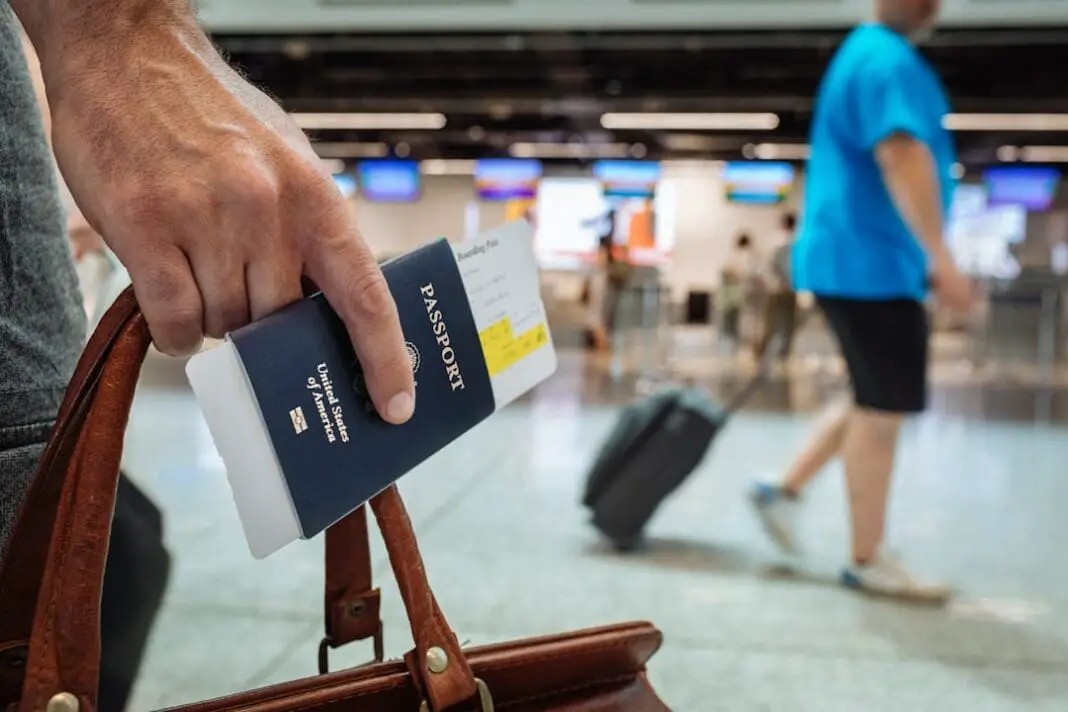
If you haven’t flown in the past year, you’re in for a shock. The TSA checkpoint you remember, the one where you shuffled through a slow line, yanked off your shoes, pulled your laptop out of your bag, and handed your ID to a bored agent, is basically disappearing. Some of these changes happened quietly. Others are rolling out right now. And a few of them are so weird that most travelers don’t even know they exist yet.
Here’s everything that’s actually different about airport security lines in 2026, and what it means for your next trip.
You Can Keep Your Shoes On Now
Yes, seriously. The shoe removal rule, one of the most universally hated parts of airport security since Richard Reid ruined it for everyone in 2001, ended on July 8, 2025. The Department of Homeland Security made the announcement and credited advances in computed tomography (CT) scanners and better explosive detection technology. Basically, the machines got good enough that they don’t need you barefoot on a filthy airport floor anymore.
Now, there’s a catch. This isn’t perfectly uniform everywhere. Airports with the newer CT scanners are fully on board with shoes staying on. But some airports still have older X-ray machines in certain lanes, and agents at those checkpoints might still ask you to remove them for secondary screening. So the experience isn’t identical at every airport yet, which is a little annoying. But the direction is clear: shoes on is the new default.
Forgot Your REAL ID? That’ll Be $45
REAL ID enforcement for domestic flights kicked in on May 7, 2025. If your driver’s license doesn’t have that little star in the corner, it’s no longer accepted at the checkpoint. Full stop. You need a REAL ID, a passport, or another form of acceptable identification.
But here’s where it gets interesting. Starting February 1, 2026, the TSA introduced something called TSA ConfirmID. If you show up without acceptable ID, you can pay a non-refundable $45 fee and go through an alternative identity verification process. The idea is that the cost of dealing with non-compliant travelers falls on those travelers, not on taxpayers.
The fee is valid for 10 days. After that window closes, if you still don’t have a REAL ID and you want to fly again, you may have to pay the fee again. And the verification process can take up to 30 minutes. So if you roll up to the airport without proper ID and you haven’t already paid the fee online, there’s a real chance you’re missing your flight. TSA Senior Official Adam Stahl put it bluntly: this is an option, not a convenience. Get your REAL ID. Apply at least eight weeks before your trip, because government processing times are what they are.
Your Face Is Becoming Your Boarding Pass
This is probably the biggest change, and most people don’t realize how far along it already is. TSA PreCheck members can now use something called Touchless ID at 65 airports across the country. You walk up, a camera takes a quick photo, and it compares your face against the passport photo already on file with the U.S. government. If it matches, you’re through. No handing over an ID. No pulling up a boarding pass. Nothing.
The match rate, according to TSA data shared with American Airlines, now exceeds 99.5 percent. The average identity verification time? Under three seconds. Three seconds. That’s faster than it takes most people to dig their license out of their wallet.
To use it, you have to opt in through your airline’s app or profile. You’ll need your Known Traveler Number, passport number, and consent. Setup takes about three to five minutes if your info is already saved. Participating airlines include American, Delta, United, Southwest, Alaska, and Hawaiian. American Airlines went all in, rolling out Touchless ID at every hub from Charlotte and DFW to LAX and JFK as of April 2026.
And American Airlines is already testing the next phase in Miami: using the same face scan to check a bag and get into the lounge. One biometric thread from the curb to the gate. That’s where this is headed.
The Privacy Question Nobody’s Asking Loudly Enough
Before you get too excited about walking through security in three seconds flat, there’s a conversation worth having. The Electronic Privacy Information Center has been calling for clearer opt-out signage and independent audits of the biometric system. TSA says the program is entirely voluntary and that facial comparison data is deleted within 24 hours of your scheduled departure. Under normal conditions, data is deleted immediately after verification. TSA also says the technology is not used for law enforcement or immigration enforcement purposes.
If you don’t want to participate, you can opt out at any time and go through standard ID verification without losing your place in line. That’s a nice safeguard. But the broader trend is pretty clear: biometrics are becoming the default, and opting out is going to start feeling like swimming upstream. Whether that bothers you is a personal call.
Your Laptop Might Not Need to Come Out Anymore
This one depends entirely on which airport and which lane you end up in. The new CT scanners create 3D images of your bag and can see through it clearly enough that removing laptops and liquids isn’t always necessary. If you’re going through a lane with one of these machines, you might be told to leave everything in your bag. If you’re in an older lane with a traditional X-ray system, you’re pulling everything out like it’s 2019.
The same thing applies to liquids. The 3-1-1 rule still technically applies everywhere, but at airports with CT scanners, you may not need to take your quart bag out. The inconsistency is frustrating, especially if you fly through multiple airports on the same trip and get different instructions at each one. But the trend is moving toward keeping everything packed.
Here’s a pro tip from frequent travelers: if you’re carrying a lot of electronics (laptop, tablet, camera, chargers, power banks), don’t stack them all in the same section of your bag. Dense clusters of electronics make scanners work harder and are more likely to trigger a secondary inspection. Spread them out, and keep your cables consolidated in one pouch. Loose cords tangled through your bag are a common flag.
Non-Travelers Can Now Go Through Security at 21 Airports
This might be the most surprising change of all. Remember when you could walk someone to the gate, or meet them right as they stepped off the plane? That ended after 9/11 and most people assumed it was gone forever. Well, it’s back, at least partially.
As of June 2026, 21 U.S. airports now offer free passes that let non-ticketed guests go through full TSA screening and enter the terminal. Pittsburgh International was the first, way back in 2017 with their myPITpass program. Nashville launched their BNA Passport in July 2024 with 75 guest passes per day. San Francisco opened their SFO Gate Explorer Pass in late April 2026, letting visitors apply up to 30 days in advance or even same day.
The details vary by airport. Philadelphia limits it to 100 visitors a day with their Wingmate Pass. Seattle-Tacoma caps it at 300 guests daily, requires entry through Checkpoint 4, and operates from 5 a.m. to 10 p.m. Some airports, like Kansas City and Philadelphia, limit guests to six-hour visits. Others, like San Antonio and Tampa, allow unlimited time during normal operating hours.
Guests go through the same screening as ticketed passengers. They need a REAL ID or passport plus their approved pass. They can’t use PreCheck or any expedited screening. And it’s first come, first served. But the fact that this exists at all feels like a throwback to a different era of flying.
CLEAR Is Doing Its Own Thing
Separate from TSA’s Touchless ID program, CLEAR has been installing biometric eGates at major airports. These let CLEAR members skip the ID verification step entirely and move straight from the eGate to the screening lane using facial recognition alone. The system syncs your biometric data with your boarding pass info, so there’s no stop-and-show pause at all. Between CLEAR and Touchless ID, the traditional ID checkpoint podium with an agent studying your license is slowly becoming a relic.
The Tool Almost Nobody Uses
There’s one more thing worth mentioning because almost nobody knows about it. The @AskTSA service lets you send questions (with photos and product links) directly to TSA via text, Instagram, Facebook Messenger, or X, and get actual answers before you leave home. Wondering if you can bring that weird souvenir or a specific type of battery pack? Just ask them. They’ll tell you. It’s one of the most useful government services out there, and it’s genuinely underused.
The overall picture here is that TSA in 2026 is barely recognizable compared to even two years ago. Shoes stay on. Faces replace IDs. Non-travelers can go to the gate. And if you forget your license, you can buy your way through for $45. Whether all of this makes flying better or just weirder depends on how you feel about a camera knowing who you are faster than you can reach for your wallet.

