

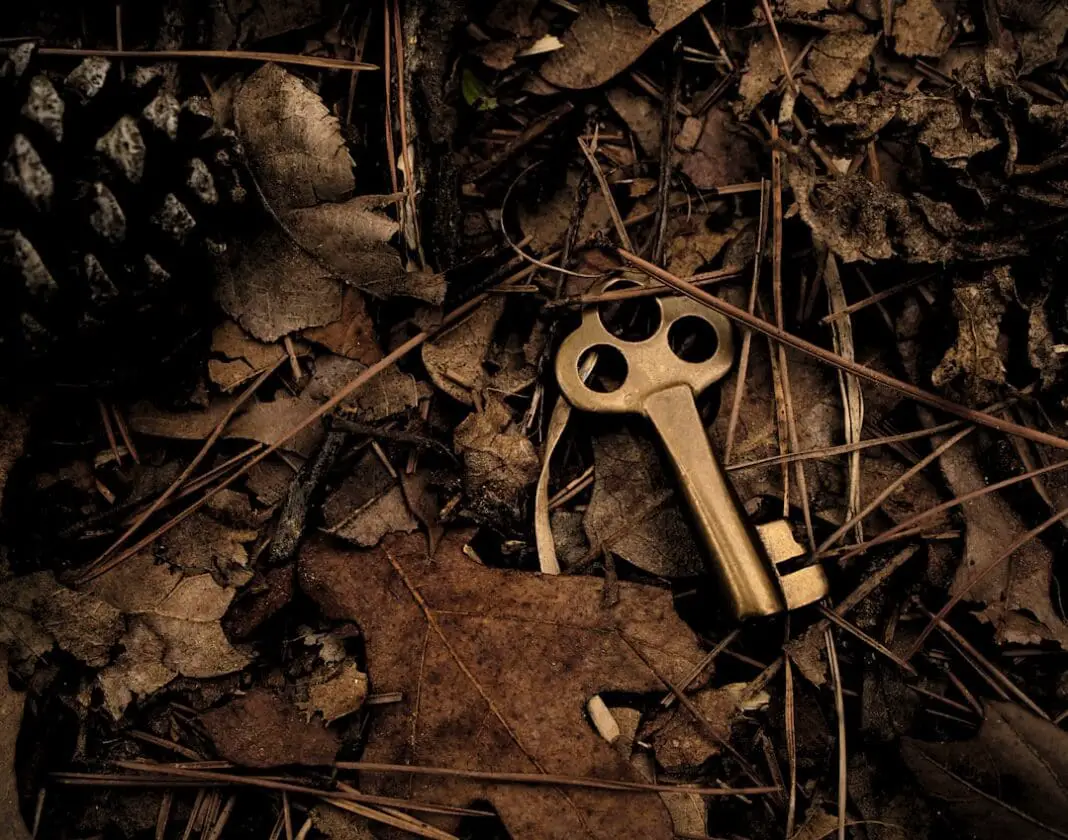
You locked up. You set the alarm. You even remembered to close the garage. But if you left a spare key under that doormat, you basically just handed a stranger a VIP pass to your living room.
I know, I know. You’ve been hiding a spare key outside your house for years and nothing has happened. That’s the thing about bad security habits. They feel fine right up until they don’t. And the statistics on this are genuinely unsettling. A UNC Charlotte study on residential burglaries found that thieves actively search for a hidden spare key in over one third of break-ins. They aren’t picking locks or smashing windows like in the movies. They’re just flipping over your welcome mat.
So let’s talk about the hiding spots you think are clever but absolutely are not, what burglars actually do when they case a house, and a few alternatives that might actually keep your home secure.
The Doormat Is Basically a Neon Sign
Let’s start with the most obvious offender. The doormat. According to security professionals and interviews with former burglars compiled by police departments across the country, 68% of burglars check under doormats, inside mailboxes, or above door frames as their very first move. These three spots are scanned in under 90 seconds. That’s faster than you can microwave a bag of popcorn.
Real estate expert Marty Zankich put it bluntly: if the doormat or top of the doorframe is your go-to hiding place, “you might as well leave a key in the door.” He’s not exaggerating. About 34% of burglars enter through the front door, making it the single most popular entry point. If a key is waiting for them right there, you’ve done their job for them.
Fake Rocks Fool Nobody
Here’s a fun number. One survey found that 35% of people put their hidden key inside a fake rock. That means roughly one in three homeowners who hide a key outside are all using the same “creative” solution. And burglars know it.
The problem is that most fake rocks look fake. They’re too smooth, too perfectly round, or sitting in a spot where no rock would naturally be. A single decorative rock placed right next to your front steps, surrounded by fresh mulch and nothing else? That’s not a rock. That’s a key holder with a thin disguise. Experienced intruders will pick up, shake, and flip anything near your entrance that looks even slightly out of place. Garden gnomes get the same treatment. As one insurance agency joked, “What other purpose is there, really, for a garden gnome if not to hide a spare key under it?”
Now, there’s one exception worth mentioning. If you have real landscaping with dozens of actual rocks and you bury a very convincing fake rock deep in a garden bed far from the door, that’s a different story. But the fake rock sitting solo on a porch? Skip it.
Flowerpots, Mailboxes, and Other “Clever” Spots That Aren’t
Flowerpots near the front door are another classic trap. Tons of homeowners keep potted plants on their porch, and tons of homeowners slide a spare key under one. Burglars know this. It takes two seconds to tip a pot and check. Home security expert Matthew Bent of Lappen Security in Wisconsin says it perfectly: “The biggest thing I tell homeowners is that most break-ins succeed because the hiding spot was predictable. Anything right by the front door, under a mat, or obviously designed to hide a key is usually the first place someone checks.”
Mailboxes are just as bad. They’re accessible from the street, often unlocked, and burglars routinely peek inside. Door ledges (that little lip above the door frame) are another spot that feels hidden but isn’t. Anyone with average height can reach up and swipe their hand across the top of a door frame in one motion.
Even rain gutters, which sound creative, are a bad idea. Beyond the fact that a determined thief will check them, rain can literally wash your key away. You’ll be locked out and keyless the next time a storm rolls through.
The Spot That Could Actually Get You Robbed Twice
Here’s one that most people never think about: your wallet or purse. If you keep a spare house key in your wallet alongside your driver’s license, you’ve created what security experts call one of the most dangerous combinations possible. A stolen wallet gives a thief your home address and a key to get in. They know exactly where you live and they know you’re not home because you’re busy filing a police report or canceling your credit cards. That’s a two-for-one that no criminal is going to pass up.
Your Insurance Might Not Cover You
This is the part that really surprised me. According to Dan Scroggins, vice president and head of personal lines insurance sales at AAA Club Alliance, if your home is burglarized by someone who used a key you intentionally left outside, your home insurance could be invalidated. Read that again. Your insurance company could deny your claim because you made it too easy for someone to walk in.
Think about that for a second. The average loss per burglary case is around $2,661, and only about 11% of burglary cases ever get solved. So you lose your stuff, the police probably won’t catch the person who took it, and your insurance might not pay you back because you left a key under a flower pot. That’s a rough day.
When Burglars Actually Strike (It’s Not When You Think)
Most people imagine burglaries happening at night, some guy in a ski mask creeping through the shadows. The reality is the opposite. FBI 2024 data shows 216,601 daytime residential burglaries compared to 174,053 at night. The peak window is between 10 a.m. and 3 p.m., right when most people are at work and kids are at school. Summer months, especially July and August, see the highest numbers.
So that spare key you leave for your kid to use after school? A burglar might find it first, hours before your child gets home. The timing of modern burglary is designed around your daily routine, and that hidden key fits right into their playbook.
Hiding Spots That Actually Work
Okay, so everything near your front door is out. But what if you genuinely need a backup plan for getting into your house? There are some options that are much harder for a thief to crack.
A coded lockbox is one of the more secure physical options. Products like the Master Lock 5400D or Kidde AccessPoint can be mounted in a less obvious location (not right beside the front door) and require a combination to open. The 2025 models even let you create one-time or time-limited codes through an app, which is great if you have a dog walker, a cleaning service, or Airbnb guests.
One of the more clever suggestions I came across was from Marty Zankich: attach a magnetic box to the back of your outdoor AC unit, matching the color of the housing. “Unless the person snooping around is an AC expert, they will never suspect it,” he said. That’s the kind of lateral thinking that actually works. Decoy faucet heads (the kind where the faucet head unscrews to reveal a hidden compartment) are another option available at most hardware stores.
Hiding a key on your car also makes a lot of sense. Most burglaries happen while you’re away from home, meaning your car is also gone. If the key goes with the car, there’s nothing for a daytime burglar to find. A weatherproof magnetic box tucked deep inside the wheel well of a vehicle parked in a locked garage is about as secure as physical key hiding gets.
And one expert tip that I think is underrated: rotate your hiding spot. Security expert Gourley recommends changing your hiding location at least once a year and warns that “if a spot feels clever, it is likely obvious.” That gut check is worth taking seriously.
Why Smart Locks Are Replacing Spare Keys Entirely
The real answer for most people in 2025 is just to get rid of the spare key problem altogether. Smart locks have gotten good enough, and affordable enough, that hiding a physical key is starting to look outdated. According to one survey, 87% of smart lock users report they no longer need a physical spare key after making the switch.
Consumer Reports lab-tested several models and found strong options at different price points. The Kwikset Obsidian 954 scored high for brute-force resistance and is completely keyless, so there’s nothing to pick. The Schlage Encode Plus supports Apple Home Key, meaning you can unlock your door with a tap from your iPhone or Apple Watch. Most smart locks install with just a screwdriver and connect through Bluetooth or Wi-Fi.
The convenience factor is real. You can create temporary codes for guests, delete them when they leave, and check an access log to see exactly who came and went. Pair it with a video doorbell and you can see your front door from anywhere.
The Simple Test to Check Your Own Security
Here’s the best advice I found in all of this research, and it came from an insurance agency’s risk assessment tip: ask yourself, “If I had to break into a random house, where’s the first place I’d look for a hidden spare key?” Whatever you just thought of is exactly where burglars look first. If your current hiding spot was anywhere on that mental list, it’s time to move it.
Because here’s the thing. A burglary happens roughly every 26 seconds in the United States. Nearly a third of those burglars walk right through the front door. And a lot of them find the key you thought was so well hidden. The good news is that fixing this takes about five minutes. Move the key, upgrade the lock, or just hand a spare to your neighbor. Any of those options beats the alternative.

