

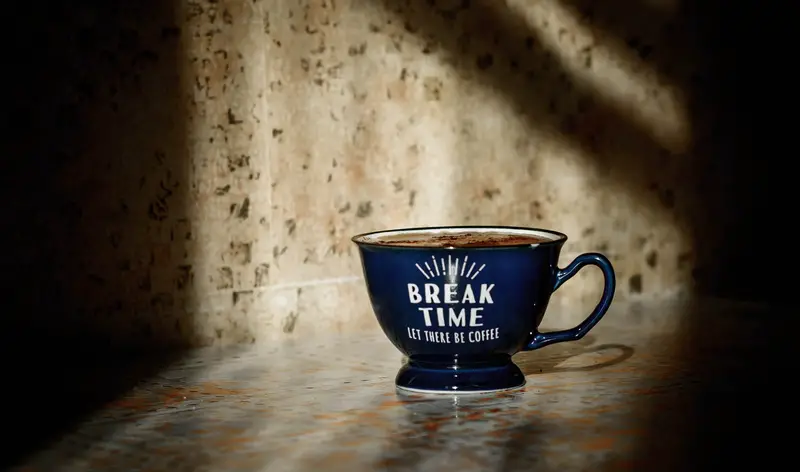
Cold coffee is a fact of life. You pour a cup, the phone rings, the dog needs out, and forty minutes later you are staring at a mug of room-temperature disappointment. The instinct is to pop it in the microwave for thirty seconds. That is the exact moment coffee people say you wreck it.
Todd Carmichael, who co-founded La Colombe and ran it as CEO until 2021, does not soften the message. “Coffee is a one-time use kind of deal,” he told Tasting Table in 2016. “You make it, you drink it, and if it gets cold, you make some more.” He even had advice for the truly desperate. Out of beans and staring down a cold pot from this morning? Still don’t reheat it. Pour it over ice.
Reheating won’t kill the caffeine
Plenty of people reheat guilt-free because they assume the caffeine cooks off. It doesn’t. Christopher Hendon, a chemist at the University of Oregon who studies coffee, has explained that caffeine is a stable molecule that barely reacts to a spin in the microwave. The only way to actually lose it would be sublimation, a jump straight from solid to vapor, and that takes about 352 degrees Fahrenheit. Your microwave is not getting your mug anywhere near that.
An eight-ounce cup carries about 95 milligrams of caffeine whether you drink it hot, cold, or lukewarm from last Tuesday. So the buzz survives just fine. What falls apart is everything that made the coffee taste like coffee.
Your coffee goes stale as it sits
The frustrating part, and the fact almost nobody knows, is that coffee starts dying the second it hits your cup. Paul Adams, senior science editor at America’s Test Kitchen, has explained that furfuryl thiol, a primary component of that roasty aroma you smell walking into a good cafe, begins sticking to other compounds and forming larger molecules that have no smell at all. At the same time the chlorogenic acid lactones in the brew break down, and what is left tastes harsher and more sour.
Those changes cannot be reversed, and America’s Test Kitchen’s point is that keeping the coffee warm will not stop them either. The damage tracks time as much as temperature, so even a fancy insulated mug is only buying you a delay. The cup you drink an hour later was never going to taste like the first sip, no matter how you handle it.
The microwave heats it like a lava lamp
A microwave does not warm your coffee evenly. Coffee is mostly water, and microwave energy makes water molecules rotate and spin fast, which raises the temperature in some spots while barely touching others. Samo Smrke of the Coffee Excellence Centre at the Zurich University of Applied Sciences has described how those volatile flavor molecules have lower boiling points than everything else in the cup, so they evaporate first when the heat spikes.
The result is a mug with scalding pockets and cool zones swirling around at the same time. One sip tastes burnt, the next tastes watery and flat. Those little rapid-boil hot spots physically eject the good-smelling compounds into the air and start breaking down others. By the time it feels evenly warm to your lips, the flavor chemistry has already been rearranged.
Where the bitterness comes from
Reheated coffee tastes bitter for a very specific reason. Emily Rosenberg, director of education and training operations at Stumptown Coffee, broke it down like this: green coffee is loaded with chlorogenic acids, and heat splits them into quinic acid and caffeic acid. Quinic acid has a sharp, astringent bite. Despite the similar name it is chemically unrelated to quinine, the stuff that gives tonic water its dry, puckery edge. The two were simply first isolated from the same cinchona bark.
Fresh coffee has enough sweetness and brightness to balance all that out. Reheat it and you crank up production of quinic and caffeic acid while the sweet notes vanish. Dark roasts get hit hardest, since a long roast has already produced more of those bitter breakdown products. Rosenberg feels so strongly about it that she does not even own a microwave. “The option’s not on the table,” she said.
That metallic taste is not in your head
Ever notice a weird metallic tang in coffee you nuked? Fresh coffee still carries aromatic oils that give the brew its body and richness, and heat breaks those oils down faster than time alone would. Once they go off they create flavors that were never in the original cup, stale and cardboard-like rather than roasty. Rosenberg pins the bitter, metallic taste on heat-holding carafes in particular: leaving a pot on a hot plate for hours does the same damage as a microwave, just slower.
The smell disappears first
Researchers have identified more than 850 volatile compounds in roasted coffee, though only a small fraction of them actually register as aroma. That is the real reason a fresh pot fills a whole house with that smell. The aroma is also the first thing to vanish in the microwave, because those sweet, fruity smells come from fragile compounds that fall apart fast under heat. Lose the smell and you lose most of the flavor, since so much of what we taste is really what we smell.
There is one small rescue for a cup that has gone bitter on you. A tiny dash of salt cuts the harshness. It sounds strange, but sodium is known to suppress bitterness, and a few grains can soften the sharp edges without turning your coffee salty. And do not crank the microwave to full power. A couple of short bursts on low are survivable. Blast it and the bitter notes take over almost instantly.
If you truly cannot start over, skip the stove
Here is a twist that surprises even coffee snobs. If you have no choice but to reheat, the microwave actually beats the stovetop. Hendon points out that a microwave gets the job done fast, which gives those volatile compounds less time to escape. A saucepan sits over direct, high heat and scorches the delicate stuff, flattening everything into something that tastes like the bottom of a gas station pot. America’s Test Kitchen goes further: warm a cup gently to about 140 degrees and you are not adding much damage, because the loss happened while the coffee sat. Hendon’s honest preference, though? He would rather drink it at room temperature than heat it at all.
What baristas do instead
The fix the pros keep repeating is almost too simple: turn the cold cup into iced coffee. Pour it over ice, add a splash of milk or cream, and you have an intentional drink instead of a sad reheated one. Cold drinks are less aromatic to begin with, so you barely notice the flavor that faded away. Got half a pot left? Seal it in a container and stick it in the fridge right away to slow the whole process down, then use it later for iced coffee, smoothies, or even baking.
If you are a slow sipper who hates cold coffee, the gear matters more than the microwave. A vacuum-insulated mug with a tight lid holds heat far longer than the same mug with the lid off. Zojirushi rates its 12-ounce SM-KHE36 at 147 degrees after six hours, from a 203-degree start. The Contigo Autoseal West Loop lists at about 29 dollars and seals shut between sips. If money is no object, the Ember Mug 2 actively holds your coffee between 120 and 145 degrees; it lists at 150 dollars and sells for around 100 on Ember’s own site. Prices as of August 2026.
One last warning if you switch to a metal travel mug. Never put a stainless steel insulated cup in the microwave. The metal sparks, and you can fry both the mug and the machine. The cheapest trick of all costs nothing: brew a little less. Make only what you can drink in the next fifteen or twenty minutes, and the cold-coffee problem quietly solves itself.

