

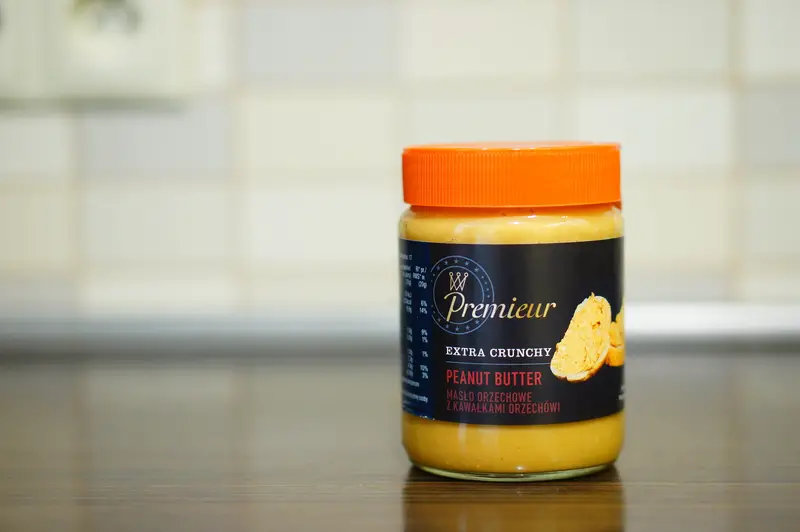
The single worst place to keep peanut butter is the cabinet directly above your stove. It feels convenient. It is quietly ruining the jar.
Heat is the main thing that breaks peanut butter down. The oils inside oxidize, the flavor turns flat and bitter, and the whole thing goes rancid faster than it should. A cabinet that heats up every time you cook dinner is doing that damage on a schedule.
This is one of those habits that seems harmless because the jar looks fine for a while. The slide is slow, the flavor dulls a little at a time, and most people blame the brand instead of the shelf.
The Cabinet Above Your Stove Is the Enemy
Peanut butter is happiest at ordinary room temperature. Push a jar above 85 degrees and its shelf life shrinks fast, which is why the USDA’s FoodKeeper tells you to keep shelf-stable food in a cabinet below that and away from the stove. Ovens, stovetops, and sunlight coming through a kitchen window all send the temperature the wrong way.
The stove cabinet is not the only trap. The space above your refrigerator gets warm from the motor running underneath it. The cabinet next to the dishwasher takes on heat and steam every wash cycle. A shelf low on an inside wall usually stays cooler than any of those, and that is where the jar belongs.
Heat is not the only enemy, either. Peanut butter is roughly half fat, and three things break that fat down: heat, light, and oxygen. Storage temperature is the one the research keeps finding matters most, with light and oxygen speeding things along from there. A jar sitting on a sunny counter is catching two of the three at once.
The damage is measurable. A 1994 University of Georgia study used commercial, stabilized peanut butter as its benchmark and saw about 1 percent oil separation after two weeks at 95 degrees. Unstabilized peanut butter does far worse: a follow-up found it separating up to 15 percent over five months. That is the oil climbing to the top and the texture falling apart, and heat is what speeds it up.
Opened jars take the hit hardest. Every scoop lets in fresh air, so an open jar near heat oxidizes far faster than a sealed one that still has its factory seal keeping air and light out.
Humidity piles on. A damp kitchen invites mold, and a jar that swings from cool to hot can form condensation on the lid that drips back into the spread, creating tiny wet pockets where mold takes hold. A cool, dark, dry shelf beats a warm, sticky one every time.
Conventional Jars Do Not Need the Fridge
The rule that trips people up runs the other direction. Conventional peanut butter, the Jif and Skippy kind, does not need the refrigerator. Jif says its peanut butter does not require refrigeration, and Skippy says the same.
Those brands are built with stabilizers. Jif Creamy lists fully hydrogenated vegetable oils, rapeseed and soybean, plus mono- and diglycerides; Skippy Creamy lists hydrogenated cottonseed, soybean and rapeseed oil. Palm oil turns up in these brands’ natural spreads, not their classic jars. Either way the stabilizer keeps the spread smooth and shelf stable at room temperature, so the fridge does nothing useful. What it does instead is firm the fat right up, turning a creamy scoop into a stiff blob that shreds your bread the second you try to spread it.
It is not preservatives doing the work, either. Neither Jif nor Skippy contains any: Jif’s label reads no artificial preservatives, and Skippy markets its classic jars the same way. What keeps microbes out is how little available water peanut butter has, and that is the real reason the conventional stuff shrugs off a room-temperature cupboard the way it does.
An opened jar of the conventional kind is fine in a cool, dark cupboard for two to three months. Only after that does the fridge earn its place, buying you another three or four months once room-temperature quality starts to slide.
Natural Peanut Butter Wants the Cold
The natural stuff flips the rule. If your jar lists only peanuts and salt, the fridge is the safer bet once you open it, though the makers do not all agree. Smucker’s Natural tells you to refrigerate; Crazy Richard’s and Once Again both say it is not necessary.
Natural peanut butter has none of the stabilizers, so the oil separates and floats to the top on its own. Left at room temperature, that exposed oil layer oxidizes and goes rancid within a few weeks. The cold acts like a brake, thickening the oil and slowing the whole process down.
It can also grow mold over time. Homemade batches are the most fragile of all, since they often add sweeteners or mix-ins that give microbes more to work with.
Refrigeration buys you months instead of weeks. The USDA’s FoodKeeper lists an opened jar of natural peanut butter at three to four months in the refrigerator, and gives it no pantry figure at all.
How Long a Jar Actually Lasts
FoodKeeper puts an unopened jar of commercial peanut butter at six to 24 months in the pantry, narrowing to six to nine months for the stabilized kind. Jif’s own answer is about two years. Breaking the seal changes the math completely.
Once it is open, room-temperature quality holds for about two to three months. Move it to the fridge and FoodKeeper gives it another three to four. Those numbers come from the National Peanut Board and the USDA, not guesswork, though the Peanut Board’s own table and its text do not quite agree with each other.
Freezing is underrated. Scoop it into an airtight container, leave a little room at the top, and it thaws back to normal texture with no real loss. FoodKeeper publishes no freezer guidance for peanut butter at all, so treat any number you see as a rule of thumb. It is handy if you buy the big warehouse-club tubs and cannot finish one before it turns.
Powdered peanut butter is usually given 10 to 12 months unopened, which is actually shorter than a sealed jar, though with most of the fat removed there is far less oil to go rancid. In a hot kitchen it is the more forgiving option.
Store It Upside Down and Skip the Stirring
Stirring natural peanut butter is a greasy mess. There is a trick that skips most of it.
If you keep a natural jar in the cupboard, store it upside down. Oil rises, so flipping the jar sends it up through the peanut solids instead of letting it pool under the lid. When you turn it right-side up to use it, the oil has already redistributed itself through the jar, and you barely have to stir.
Cold peanut butter is famously hard to spread, which is the real trade-off of the fridge. Let a scoop sit out for a few minutes, or microwave it for a few seconds, and it softens right back to smooth.
The Dirty Knife Problem
The fastest way to wreck a jar has nothing to do with where you store it. It is the knife.
Dipping a knife into peanut butter after it has been in the jam drags sugar, moisture, and bacteria into a jar that did not have them before. That cross-contamination invites mold and spoilage. Use a clean utensil every time, and drop the double-dip habit if you share the jar with anyone.
Air is the other quiet culprit. Every minute the lid sits off, fresh oxygen hits the surface and speeds up the oxidation. Screw the lid down tight, and do it right away instead of leaving it loose on the counter.
How to Tell When It Has Turned
Rancid peanut butter announces itself. Fresh peanut butter smells roasted and nutty; a jar that has turned smells sharp, bitter, or almost like paint.
The look gives it away, too. The color darkens, the surface can dry out and crack, and natural jars sometimes grow visible mold around the rim. The taste goes harsh and bitter instead of rich and slightly sweet.
Do not bother scraping mold off the top. USDA guidance is to discard peanut butter, legumes and nuts outright once mold appears, because they are made without preservatives. The whole jar is finished.
Where You Live Changes the Rules
Geography quietly rewrites all of this. In a hot, humid climate, oils turn faster, and a jar that would coast for months in a cool northern kitchen can drift off in weeks down south.
If your kitchen runs warm and a jar tends to hang around for months, the fridge stops being optional and becomes the smart default. Jif puts an opened jar at about three months on the pantry shelf. After that, flavor drift gets more likely, and heat only shortens that window.
One low-tech fix for a humid pantry: drop a desiccant packet near the jar or run a dehumidifier in the room. Pulling moisture out of the air slows the mold that a sticky kitchen encourages.
Read the Label, It Is Not a Suggestion
Skipping the label is one of the most common storage mistakes. Some brands print specific instructions, and many natural jars flat-out say refrigerate after opening right on the container.
Those three words settle the debate for that particular jar. A product made with only peanuts and salt is telling you it has no chemical backup, so the cold is doing the stabilizing that the recipe left out.
Why the Fridge Is About Taste, Not Danger
Most peanut butter storage advice is about quality, not danger. Abby Snyder, an associate professor of food science at Cornell who studies microbial food safety, told the Washington Post in 2023 that peanut butter is a low water activity product that is commonly stored at room temperature, and that it does not require refrigeration.
Peanut butter has been tied to salmonella outbreaks over the years, from Peter Pan in 2006 and 2007 to the Peanut Corporation of America in 2008 and 2009, and Jif itself in May 2022. The reason is strange. Once it gets into the product during manufacturing, salmonella can survive in peanut butter but cannot grow there, because there is too little available water. Chilling a jar at home would not change that one way or the other.
What the fridge actually buys you is flavor and shelf life, especially for natural jars where the oil layer on top is the first thing to go. And the storage rule that survives all of it is the simplest one: FoodKeeper’s own instruction is to keep shelf-stable food in a cool cabinet away from the stove. Which brings the whole thing back to that cabinet you should stop using.

