

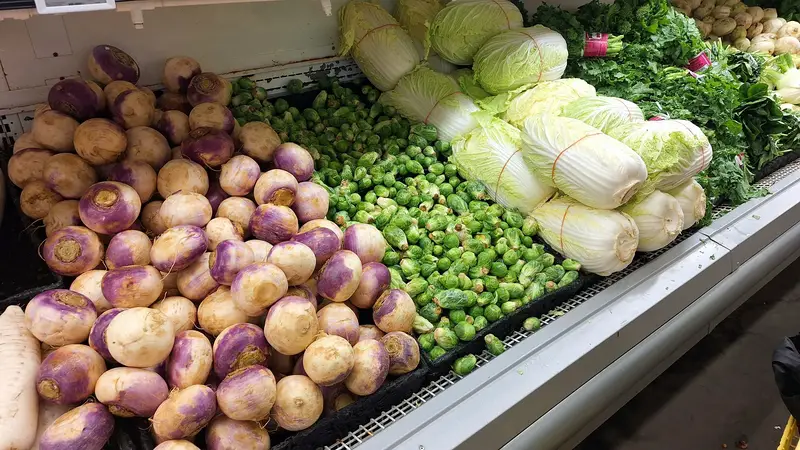
The turnip is America’s least-liked vegetable. In a 2019 survey of 2,000 people, commissioned by the frozen-food brand Dr. Praeger’s, 27 percent said they disliked it, putting it ahead of beets, radishes, and even Brussels sprouts. That is a rough fall for a plant that fed most of Europe through the winter for hundreds of years.
Almost nobody who hates turnips has eaten a good one. The gray, watery version people remember from a school lunch tray or a rushed holiday dinner is a cooking mistake, not the real vegetable. Roasted right, a turnip is nutty, a little sweet, and closer to a good potato than to punishment. It deserves a comeback, and so do a whole shelf of vegetables your great-grandparents grew without thinking twice, most of which have quietly vanished from kitchens since then.
A Vegetable Older Than You Think
Turnips are among the oldest vegetables people have ever farmed. Wild Brassica rapa still grows across Siberia and the Caucasus, and people were cultivating turnips thousands of years before the Greeks and Romans started writing about them. They are tough enough to survive almost anything you throw at them. There are dozens of varieties, in different shapes and colors, though most Americans only ever picture the purple-topped, white-bottomed one at the store.
The turnip also carries an old image problem. For centuries it was branded as food for poor people and farm animals, the thing you ate when there was nothing better. That reputation outlived the hungry winters it was built on. Today most shoppers walk right past it, and plenty mix it up with the rutabaga, which is actually a cross between a turnip and wild cabbage.
Americans Stick To A Very Short List
The turnip’s bad name makes more sense once you see how Americans eat in general. In the same survey, people who do eat vegetables said they turn up in only about a third of their meals. Most of us are working from a very short list.
The winners are the easy ones. Corn is the country’s favorite, liked by 91.4 percent of respondents, with potatoes right behind at 91.2 percent. Carrots and tomatoes tie for third at 89 percent. So most of us rotate through the same few vegetables and skip everything else in the produce aisle.
The strange twist is that people feel bad about it. Seven in ten say they wish they ate more vegetables, and 67 percent feel guilty when they finish a meal without any. The interest is there. The turnip just never gets a fair shot.
The Greens Are The Best Part, And Nobody Uses Them
Buy a turnip with its leafy top still attached and you are getting two vegetables for the price of one. The root goes into one dish and the greens into another. Most shoppers toss the tops straight in the trash without knowing they are throwing away the better half.
Turnip greens are a backbone of Southern cooking, and the reason traces back to a hard piece of history. On plantations, owners kept the roots for themselves and left the leafy tops behind. Enslaved people took those greens, seasoned them, and simmered them low and slow into something rich and filling. The liquid left in the pot, called potlikker, was saved and soaked up with cornbread so nothing went to waste. What got treated as scraps turned into one of the best dishes on the table.
Cooking them is simple. Treat the greens like any hearty green, sauteed with a little onion or simmered until tender. Traditional recipes lean on salt pork, but you can skip it and still get a smoky depth from smoked paprika or a few drops of liquid smoke instead.
The Root They Called The Oyster Plant
Salsify is a skinny brown root that most Americans have never laid eyes on, and it comes with a wild claim: cooked right, some people swear it tastes like oysters. That is where the old name, oyster plant, comes from, though plenty of growers say they cannot taste the resemblance at all. Families who could not afford real seafood got a small taste of luxury from something they dug out of the frozen ground.
There is a trick to handling it. Salsify discolors fast once it is cut, so drop the pieces into lemon water as you go, then parboil it and pan-fry it in butter until golden. The flavor is delicate and slightly sweet, and it soaks up whatever you cook alongside it, which makes it a natural in soups and stews.
You can still track it down if you look. Some winter farmers markets and specialty grocers carry it, along with an even rarer black salsify that only shows up in the coldest months.
Turnips Were Halloween Lanterns Before Pumpkins
Before pumpkins owned October, rural families in Ireland, Scotland and England carved their lanterns out of turnips, and sometimes out of mangelwurzels. Not the small beets in your salad. Mangelwurzels are monster fodder beets that can top ten pounds, grown to feed both the family and the livestock straight through winter. Hollow one out, cut a face, drop in a candle, and you had a lantern.
Thomas Jefferson was into forgotten crops too. The Monticello vegetable garden grew sea kale, salsify and cardoon, all of which turn up again further down this list. Ground cherries deserve the same second look: a tiny orange fruit wrapped in a papery husk, like a sweeter, wilder cousin of the tomatillo. You peel the husk, rinse off the sticky film, and eat them raw. They taste almost tropical, and they make a jam unlike anything else in the grocery store.
Both are easy to grow and hard to buy, which is a big part of why they slipped off American plates in the first place.
The Weed That Kept Gold Miners Alive
During the California Gold Rush in the mid-1800s, prospectors kept themselves from getting sick on a low, leafy green called miner’s lettuce. It grows wild along the West Coast and is a good source of vitamin C, exactly what men living on beans and salt pork were missing. Long before any miner showed up, Indigenous peoples in the region had been using the plant for generations, both as food and as medicine.
Across the Atlantic, the Victorians treasured a coastal plant called sea kale that grew along the shores of northern Europe. It appeared at elegant British dinner parties as a delicacy, then quietly disappeared from the menu. It did not fall out of favor because it tasted bad. It faded because it was fussy and slow to grow, and easier crops crowded it out. That is the same reason so many of these vegetables vanished. Nobody voted them off the plate. They just lost a race against whatever was cheaper to farm and prettier to stack on a shelf.
The Ugly Ones Worth Buying
Some forgotten vegetables got left behind purely for looking strange. Celeriac, also called celery root, has a knobby, gnarled exterior that scares shoppers off before they ever reach the dense ivory celery-flavored center. The trick chefs swear by is a mash that is half celeriac and half potato, which keeps the comfort of regular mashed potatoes but tastes brighter and lighter.
Kohlrabi looks like it came from another planet, a pale green bulb with stems shooting out in every direction. It grows above the ground, tastes like a mild broccoli stem crossed with a turnip, and stays crunchy and sweet raw in a slaw or roasted soft in cubes. German cooks have leaned on it for generations.
Then there is cardoon, a cousin of the artichoke with thick, celery-like stalks and a pleasant bitter edge, once a winter favorite across Europe. And the Jerusalem artichoke, which is not an artichoke at all but a knobby tuber from the sunflower family with a nutty, sweet flavor Native Americans cooked with long before it picked up that confusing name.
Rutabaga suffers the same fate as its turnip cousin, written off as old-fashioned and dull. It is actually sweeter and firmer than a turnip, and it caramelizes into something worth eating when you roast big cubes at high heat or cut it into thick fries.
How To Cook A Turnip So You Actually Like It
The fix for turnips is mostly about heat and timing. Frost makes them sweeter, which is why they taste best in fall and winter. They do not keep long, though. A turnip is good for a week or two in the fridge; it is the rutabaga that stores for months in a cold cellar. Young, small turnips are sweet enough to eat raw, sliced thin into a salad or shredded into slaw. The older, bigger ones want to be cooked.
Roasting is where they win people over. Cube them, toss with oil, and roast until the edges brown and the natural sugar caramelizes. They come out nutty and rich, nothing like the boiled mush that wrecked the vegetable’s name in the first place. You can also cut them into fries, slice them into chips, or boil and mash them as a lighter stand-in for potatoes.
Then there is the pickled version, a staple on Middle Eastern sandwiches, gyros, and falafel, made with vinegar, water, salt, and a few slices of raw beet, which is what turns the whole jar bright pink. Give it about five days in the fridge. Sharp and tangy, it is nothing like the sad side dish stuck in your memory. Give America’s least-liked vegetable one honest try, cooked with a little heat and salt, and you might just switch sides.

