

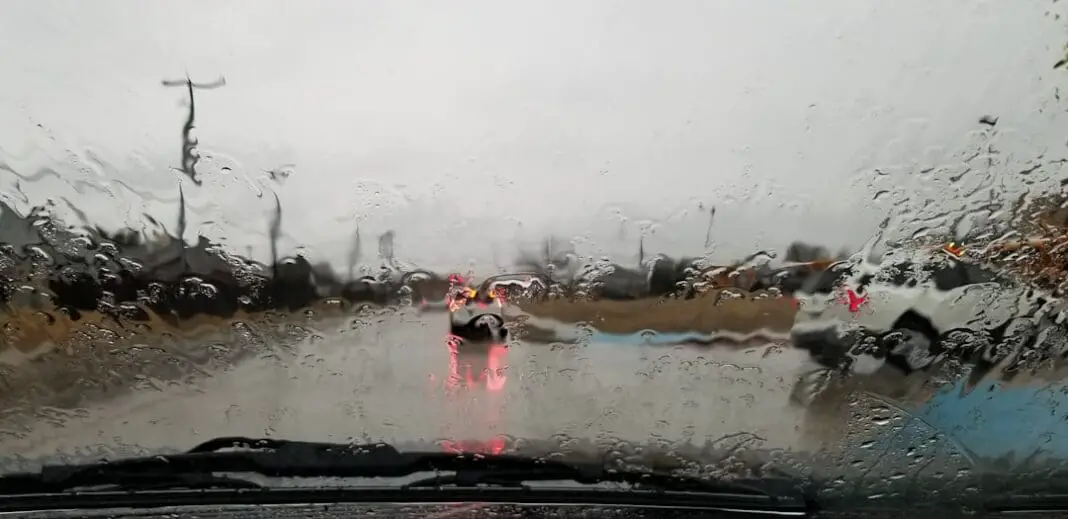
Most of us treat cruise control like a freebie. You set it, relax your right leg, and let the car handle the boring miles on a flat stretch of interstate. On a dry day, it pretty much is a freebie. But the moment rain starts smacking the windshield, that same little button becomes one of the dumbest things you can leave switched on. Here is the kicker: most drivers have no clue why, and the carmakers have done a pretty lousy job explaining it.
I always assumed cruise control was no big deal in a light drizzle. Turns out it can do the exact opposite of what your gut wants in an emergency. Let’s get into the stuff nobody told you in driver’s ed.
The Part That Should Stop You Cold: It Hits the Gas
Quick question. Your car starts skating across a puddle at 60 mph. What do you want it to do? Slow down, obviously. What does cruise control do? It can speed up. Seriously.
When your tires lift off the pavement and ride on top of water, the wheels suddenly spin a little freer. The system reads that as “we are losing speed, better add throttle.” So it feeds the engine more gas at the worst possible second. One legal team that handles these crashes spells out the mechanism plainly: cruise control will actually accelerate your car when it hydroplanes, which is the exact opposite of what should happen. That same firm points out that automakers have mostly failed to warn people about this, so most of us on the road have zero idea it can happen.
It Takes Less Water Than You Would Ever Guess
You might think you need a flooded road to hydroplane. Nope. Once you pass about 35 mph on a wet road, your tires start losing their grip. At 55 mph, your tires can lose all contact with the pavement on as little as one-tenth of an inch of water. One guide describes that depth as thinner than a smartphone. Let that sink in. A puddle you can barely see can turn your car into a sled.
Now think about where you actually set cruise control. Almost always somewhere between 55 and 75 mph on the highway. That is the exact speed range where full hydroplaning is most likely. So you are locking in the riskiest speed and lifting your foot off the controls at the same time. It is a bad combo no matter how good your tires are.
The First 10 Minutes of Rain Are a Trap
This one genuinely surprised me. The most dangerous moment is not during the heaviest downpour. It is right when the rain starts. Cars drip oil, grease, and grime onto the road for days during dry stretches. When the first light rain hits, all that gunk floats up and mixes with the water, turning the surface into something close to a skating rink.
Safety experts call this the “first rain” effect, and they say it is worst during the opening hour of rain or even a light mist. One California firm warns drivers that those built-up oils rise to the top and make roads especially slick before the rain gets a chance to wash them away. So the very moment you are least likely to bother killing the cruise control is exactly when the road is at its slipperiest.
Your Foot Is in the Worst Possible Spot
When you drive normally, your foot hovers near the pedals. The instant something feels off, you are already lifting off the gas or covering the brake. With cruise control on, your foot is parked off to the side, maybe flat on the floor. You have added a whole extra step before you can even react.
The correct first move when you start to hydroplane is simple: ease off the accelerator without stomping the brakes. But with cruise control engaged, you have to reach over and cancel it before you can even start slowing down. An auto shop breaks down how that delay eats up precious fractions of a second, and how cruise control quietly disconnects you from the car. You stop noticing the tiny slips and drifts that warn you a slide is coming.
Wet Roads Can Double Your Stopping Distance
Even if you never hydroplane, rain stretches out how long it takes to stop. Water on the road can mean your car needs twice the distance to come to a halt compared with dry pavement. Cruise control works against you here too, because it is busy trying to hold a steady speed when you should be bleeding speed off early and smoothly.
The scale of this is bigger than people realize. There are more than 5.7 million crashes on U.S. roads every year, and about 22% are weather-related. Of those weather crashes, 46% happen during rainfall and a striking 73% happen on wet roads, which is more than snow and ice combined. Wet pavement, not blizzards, is the single biggest weather risk out there.
AAA Calls It a Flat-Out Myth
There is a stubborn belief that cruise control is fine in any weather. AAA labels that idea a myth, full stop. Their position is blunt: using cruise control in rain, snow, sleet, hail, or ice messes with the system’s ability to hold a constant speed, and set too fast on wet pavement it can throw you into a hydroplane the moment you hit standing water.
The federal numbers line up with that. The U.S. Department of Transportation reports that 70% of weather-related crashes happen on wet pavement, and 46% happen while it is actually raining. The national highway safety agency says cruise control belongs on long, open highways when the weather is clear and a steady speed is genuinely a good idea. Rain is not that situation.
If You Crash, the Law Often Says It Is on You
Here is the expensive part the headline promised. People assume hydroplaning is some act of nature that nobody can be blamed for. The courts usually disagree. In the eyes of the law, every driver is expected to stay in control of the vehicle at all times, even in bad weather.
One firm puts it bluntly: when a car hydroplanes and causes a wreck, the driver is often at fault for not being in control, and most hydroplaning crashes are considered preventable. Using cruise control in the rain can be treated as a failure of that basic duty, since it cuts down your ability to react fast. Translation: that costly mistake in the headline can mean a ticket, a bigger repair bill, or being on the hook for the entire crash.
Fancy New Cars Do Not Get a Pass
Got a newer ride with adaptive cruise control that brakes and adjusts on its own? Do not get cocky. Those systems lean on cameras and radar sensors, and heavy rain can blind them. A local news fact-check confirmed that rain can interfere with the sensors, so the system may not respond correctly if your tires start slipping.
Some newer vehicles are smart enough to block cruise control from turning on in wet conditions at all. That is a nice touch. But even the cars that allow it come with the same advice from safety pros: leave it off when it is raining. The tech is a backup, not a babysitter, and you are still the one who answers for whatever the car does.
What Smart Drivers Do Instead
None of this means you should white-knuckle every drizzle. It just means a few easy habits keep you in charge of the car. Flip cruise control off the second your wipers come on. Keep your foot resting lightly near the pedals so you can react in a blink. Drop your speed below your dry-road normal, and leave way more room to the car ahead.
Avoid puddles and standing water when you can, because a giant splash is never worth it. The University of Pittsburgh’s transportation safety institute lists do not use cruise control in the rain right alongside checking tire tread and slowing down as a core rule, not a suggestion.
Speaking of tires, do the penny test. Stick a penny upside down into the tread. If you can see all of Lincoln’s head, your tread is too shallow and you are far more likely to hydroplane. Worn or underinflated tires cannot push water out of the way, and shoving water aside is half the battle on a soaked road.
And if your car does start to slide, do not panic and do not yank the wheel. Hold it straight, gently lift off the gas, and let the tires find the pavement again. Honestly though, the best move happens way before any of that. Reach over and click cruise control off. It takes one second, and it might be the smartest one-second decision you make all year.

