

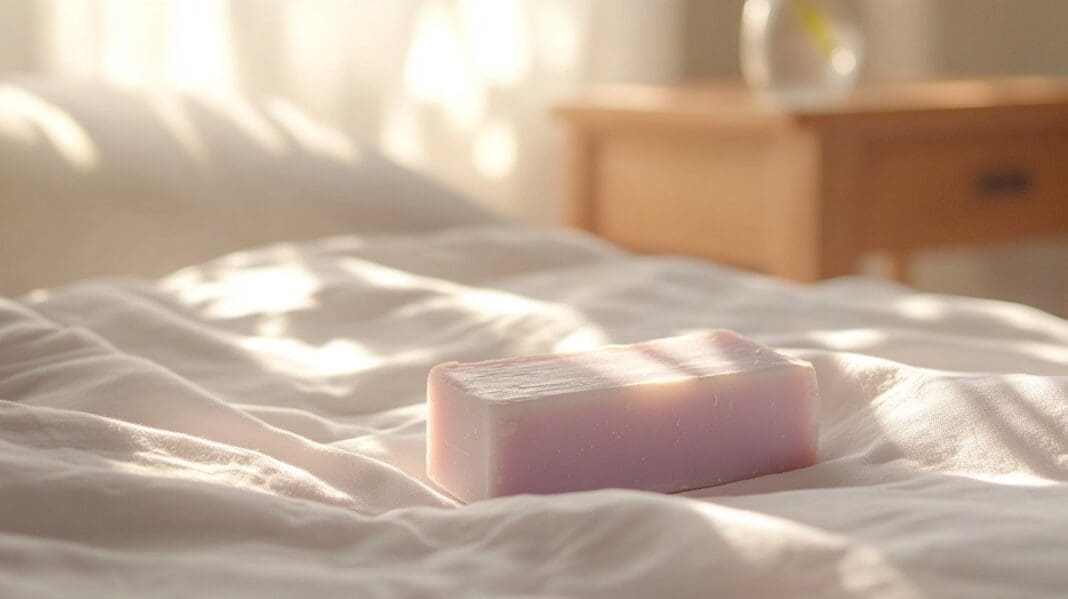
The first time a friend told me to slip a bar of soap under my bed sheets, I laughed right in her face. It sounded like one of those things your great-aunt swears by, right up there with keeping a raw onion on the windowsill or a potato in your sock. But this one keeps coming back around. It pops up on TV, in late-night forums, and in the comments under basically every article about leg cramps ever written. And a surprising number of otherwise sensible people insist it works. So before you roll your eyes, hear me out, because the story behind this little trick is way weirder than the trick itself.
This Is Way Older Than the Internet
You’d think a tip this strange started as a viral post somewhere around 2015. Nope. The folks at The People’s Pharmacy say they first heard about soap under the sheet all the way back in 2004, and the idea was floating around long before that. Some believers claim French grandmothers have been doing it for decades, passing it down like a family recipe. So while it feels like a fresh oddity, plenty of people have been quietly tucking a bar of Ivory near their toes for a very long time. That alone made me curious. Dumb fads usually burn out fast. This one refuses to die.
What People Are Actually Trying to Fix
The soap crowd is usually dealing with two things: nighttime leg cramps and restless legs. Restless legs syndrome (sometimes called Willis-Ekbom disease) is more common than you’d guess. According to a sleep medicine expert at the American Academy of Sleep Medicine, it affects around 13% of Americans. About 2% of kids have it. Up to 80% of pregnant women report it at some point. And once you hit your late 50s, the number climbs toward 20%. People describe the feeling as burning, buzzing, humming, twitching, or a deep creepy-crawly itch you can’t scratch. It steals sleep, and the misery is real. That’s the part most skeptics miss. People aren’t reaching for soap because they’re bored. They’re desperate.
How People Say to Actually Do It
Here’s the part that surprised me: there’s a whole method to it. You unwrap a fresh bar and slide it under the bottom sheet, down where your legs and feet rest. That’s it. When the effect seems to fade after a few weeks or months, you don’t toss the bar. You score it or shave the surface with a knife to expose fresh soap, which apparently brings it back to life. When that stops working, you swap in a new bar. One cyclist reader who got cramps after long rides put a bar under his bottom sheet and swore it did the job. A woman who started cramping in her thighs added a second bar up at knee level. One person even sliced bars thin with a cheese-cutting wire and stuffed the scraps in her socks while she walked around the house. Commitment.
The Great Brand War Nobody Talks About
If you want to start an argument, ask soap believers which brand is best. Irish Spring and Ivory get named the most. Lavender soap has a loyal following. Some people insist you should avoid Dial and Dove, and then other people turn around and say those exact brands work great for them. There’s no agreement at all. One reader said the soaps with the strongest perfume smell worked better than the plain stuff. Plenty of travelers even use the tiny hotel bars they sneak home in their luggage. My favorite convert is the ICU nurse with advanced training who called the whole thing complete nonsense, tried it out of pure desperation, and now keeps a bar in a little box on her nightstand that she reaches for the second she feels a cramp coming on.
Nobody Can Agree on Why It Might Work
This is where it gets genuinely interesting. The popular guesses are magnesium soaking into your skin overnight or the lavender scent relaxing the muscles. Both are basically just hunches. But there’s a stranger theory that I can’t stop thinking about. Your nose isn’t the only place you have smell receptors. Research published in late 2023 found olfactory receptors all over the body, including in hair follicles. The idea is that these receptors can pick up scent molecules drifting off the soap, and they may behave like the tiny channels in your nerves that react to heat, cold, menthol, and the kick of hot peppers. When those get triggered, the thinking goes, they send a signal that interrupts the bad muscle messages causing the cramp. Is it proven? No. But it’s a lot less crazy than “soap magic.”
The Falling-Off-the-Bed Mystery
Here’s the detail that made me stop laughing. There are stories of people who got relief without even knowing a bar of soap had been slipped into their bed. If it were purely in their heads, how would that work? My favorite tale is the woman whose husband was a doctor and a total skeptic. She secretly tucked soap under his sheets without telling him. His cramps calmed down for weeks. Then one night they came roaring back, and she went looking and found the bar had fallen onto the floor. People also report the bar slowly losing its power over time, which lines up with how scent molecules keep escaping a soap surface until there aren’t many left. None of this proves anything. But it’s a heck of a coincidence pile.
The Skeptics Have a Solid Point Too
Now let me be fair, because I’m not about to pretend this is settled. There are zero controlled studies on soap in your bed, and one of the reasons is blunt: there’s no big money in proving a 99-cent bar works. Snopes dug into it and basically threw up their hands, landing on “we’re still in the dark.” The science crowd is harsher. One outlet flat out called it a myth, pointing out that the remedy got a huge boost from Dr. Oz and that believers can’t even agree on the basics, like wrapped or unwrapped, big bar or small, foot of the bed or right at the cramp. They argue that restless legs naturally come and go, so any random change can look like a cure when symptoms were going to fade anyway. That’s the placebo trap, and it’s a real one.
Sometimes It’s Not What You Think
One thing worth knowing before you build your whole bedtime around a Dove bar: plenty of people who think they have restless legs are actually dealing with a vein issue called chronic venous insufficiency. The valves in your leg veins are supposed to push blood up toward your heart. When they get weak, blood can pool in your lower legs, and that pressure can feel almost exactly like restless legs, especially at night when you’re lying still. Soap obviously won’t do a thing for a plumbing problem in your veins. So if your legs keep nagging you and you also notice swelling or visible veins, that’s a real conversation to have with a doctor instead of a soap aisle decision.
Somebody Literally Built a Soap for This
Here’s how seriously some people take this. After hearing from so many readers, The People’s Pharmacy went and made an actual product called Bed Soap, designed just for sleeping with. Their complaint was that a chunky regular bar is uncomfortable to sleep on, so they made theirs flat, long, and wide, with a hint of lavender because there’s decent evidence lavender helps people drift off. One box comes with three bars, and once a bar has done its bedtime duty, you can just take it to the shower and use it like normal soap. The customer reviews are wild. One woman has used it for five years, says she “truly cannot live without it,” and packs a bar for hotel rooms. There’s even a 2008 report from an anesthesiologist suggesting soap fragrance seems to ease muscle cramps. Make of that what you will.
So Should You Try It
Honestly? Why not. I went in as a hardcore skeptic and I came out somewhere in the middle, which is rare for me. The evidence is anecdotal, the science is mostly educated guessing, and half the experts say it’s nonsense. But it costs about a dollar, it takes ten seconds, and as Snopes pointed out, the only real downside is sharing your bed with a few flakes of soap. That’s the whole risk. No fancy gadget, no subscription, no waiting on a delivery truck. Grab whatever scented bar is already in your bathroom, slide it under the sheet near your feet, and see what happens. Worst case, your bed smells like Irish Spring. There are far worse ways to lose a bet.

