

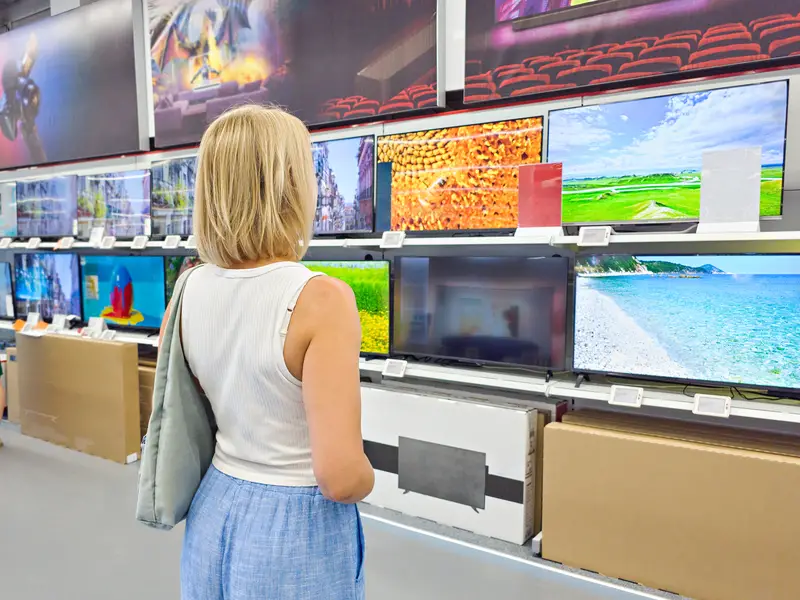
Walk into any big box store and the wall of televisions looks like a small miracle. Every screen is cranked to maximum brightness, every color pops, and the price tags on the bottom shelf make it feel like you would be foolish to spend more. Then you get the thing home, plug it in, and reality shows up about three months later. Not every TV brand is playing the same game, and a few of them are downright hostile to the person who just handed over money. So here is an honest ranking, worst to best, of the brands filling those shelves right now.
8. Vizio: The One to Avoid at All Costs
If you take nothing else from this list, take this. Vizio is the brand to walk past. On paper the picture can look fine, which is exactly the trap. The real problem starts after the box is open. Vizio’s SmartCast software is notorious for lagging, freezing, and crashing, and so many owners give up on it that buying a separate Roku or Apple TV has basically become part of the purchase.
The reviews are brutal. On PissedConsumer, Vizio sits at a 2.2 star average with 73 percent of responses unfavorable. Over at ConsumerAffairs, owners describe screens blacking out mid-stream while the audio keeps playing, an interface that shoves ads in your face the second you turn it on, and plastic support legs that snapped twice and damaged the furniture underneath. One owner said they sent photos to support, got promised help, and were then ghosted completely.
It gets worse. Attorneys working with ClassAction.org are investigating reports that forced firmware updates have “bricked” working sets, leaving them stuck on black screens, static, or endless reboot loops. A perfectly good TV can be killed by an update you never asked for. Consumer Reports even stripped Vizio of its recommendation over reliability. And Vizio was the original data-harvesting pioneer, settling with the FTC for $2.2 million after quietly tracking what people watched. Save yourself the headache.
7. RCA: A Famous Name Doing No Favors
RCA made the first color televisions back in 1954, and the company is still coasting on that history. The modern brand has almost nothing to do with the old one, and the current sets show it. Buyers on Amazon report units arriving already broken. One reviewer named Becky said that when she plugged hers in, the inside of the screen was damaged straight out of the box.
That is the whole problem with going this cheap. As House Digest points out, the cost of repairing a cracked or dead panel wipes out every dollar you thought you were saving. Even when an RCA set survives the trip home, you are looking at limited refresh rates and middling picture quality, which makes it a poor pick for gamers or anyone who cares about movies. Consumer Reports also lists RCA among the brands with subpar reliability. A big name on a small budget still buys you a small-budget TV.
6. Hitachi: A Ghost of Its Former Self
Hitachi used to be a household name, the kind of brand your grandparents trusted without a second thought. That era is long gone. The company has largely vanished from the mainstream TV market since around 2018, and the final wave of models earned their exit with poor build quality and shrinking availability, especially anywhere outside Europe.
If you spot a Hitachi set floating around a clearance rack or a third-party seller, treat it as a warning sign rather than a bargain. A brand that has effectively left the market is not going to be pushing software updates, honoring warranties, or keeping parts in stock. When something breaks, and with old stock it usually does, you are on your own. Nostalgia is not a spec sheet. There is no reason to gamble on a name that already gave up on the category.
5. Insignia: Best Buy’s House Brand Cuts Corners
Insignia is the store brand you see stacked near the entrance at Best Buy, and the price is the entire appeal. The problem is what happens once the warranty runs out. Reddit threads are full of owners reporting that their Insignia set died suspiciously soon after the coverage window closed, which leaves them with no recourse and a dead screen.
Beyond lifespan, the common gripes are weak audio and a clunky, dated interface. Some models still ship without the modern HDMI ports you would expect, which is a headache the moment you try to connect a current game console or soundbar. To be fair, an Insignia works fine as a throwaway TV for a garage or a guest room where you will not cry if it quits. Just do not make it the centerpiece of your living room and expect it to last.
4. Hisense: Great Specs, Shaky Follow-Through
Hisense has come a long way and can genuinely impress in the store. That is the catch. Consumer Reports pulled its recommendation from several Hisense sets after survey data estimated that 20 percent of them will run into a problem within the first five years. That earned the brand only a “Fair” reliability rating, and a spokesperson made the key point plainly: strong lab scores for picture quality do not guarantee the thing will still work in year three.
There is also the privacy angle. In 2025, Texas Attorney General Ken Paxton filed suit against several TV makers including Hisense, alleging they secretly recorded what people watched at home, and the AG secured a temporary restraining order against Hisense in December 2025. If you buy one, buy on a deep sale, expect to add your own streaming stick, and go in with your eyes open.
3. TCL: A Coin Flip on Quality
TCL is the value brand a lot of people quietly love, and when you get a good unit, the price-to-picture ratio is hard to beat. The trouble is consistency. Reviewers note that quality control wanders, with some sets developing panel uniformity problems or backlight irregularities that jump out during darker scenes and solid-color backgrounds.
TCL also swaps out its model lineup constantly, which sounds minor until you try to research a specific set before buying. Last year’s rave review might describe a panel that no longer exists under the same model name, so you are partly buying blind. TCL was named in that same Texas data-tracking lawsuit too. None of this makes TCL a hard pass the way Vizio is. It just means you should read reviews for the exact model in front of you and lean toward the higher tiers, where the quality control tends to hold up better.
2. Samsung: Skip the Cheap Ones, Love the Expensive Ones
Samsung is a split decision, and knowing which side you are on saves real money. The budget models are where people get burned. Take the Samsung U7900F, which SlashGear flagged as one to avoid. RTINGS called it flatly “a poor TV,” noting it fights glare in bright rooms and washes out in dark ones thanks to sub-par black levels. A low price does not automatically make a set worth buying.
Climb the ladder, though, and Samsung is a different company. Its high-end OLED sets are genuinely excellent, and the Samsung S95F landed on best-of-2025 lists. Samsung also carries a strong overall reliability reputation, which is why it keeps getting recommended as a safer alternative. Fair warning, Samsung was hit with a January 2026 class action over viewing-data collection, so no brand is spotless here. Buy Samsung in the mid tier or above, not off the clearance shelf, and you will be happy.
1. Sony: The Brand Actually Worth Your Money
When the goal is buying once and forgetting about it, Sony is the pick. Consumer Reports data tells the story better than any marketing ever could. Only 11 percent of Sony sets are estimated to develop a problem in their first five years, compared to the 20 percent figure hanging over Hisense and Vizio. That earned Sony a “Very Good” reliability rating, near the top of the entire category.
Picture quality is reliably strong across the lineup, the smart platform is smoother and less ad-choked than most rivals, and the build feels like it was designed to survive real living rooms rather than a showroom demo. Sony is not cheap, and to be honest none of these brands are angels on the privacy front. But paying more for a set that actually lasts beats saving fifty dollars on one that bricks itself during a forced update. If you want a TV you will not be cursing at in two years, this is where your money goes.
The Bottom Line
The lesson under all of this is simple. That gorgeous demo on the store wall tells you almost nothing about how the TV behaves after a year in your house. Independent testing does. Avoid Vizio outright, treat RCA, Hitachi, and Insignia as disposable at best, and shop TCL and Hisense carefully by the exact model. If your budget stretches, Samsung’s upper tier and especially Sony give you a screen you can actually forget about, which is the whole point of owning one.

