

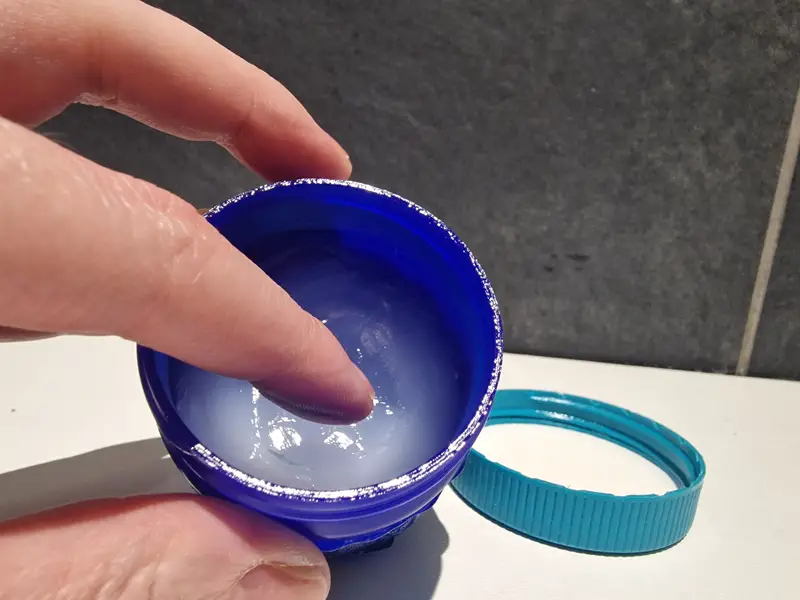
Somewhere along the way, a jar of Vicks VapoRub stopped living in the medicine cabinet and started showing up at the foot of the bed. People scoop it out, smear it across the soles of their feet, pull on a pair of thick socks, and go to sleep. The reason they give sounds a little wild the first time you hear it. They swear it quiets a stubborn cough long enough to sleep through the night. That is the strange place. Not the chest. The feet.
The Feet Trick Started as an Internet Rumor
Rub menthol on your soles, the story goes, and your cough calms down within minutes. It spread across Facebook and then everywhere else, passed along by grandmothers and strangers with the confidence of a proven cure. Scientists were less impressed. Joe Schwarcz, who runs the Office for Science and Society at McGill University, called it flat out “ridiculous,” and pointed out there is no path for anything rubbed on your feet to loosen the gunk sitting in your chest. Pharmacists agree there is no evidence that Vicks on your feet does a thing for a cold, congestion, or cough. The active ingredients only work when you breathe them in, which is exactly why the label tells you to rub it on your chest.
Your Feet Might Be the Right Place, Just for a Different Reason
The twist nobody sees coming works like this. The feet idea flops for coughs, but it has real backing for something else entirely: toenail fungus. Back in 2011, researchers ran an actual clinical study on it. Eighteen people with confirmed nail fungus at an Air Force medical center dabbed Vicks on their nails and got checked at 4, 8, 12, 24, 36, and 48 weeks. The verdict caught the podiatry world off guard. Vicks showed a positive effect on the infection. The ingredients doing the work are thymol, menthol, camphor, and eucalyptus oil, all of which had already shown in lab tests that they could push back against fungus.
This is not some fringe belief either. A podiatrist at Harvard-affiliated Brigham and Women’s Hospital has reportedly told patients that a daily dab of Vicks on the toenails can help, and the price is hard to argue with. One estimate puts the cost at around 6 cents a day. The catch is patience. You may be rubbing it on for close to a full year before you see clean nail grow in.
A Foot Doctor With a Million Followers Has Thoughts
Dr. Tom Biernacki, a board-certified foot and ankle surgeon with more than 950,000 YouTube subscribers, says patients ask him about the Vicks trick almost every week. His honest take lands somewhere in the middle. About 20% of his patients see mild improvement over 6 to 12 months, and lab studies do show thymol and camphor slow fungal growth. But a lab dish is not a thick toenail. He warns that leaning on Vicks alone can let a stubborn infection creep over to the nails next door while you wait for results that may never fully show up.
For comparison, he points out that the pill terbinafine clears the fungus in 60 to 70% of people in about 12 weeks. Vicks is the budget option, fine for a mild case or as a stopgap while you figure out your next move. It is not the miracle the internet makes it out to be, but it is not snake oil either.
The Smell in That Jar Is One of the Most Recognizable on Earth
Crack open a jar and your brain knows exactly what it is before your eyes confirm it. That is not an accident. Vicks VapoRub has been around for more than 125 years, and its scent has been called the third most recognizable smell in the world. Procter & Gamble brought it to the market in 1905, and it still parks itself near the front of the shelf every single cold season.
The idea behind it is far older than the jar. A pharmacist named Richardson built the formula after learning about an ancient Chinese practice of hanging a small bag of camphor around a sick person’s neck. Breathing in camphor creates that cracked-open feeling in your nose, so the trick slowly turned into a salve you rub on your chest. The three active ingredients today are camphor at 4.8%, menthol at 2.6%, and eucalyptus oil at 1.2%.
People Rub It in Even Stranger Spots
The feet are only the beginning. Some people press a little into their forehead and temples when a headache hits, since the menthol throws off a cool feeling a bit like holding an ice pack against your skull. Others rub it into sore shoulders or a stiff knee, where the balm first cools the skin and then warms it, and that back-and-forth tugs your attention away from the ache underneath. There are even people who use it on rough, cracked heels, slathering it on after a shower and sleeping in socks so it soaks in overnight. None of these are what a chemist in 1905 had in mind.
Why No One Has Actually Proven the Cough Thing
You would think a claim this popular would have a stack of studies behind it. It does not, and the reason is almost funny. That famous smell makes a fair test nearly impossible. To prove a remedy works, scientists usually compare it against a fake version, but you cannot hand someone a “fake” Vicks. The second they smell it, they know which one they got. On top of that, the company has little reason to spend money proving anything about a product that has been selling for over a century.
What science has found instead is more interesting. A 2023 study zeroed in on a receptor called TRPV4 that plays a role in the coughing that comes with a common cold. Vicks ingredients like menthol, camphor, and eucalyptus oil switch on those receptors when you inhale them, which may help settle cold symptoms. The key word is inhale. Vapors rising off your feet under a blanket are not reaching your airways.
The Trend Has a Bizarre Side Quest in Rave Culture
One detail buried in the coverage has nothing to do with colds at all. Part of how mentholated rubs spread as a body product traces back to rave culture, where people smeared the stuff on their skin for the cold, tingly rush it gives off. The menthol tricks your nerves into feeling a wave of cool, and under bright lights and loud music that sensation gets cranked way up. It is a strange bridge between a chest cold and a warehouse dance floor, but the same little jar shows up in both.
The Uses That Have Nothing to Do With Your Body
Once you accept that Vicks lives outside the medicine cabinet, the list gets long. That strong menthol-and-eucalyptus scent that clears your nose also bothers a lot of bugs. Some people rub a thin layer on their skin as a bug repellent, and others run a thin line near windowsills or trash areas to keep ants from marching through. The cedar oil and camphor in the formula are the parts insects reportedly can’t stand.
It gets more random from there. A dab on a squeaky door hinge quiets the noise like any light grease would. Smear a little over sticker residue, wait a few minutes, and the leftover gunk wipes right off. A small amount under a trash can lid masks the smell between takeout nights, and an open jar tucked into a musty closet or basement does the same. People with pets rub it in spots they want off-limits, since animals want nothing to do with that scent. One jar, a dozen jobs, and only one of them is the one printed on the label.
So Should You Try It?
Rubbing Vicks on your feet to stop a cough is mostly comfort and the power of believing something helps, and there is nothing wrong with a trick that lets you finally sleep. Hundreds of people keep swearing it works for them, science or no science. The feet-for-fungus angle has actual study behind it, as long as you go in expecting slow results and a check-in with a real foot doctor if it starts to spread. The household tricks are just plain handy. So the next time someone tells you they keep a jar of Vicks by the bed instead of the bathroom sink, they are not being weird. They are part of a long tradition of finding new jobs for one little blue jar.

