

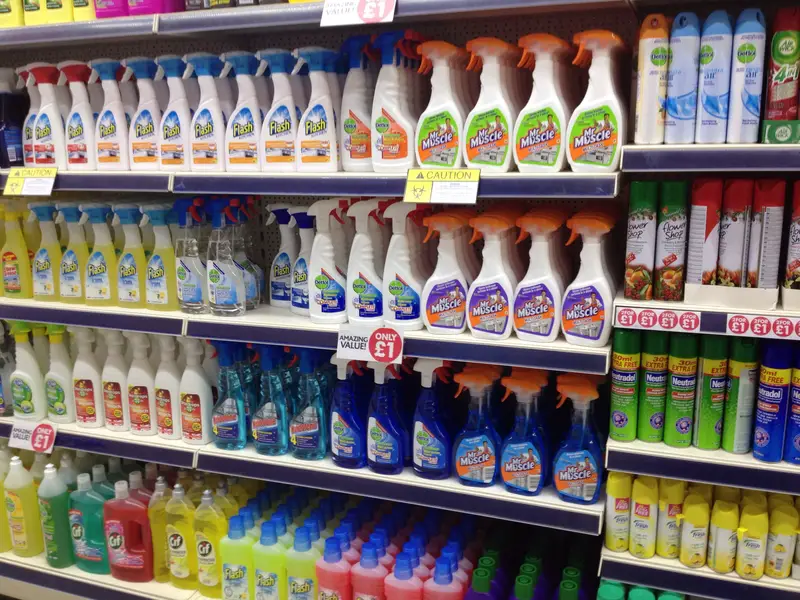
I have a cabinet under my kitchen sink that looks like a cleaning product graveyard. There’s a half-used bottle of something for granite, another for glass, a third for “tough grease,” and at least two that I bought because the label was pretty. Sound familiar? Most American households have between five and ten different cleaning sprays, and most of them are doing the exact same thing — just in different colored bottles with different marketing budgets.
So here’s the real question nobody wants to ask: Is there actually one spray that handles everything? I went down a rabbit hole of independent lab tests, expert reviews, and real-world kitchen experiments to find out. The answer surprised me, and not for the reasons you’d expect.
The Spray That Keeps Winning Tests (And It’s Not Windex)
Mr. Clean Clean Freak Multipurpose Cleaner has been quietly dominating product tests for the past two years. Good Housekeeping gave it a cleaning award in 2023. Consumer Reports picked it as their favorite all-purpose cleaner. Bob Vila’s team loved it. The Kitchn ran an independent test and the reviewer said she’d never cleaned her kitchen so fast in her life.
What makes it so different? The nozzle. I know — a nozzle doesn’t sound exciting. But most cleaning sprays have one setting: you squeeze, stuff comes out, and you hope for the best. The Clean Freak bottle has what Mr. Clean calls a “Power Nozzle” with a wider, more comfortable trigger. You can pull it lightly for a quick targeted burst or hold it down for a continuous mist that covers a huge area without drowning one spot. That mist is the secret weapon. It prevents you from over-saturating your counter, which means less wiping and no puddles.
In testing, it wiped up greasy vegetable oil from a stovetop in just a few strokes with a paper towel. No lingering greasiness. It removed maple syrup from a kitchen table with zero stickiness left behind. Caked-on marinara sauce on kitchen counters? Gone. One tester reported it even knocked out dog nose smears on windows — something that had defeated every natural glass cleaner she’d tried before.
The One Surface Where It Stumbles
Here’s the catch nobody talks about: Clean Freak leaves streaks on stainless steel. Not terrible streaks, but visible enough that you’ll need to buff them out with a microfiber cloth. That’s a real issue if you have stainless steel appliances, which — let’s be honest — is half of American kitchens at this point. Consumer Reports flagged this in their testing, and it’s the kind of detail that separates a good cleaner from a perfect one.
Also worth knowing: the lavender-scented version is the only one with EPA Safer Choice certification, meaning the EPA reviewed the ingredients and found them safer for human health and the environment. The lemon and Original Gain scents? They don’t have that certification. Same brand, same product line, different safety standards depending on which scent you grab. Nobody reads that on the shelf.
The Science Behind Why Most Sprays Work the Same Way
Here’s something that blew my mind: almost every multipurpose cleaner on the market uses the same three chemical categories. That’s it. Three. Surfactants, solvents, and buffering agents. Surfactants change the surface tension of grease and soil particles so they can’t cling to your counter anymore. Solvents — usually just water — penetrate and loosen the stain. Buffering agents stabilize the pH so the whole formula stays effective against grease.
America’s Test Kitchen worked with an independent ISO-accredited lab and found something that should make the big cleaning brands nervous: citric acid — the stuff in lemons — was equally effective at eliminating salmonella as the traditional quaternary ammonium compounds (quats) found in Lysol. Read that again. Lemon-derived acid killed salmonella just as well as the heavy-duty chemical disinfectants that have been industry standard for decades. The only requirement was following the manufacturer’s instructions, which usually means letting the spray sit on the surface for a specific amount of time rather than immediately wiping it off.
You’re Probably Wiping Too Soon
Speaking of instructions — this is maybe the biggest thing people get wrong with cleaning sprays. Almost nobody reads the label, and almost every label says to let the product sit before wiping. The Clorox Disinfecting All-Purpose Cleaner, for example, needs about 10 minutes of contact time before messes come up properly. Ten minutes! Most people spray and wipe within five seconds. You’re basically spreading the mess around with expensive water at that point.
There’s also a difference between cleaning, sanitizing, and disinfecting that most people don’t realize exists. Cleaning just removes visible dirt. Sanitizing reduces bacteria to safe levels. Disinfecting kills virtually all bacteria and viruses on a surface. Most “all-purpose” sprays only clean. To actually disinfect, you often need to spray, wait, then rinse with water afterward. That’s multiple steps that nobody does because the marketing makes it look like one spray and wipe handles everything.
The Runner-Up That Nobody Saw Coming
America’s Test Kitchen didn’t pick Mr. Clean as their winner. They went with Method All-Purpose Cleaner in French Lavender. Why? It dissolved stubborn messes in professional test kitchens — we’re talking commercial cooking environments, not someone’s breakfast counter — while leaving virtually no streaks or residue on any surface. That includes stainless steel, sealed granite, Corian synthetic stone, porcelain, ceramic, and glass. Method’s spray bottle also produced a wider arc of solution, covering more surface area per spray, which meant less pumping and more cleaning.
For people worried about what’s actually in their cleaning products, Method’s antibacterial version uses citric acid instead of the harsher quats found in most disinfectant sprays. And an independent organization called Made Safe, which screens household products for dangerous ingredients, found that most cleaners — even the popular ones — don’t pass their ingredient analysis with flying colors. Some are better than others, but “safe” is a relative term in the cleaning aisle.
The Three-Ingredient DIY Version That Actually Works
If you’re the type who doesn’t trust anything with a barcode, there’s a homemade option that cleaning bloggers have been making for years: distilled white vinegar, water, and a few drops of essential oil. That’s the whole recipe. Distilled white vinegar is a legitimate disinfectant and deodorizer. Its acidity fights bacteria on most home surfaces. Tea tree oil — sometimes labeled melaleuca — is a natural disinfectant known to fight bacteria, fungi, and even some viruses.
The trick most people miss is the water type. If you use regular tap water, your homemade cleaner only lasts about two to four weeks before it starts degrading. Use distilled water, and it’ll last three to six months. The minerals and impurities in tap water speed up the breakdown of the cleaning solution. Store it in a cool, dark place — not on your sunny kitchen windowsill — and it holds up even longer.
But there’s a serious limitation: vinegar cannot be used on natural stone. Marble, granite — the acid will etch and damage the surface over time. For those surfaces, a castile soap solution works instead. Castile soap is an old-school soap from the Castile region of Spain made entirely from natural ingredients with no animal fats or synthetic anything. Mix it with water in a spray bottle and you’ve got a stone-safe cleaner. Just don’t mix castile soap with vinegar — the acid neutralizes the soap and you end up with a useless, filmy liquid.
The Cleaning Tablet That Costs Pennies Per Bottle
One product that flew under the radar in recent testing is Zep Pro-Tabs All-Purpose Cleaner. It comes as tablets — four per pack — and you drop one into a reusable spray bottle with 32 ounces of warm water, wait five minutes, and shake. That’s your cleaner. It works on countertops, tile, porcelain, fiberglass, and painted surfaces. The cost per bottle ends up being a fraction of what you’d pay for a pre-mixed spray.
The catch: don’t use it on natural stone surfaces, carpets, or automotive paint. But for everything else in your kitchen and bathroom, it tested above expectations. Consumer Reports was impressed enough to flag it as their top pick in the concentrated cleaner category. And because you’re reusing the same bottle, there’s less plastic waste — which matters if your recycling bin is already overflowing every Tuesday.
So What Should You Actually Buy?
If you want one spray that handles the most surfaces with the least effort, Mr. Clean Clean Freak in lavender is the consensus pick across multiple independent tests. It’s fast, it smells good, and the nozzle alone makes cleaning less annoying. Just keep a microfiber cloth handy for your stainless steel.
If you care more about ingredients and don’t mind slightly less raw power, Method All-Purpose Cleaner is the safer bet with better streak-free performance across all surfaces. And if you’re the DIY type, a simple vinegar-water-essential oil spray handles 90% of daily cleaning for about thirty cents a bottle.
The real secret isn’t which spray you buy — it’s whether you let it sit before wiping. Those ten seconds of patience are worth more than any fancy formula.

