

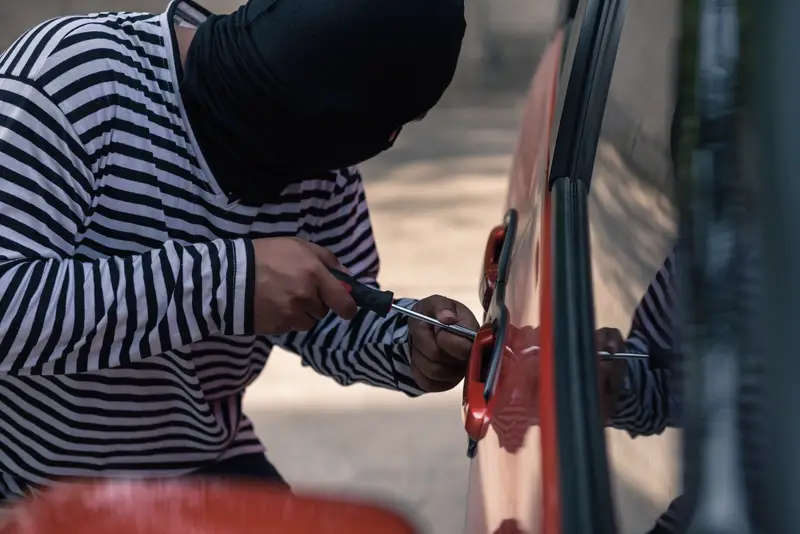
You turn the key in a parking lot and your car sounds like a dragster with a grudge. Nothing is wrong under the hood. Somebody slid under the back end with a battery-powered reciprocating saw and cut out a part about the size of a loaf of bread, a job federal prosecutors say can take as little as a minute. The part is the catalytic converter, and nothing else on an American car gets stolen as often.
What makes it such an odd crime is the gap between the two sides of the deal. The thief walks off with a couple hundred bucks in cash. The owner gets a repair bill in the thousands and a car you can hear from two blocks away.
The Payday Is Smaller Than You Think
A converter is just an emissions part, a metal canister welded into the exhaust and packed with platinum, palladium and rhodium. The metal is the whole reason it gets cut off cars. “Experts also tell us that while thieves can make anywhere from $25-$300 for a standard catalytic converter, converters from hybrid vehicles can sell for up to $1,400 because they have even more of those precious metals inside,” said Patrick Olsen, editor-in-chief at CARFAX.
The owner’s side of that trade is brutal. State Farm’s average theft claim runs about $2,900, and repairs often land between $1,000 and $3,500 once you count the wiring and sensors that get wrecked along the way. “Thieves stripped these catalytic converters in a matter of minutes, leaving the car owners to face thousands of dollars in out-of-pocket repair bills,” Cpl. Annelise Barrett of the Sykesville Police Department said in a CARFAX release.
Thefts Jumped 1,632% in Three Years
The National Insurance Crime Bureau logged 3,721 converter thefts in 2019. Then 16,214 in 2020. Then 50,503 in 2021. The peak came in 2022 at 64,433, an increase of 1,632% from where it started.
State Farm alone paid $115.4 million on 45,000 converter claims that year. Then the bottom dropped out. The NICB counted roughly 43,674 thefts in 2023 and roughly 14,036 in 2024, a 68% fall in a single year.
The Whole Crime Wave Ran on One Metal
Rhodium did this. The U.S. Geological Survey tracks the annual average price, and it went from $3,919 an ounce in 2019 to $11,205 in 2020 to $20,254 in 2021. Palladium, the other big one, was climbing too.
Theft peaked in 2022, a full year after the metal did, which tells you how long it takes for a street-level crime to catch up to a commodity chart. Rhodium then fell 77%, to an annual average of about $4,660 by 2024, while palladium dropped nearly 60%. The thefts collapsed right alongside it.
The relationship is tight enough to put a number on. One study of eight California cities found that a 10% rise in those metal prices brought roughly a 20% rise in thefts. This was never really a car security story. It was a scrap value story.
The Biggest Bust Ran on $545 Million in Metal
In November 2022, the Department of Justice announced the takedown of a nationwide catalytic converter theft ring. Arrests and searches ran across nine states, and 21 people in five states were charged.
Prosecutors aimed past the guys with the saws, at the middle of the chain, targeting DG Auto, a New Jersey company that allegedly bought stolen converters from thieves nationwide, stripped out the metal and sold it to a refinery for more than $545 million. A street thief is replaceable. A buyer who will take 500 converters without asking questions is not.
Nobody Actually Knows How Many Get Stolen
Every national figure on this crime comes from insurance claims, and claims are a floor, not a count. Roughly a third of U.S. drivers carry no coverage that would ever produce a claim, because the part of an auto policy that pays for theft is optional, plenty of older cars run liability only, and about one driver in seven has no insurance at all. Those owners eat the repair and never show up in any database.
Deductibles bury more of them. A typical deductible of $500 to $1,000 against a $1,000 to $3,500 repair means filing often gains the owner almost nothing and risks a premium bump, so people pay cash and move on.
CARFAX counts a different way, estimating thefts from converter replacements in repair-shop service records and leaving out the ones replaced for wear, defects or recalls. It came up with more than 137,000 stolen in 2025, roughly double the insurance peak. That is not a bigger crime wave. It is the same one, counted closer to the ground. Even the famous peak number has moved: the NICB first put 2022 at 64,701 and later revised it to 64,433.
The Prius Isn’t on the Newest Target List
The hybrid reputation is real but dated. CARFAX’s current national ranking of the most frequently targeted vehicles runs: Ford F-150, Hyundai Tucson, Ford Explorer, Ram 2500, Chevrolet Silverado, Chevrolet Traverse, Ram 3500, Ford EcoSport, Ford Expedition and Chevrolet Trax. Not a Prius on it.
“There is a wide range of vehicles impacted, and most of these are pickup trucks and SUVs, which tend to sit higher off the ground, making it easier for thieves to get in and out,” Olsen said. No jack, no ramps, no struggling. Somebody can roll under an F-150 in a work lot and be gone before anyone looks up.
Hybrids are still the better score per unit. They burn less gas, so their converters degrade more slowly and hold onto more precious metal. One vehicle type is immune: a fully electric car has no catalytic converter at all.
Strict Laws Didn’t Save St. Paul
Since 2021, more than 30 states have passed laws aimed at this one part. New York’s, signed in late 2022, requires scrap processors to keep records on every converter they buy and car dealers to offer etching kits. California’s 2022 law restricts who can sell them. Minnesota’s 2023 law requires VIN marking and electronic records.
They worked, for a while. New York City thefts fell more than 80% from 2022 to 2024. In Denver, police counted about 105 thefts through early September 2024, against more than 3,000 in all of 2023, after city rules forced recyclers to verify seller identity and keep records.
Then the metal came back. Rhodium more than doubled over the past year, CARFAX said, hitting about $11,000 an ounce in March, still well below the 2021 spot peak of roughly $30,000. In St. Paul, Minnesota, with that strict state law fully in force, converter thefts went from 172 in 2024 to 504 in 2025, a 193% jump. Laws set a floor. They do not set a ceiling.
Summer Makes It Easy
Spring and summer are the easy months. Warm nights are more comfortable for lying on asphalt with a saw. More cars sit outside overnight. Airport lots and hotel lots fill with vehicles nobody will look at for a week.
Repair costs have not cooperated either. State Farm’s average claim climbed 53%, from $1,900 in 2019 to about $2,900 by 2024, and the Bureau of Labor Statistics index for motor vehicle maintenance and repair shows shop labor and parts costs rising more than 30% over those same years.
Your Tailgate Might Be Next
The converter is the champion, but it is not alone. Pickup tailgates are a favorite, especially on the Ford F-Series, Ram 1500 and Chevy Silverado, because modern ones carry cameras, electric locks and lift assist, and they still come off by opening them, unplugging a couple of cables and lifting.
Removable third-row seats vanish out of SUVs and minivans in seconds through the rear hatch, with no serial numbers to trace them. Airbags get pulled from dashboards and sold to shady repair shops, since a legal replacement runs $1,000 to $3,000. LED and HID headlights off BMWs, Lexuses, Porsches and Audis are worth hundreds or thousands and are rarely marked with anything traceable.
Then there is the one that should actually scare you. Garage door openers get taken out of cars, and if the thief also finds the registration in the glovebox, they now have your address and a way into your house. That is a smash-and-grab turning into a home break-in.
What Actually Makes a Thief Move On
Law enforcement advice on this is boring and it works, because this crime is about speed. Park in a locked garage when you can. Outside, pick well-lit spots with foot traffic. Turn up the alarm sensitivity, add motion-sensor lights, and bolt on a metal cage or lock around the converter. Thieves take the easy one; even a small obstacle sends them to the next truck in the row.
Engraving your VIN on the converter is the cheapest thing on the list and the one most people skip. It does not stop the cut, but it gives police, scrapyards and pawn shops a way to identify the part.
My read on all of it: stop watching the crime and start watching the metal. Converter theft did not fall because cars got harder to crawl under or because thieves found religion. It fell because rhodium crashed, and it climbs back wherever rhodium climbs back, strict state law or not. If you drive a truck or an SUV that sits high, a $150 shield is the cheapest insurance against a $2,900 morning.

