

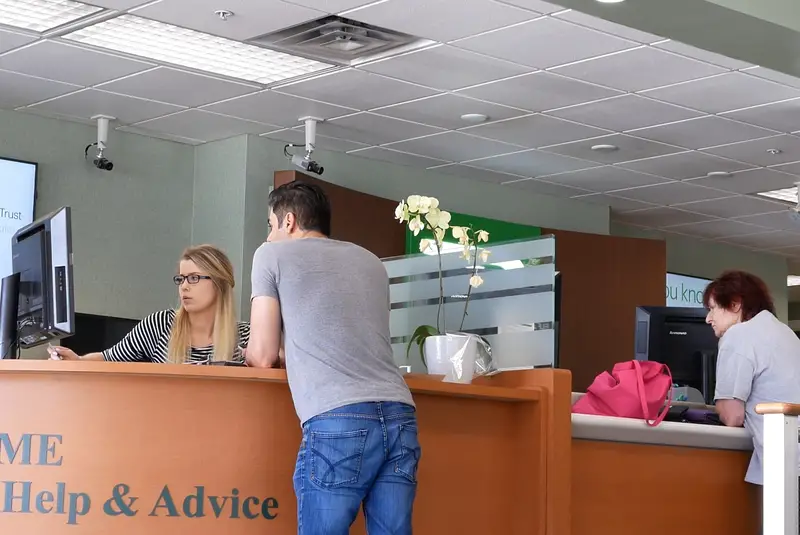
You walk into your bank, make small talk with the teller, deposit your paycheck, and leave. Simple enough, right? But behind that friendly smile and the bulletproof glass, there’s a whole world of banking weirdness you never see. From secret shoppers watching your teller’s every move to overdraft fees that would make a loan shark blush, the banking industry runs on things they’d rather you not think too hard about.
I spent way too long reading confessions from former and current bank tellers, and honestly? Some of this stuff made my jaw drop. Here’s what they want you to know — but can’t say while they’re on the clock.
Your Teller Is Being Secretly Graded While Helping You
Ever wonder why the teller suddenly asks if you’ve thought about opening a savings account or applying for a new card? It’s not because they’re genuinely curious about your financial goals. Many banks hire mystery customers — basically secret shoppers — who pose as regular people and grade tellers on everything from their greeting to whether they tried to sell you something.
These evaluations aren’t just for show. Tellers’ jobs literally depend on them. Some banks require employees to hit a certain number of referrals every single day. And if that isn’t stressful enough, some locations post each employee’s sales numbers where everyone on staff can see them. Imagine your boss taping your performance review to the break room wall. That’s the vibe.
So the next time your teller seems a little too enthusiastic about a new product, don’t be annoyed. They might be trying to keep their job while someone with a clipboard is pretending to fill out a deposit slip three feet away.
They Can See Way More Than Your Balance
When you step up to the counter and hand over your ID, the teller pulls up your account. And they can see a lot. Your current balance, your recent transactions, sometimes even your credit score — it’s all right there on their screen. Every purchase at Target, every late-night DoorDash order, every transfer you made at 2 a.m. They’re not judging you (probably), but they could if they wanted to.
This is also why tellers get a little twitchy when you walk up to their window uninvited while they’re helping someone else. They might have another customer’s full financial life displayed on their monitor. It’s not rudeness — it’s privacy protection. If they say “I’ll be with you in a moment,” they mean it.
Your Deposit Doesn’t Actually Exist Yet (According to the Bank)
Here’s one that burns people all the time. You deposit a check on Monday. You see it in your account. You think the money is there. You spend it. Then boom — overdraft fee. What happened?
Even though technology exists to process checks almost instantly, many banks deliberately take up to three full days to actually post your deposit. Federal law says banks have to make funds available in a “reasonable” amount of time, but “reasonable” can mean two days — or longer if the deposit is over $5,000, or if you used a third-party ATM or mobile app.
During that limbo period, if any payments come through and your account doesn’t have enough to cover them, the bank collects around $30 per bounced item. Some banks charge up to $35 per occurrence, and you can get hit with multiple overdraft fees in a single day. One former banker personally witnessed a customer rack up over $600 in overdraft fees on what started as a $20 shortfall. Six hundred dollars. On twenty bucks.
Overdraft “Protection” Is a Trick With a Nice Name
Banks market overdraft protection like they’re doing you a favor. “Don’t worry, your transaction will still go through!” Sounds great until you realize each time it kicks in, you’re paying a massive fee. Dave Ramsey has called maintenance fees some of the sneakiest charges in banking — you agree to them when you open the account and might not notice until they show up on your statement months later.
One former teller described working at U.S. Bank where a customer’s ATM automatically dispensed $20 in cash even though it would overdraft him. The machine didn’t show his balance until after the money came out. Think about that for a second. The ATM knew he didn’t have the money. It gave it to him anyway. Then it charged him for the privilege.
Some banks have started backing off. Discover eliminated insufficient funds fees, and Bank of America reduced theirs in 2022. But plenty of banks are still playing the same game.
Your Debit Card Gives You Way Less Protection Than You Think
If your credit card gets stolen, you’re generally covered. You report the fraud, the charges get reversed, and you move on with your life. You usually have around 60 days to report it.
Debit cards? Totally different story. If you report a lost or stolen debit card more than two business days after you notice it’s gone, you could be on the hook for up to $500 in unauthorized transactions, according to the FDIC. And since a debit card pulls directly from your checking account, that’s real money — your money — gone. With a credit card, the fraudster is spending the bank’s money, which gives the bank a much stronger motivation to fight the charges.
Banks actually prefer you use your debit card because those transactions are cheaper for them to process. But for you, it’s a worse deal almost every time. Something to keep in mind the next time the cashier asks “debit or credit.”
If You Call Instead of Clicking, You’ll Probably Get Your Fees Waived
Here’s a secret that could literally save you money today. If you fill out an online complaint form or submit a request through your banking app, you’ll likely get a by-the-book response. Denied. Policy is policy. Sorry, not sorry.
But if you pick up the phone and call — or better yet, walk into a branch — representatives often have the power to forgive fees at their discretion. It depends on the situation and your history, but a polite phone call goes a long way. One teller confirmed that reps are empowered to waive charges if the circumstances make sense.
The catch? If you abuse this — calling every month to get another fee reversed — you’ll eventually get blacklisted. Banks keep track. But for the occasional honest mistake, a five-minute phone call beats eating a $35 charge every time.
The Bank Is Making a Fortune Off Your Idle Money
Your basic checking account probably pays you 0.01 percent interest. Maybe nothing at all. Meanwhile, the bank is taking your deposited money and lending it out at rates between 5 and 20 percent for credit cards and personal products. That gap between what they pay you and what they charge borrowers is how banks make billions in profit every year.
Banks actually love customers who keep big balances sitting in low-interest accounts. The more money you leave idle, the more they make off it. And those complicated minimum balance requirements? They’re designed to make you keep extra cash parked in your account as a buffer. A $25 monthly fee that gets waived if you maintain $5,000? That’s the bank making sure your five grand stays where they can use it.
They Already Decided You’re Not Getting That Business Account
If you’ve ever walked into a bank excited about funding your dream restaurant or side hustle, here’s something that might sting: the loan officer might have already decided before you sat down that you weren’t getting approved. But they’ll let you apply anyway. Why? Because collecting applications is part of the process, and nobody wants to be the person who turns you away at the door.
Also, closing an account isn’t as easy as pulling your money out. Some banks require in-person visits, specific forms, or even a closing fee. And if you have automatic payments tied to that account, you’d better switch them first or you’ll get hit with more fees on your way out the door.
Your Smelly Money Is a Red Flag
One former teller who worked at a branch in Atlanta shared a story about counting a $1,500 deposit that smelled like “a pound of weed.” Tellers are trained to report anything suspicious to management. If your cash has a strong odor, that puts you on the bank’s radar immediately. The teller’s advice? If your money smells like anything other than money, use the ATM.
And while we’re at it — don’t bring your coins in a jug. Many banks require coins to be wrapped in rolls before they’ll accept them. Show up with a five-gallon water jug full of quarters and you’ll get turned away. Some banks will count coins for free if you have an account, but don’t count on it.
A Lot of Former Tellers Moved Their Money to Credit Unions
Maybe the most telling detail in all of this: multiple former bank employees said that after seeing how things work from the inside, they moved their own money to credit unions. Credit unions are nonprofits, so they tend to offer better rates on everything from savings accounts to auto purchases. They’re insured up to $250,000 under NCUA protection, same as FDIC coverage at banks.
One former teller put it simply: at a credit union, “they treat you like a person and not just a number.” When the people who’ve worked behind the counter choose to bank somewhere else entirely, that tells you everything you need to know.

