

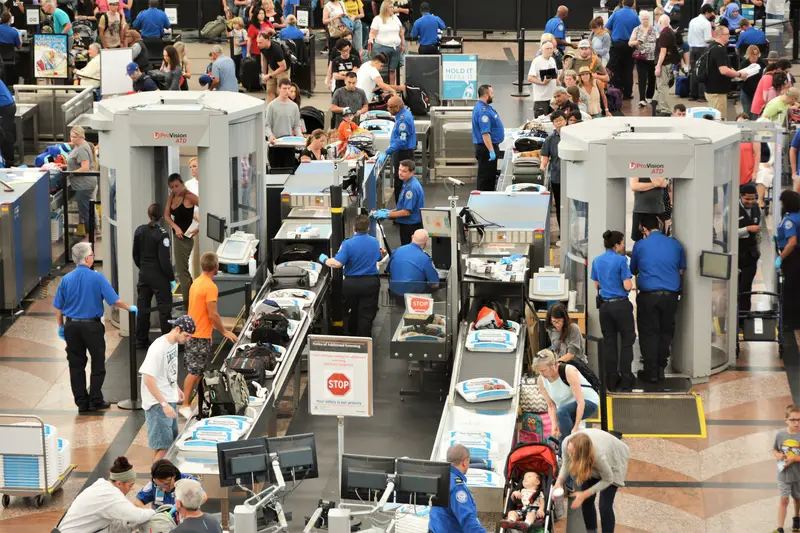
Carmen Rosa Solislerqux, a 55-year-old swimming instructor from Santo Domingo, was standing in line at Miami International Airport in March 2025 with three bags in her hands. She said one word too many. According to police, she told an airport employee that one of her bags had a bomb in it. Within minutes, the whole thing snowballed. K-9 units sniffed her luggage, found nothing, and by around 7:30 that evening she was in handcuffs. She spent the night in a correctional center and later told officials she was only joking. Florida did not care. A false bomb threat there is a second-degree felony.
That is the trap. People assume a dumb comment in a security line is harmless because they know they are not actually carrying anything. But the person hearing it does not know that. And the machine that kicks into gear afterward does not run on your intentions. It runs on your words.
One Sentence Is Genuinely All It Takes
You do not need a plan, a device, or even a straight face. Anton Radchenko, an international aviation lawyer who runs a company called AirAdvisor, says joking about bombs, guns, or terrorism at a checkpoint is a rookie mistake he sees over and over, usually from people who do not fly much. His words on the agents are blunt: they “take all this very seriously, and rightfully so.”
What surprises most travelers is that TSA officers are trained to treat every threat comment as real until it is proven fake. There is no mental filter where an agent decides you seem nice and lets it slide. Sarcasm, irony, a groan about the wait, a joke to your kid to make them laugh, all of it lands the same way. Once the words are out, the officer is required to act like you meant them.
“I Was Only Joking” Is Not a Defense
Here is what people get wrong. They think if they immediately explain themselves, the problem disappears. It does not. In December 2025, a 37-year-old man named Stanislav Zubko missed his flight at Fort Lauderdale-Hollywood International Airport and, according to a prosecutor, said he had a bomb. He told deputies he was “just joking.” He got charged with a false report of a bomb anyway, a second-degree felony, and a judge ordered him to stay away from the airport entirely and away from firearms and ammunition.
Zubko is not some rare weirdo. He is part of a whole string of South Florida cases where travelers said something stupid, immediately claimed it was a joke, and still got booked. The “it was a joke” line holds no legal weight. If anything, it confirms you said the thing. You have basically admitted the words came out of your mouth, which is the exact part that gets you charged.
A Teenager Learned This With Seven Words
In July 2025, a 16-year-old boy was flying home to Kansas City from Fort Lauderdale on a Spirit Airlines flight. As the plane got ready for takeoff, he allegedly said, “I have a bomb in my pocket.” Another passenger heard it and reported it. That was the whole event. Seven words, one complaint, done.
The response was not small. Spirit taxied the aircraft to a remote spot, deplaned everyone, and deputies took the teen into custody. His mom told reporters he was joking about his masculinity, not making a real bomb threat, and that he is a “good kid.” A judge ordered a psychological evaluation and held him in a juvenile facility on charges of criminal mischief over $1,000 and a false report of a bomb. Then passengers who had been sitting near him testified that no real threat was ever made, and six days after the arrest the judge sent him home. He still has a court date. And the emptied plane, the handcuffs and the nights in custody all happened first.
Sometimes It Is Not Even a Joke You Meant to Tell
This is the part that should scare regular people who would never crack a bomb joke on purpose. In January 2026, a man named Eulalio Orama was at Miami International standing at an American Airlines gate. He was annoyed because his carry-on had to be checked, since there was no overhead room left. A gate agent asked him a standard question about whether he had lithium batteries in his bag. He answered in Spanish with something like, “A bomb doesn’t fit inside the bag.”
To him, it was probably a frustrated shrug of a comment. To the gate agents and the travelers nearby, it was the word “bomb” at an airport. An investigator from the county’s homeland security bureau was pulled in, deputies detained him shortly before 2 p.m., and he was formally arrested twenty minutes later. He was booked and stood in front of a circuit judge the next morning on a felony charge. The lesson buried in his case is simple. You do not have to be trying to be funny. You just have to say the word in the wrong place at the wrong moment.
The Bill Can Reach Numbers That Do Not Feel Real
Money is where this stops being a story about awkward moments and starts being a story about your bank account. Back in 2014, a 60-year-old man at Miami International made a bomb joke that shut down parts of the airport for hours. He agreed to pay more than $89,000. Not a typo. That was the price of the delays, the searches, and the chaos his comment caused, and once he paid it prosecutors let the charges go.
The federal side is even heavier. In May 2025, a 40-year-old man named Brandon Scott was sentenced to 22 months in federal prison for handing a flight attendant a note that read in part, “There is a bomb on the plane. This is not a joke.” The plane got diverted to Spokane. No device was found, and he admitted what he did. The judge still gave him prison time, three years of supervised release, and ordered him to pay $79,449.47 in restitution to the airline and the airport. That number is what one diverted flight actually costs someone.
The TSA can also fine you on its own, separate from any criminal case. For a person, a security violation runs up to $17,062 a time, with a $100,000 ceiling on any single penalty action. The $1,200,000 figure you see quoted is the cap for airlines and companies, not for passengers. Neither is the everyday fine, but both tell you how seriously the system treats this.
You Can Get Punished Three Separate Ways for One Comment
Most people think of consequences as one thing. Get in trouble, deal with it, move on. Airport threats do not work like that, because different agencies run their own tracks and none of them cancel out the others.
One bad comment can hit you with a criminal charge in local or state court, a civil fine from the TSA, and the loss of your TSA PreCheck all at the same time. A first offense can suspend your PreCheck for up to five years. An egregious case or a repeat can get you permanently banned from PreCheck. The criminal case does not erase the civil case, the civil case does not erase the criminal one, and the PreCheck office handles its own decision entirely separately. You could beat the criminal charge and still be paying a fine and standing in the long line for the rest of your flying life.
Even Being Too Chatty Can Flag You
This one caught me off guard. TSA officers are not only listening for scary words. They are trained to watch behavioral patterns, and one of the patterns that raises an eyebrow is a passenger who talks too much. If you are chatting nonstop, an officer may read it as an attempt to distract them from doing their job. The friendly over-explainer and the person trying to slip something past both look busy with their mouths.
So the checkpoint is genuinely not the place to be the life of the party. It is not a personality test and nobody is grading you on charm. Follow directions, keep the small talk short, and save your material for the gate.
What Actually Smart Travelers Do
The fix costs you nothing. Stay calm, stay respectful, and treat the words “bomb,” “gun,” and “terrorism” as radioactive from the second you enter the airport until the second you leave. Radchenko points out that a lot of these rules have been around for years, yet people still trip over them because they think the warnings are for someone else. They are not.
Remember why the pattern keeps repeating. Nearly every person in these cases said the same magic phrase afterward, “I was only joking,” and every single one of them still ended up in a jail cell, a courtroom, or both. The joke is never worth the story you will be telling from a correctional center. If you feel the urge to be funny in a security line, the smartest thing you can do is swallow it and keep walking.

