

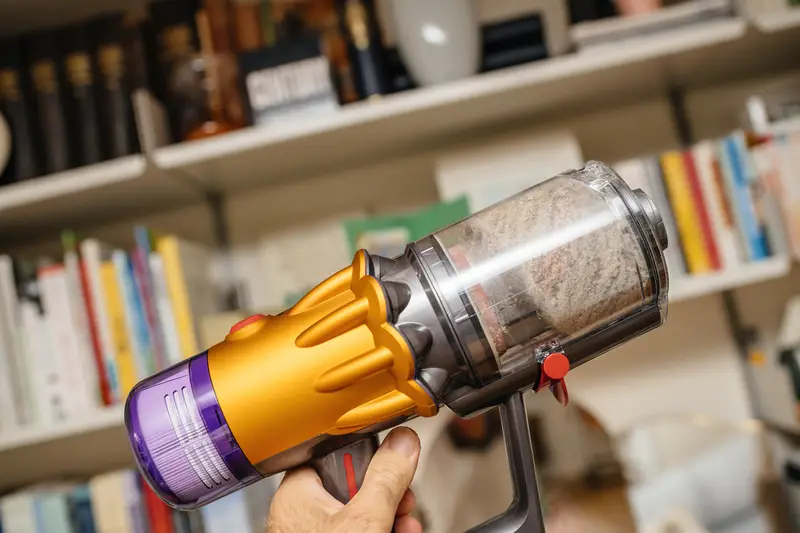
Consumer Reports pulled every Dyson stick vacuum off its recommended list back in 2019, and its 2026 stick vacuum picks still name no Dyson. Not a single model survived the cut. The outlet that millions of American shoppers treat like gospel looked hard at its own numbers and decided the flashiest vacuum brand in the country was no longer worth telling people to buy. For a company that sells cleaning power like it invented the concept, that is a gut punch.
The reason is plain and a little grim. They break. A survey of more than 51,000 owners found Dyson stick vacuums develop problems or quit at a higher rate than any other brand tracked. The estimate is that close to half of them fail or start acting up within five years of purchase, which is not what you expect from a machine that can cost as much as a used laptop.
This stings more because Dyson never played in the budget aisle. The brand built its reputation on being the expensive one that was worth it, the vacuum you saved up for. Paying $500 or more and then watching it clog, fade, or flat out die before your kid finishes elementary school is a hard thing to swallow.
A Vacuum Called the Best Ever Just Got Benched
In September 2016, Consumer Reports called the Dyson V8 Absolute “the best stick vacuum we’ve ever tested.” Read that line twice, because it comes from the same testers now waving you off. The V8 lost its crown. Five V-series models, priced anywhere from $300 to $700, lost their recommended badges and slid straight into the middle of the pack, sitting next to machines that cost a fraction of the price.
One number explains the whole fall. Dyson stick vacuums scored a 2 out of 10 for predicted reliability, which drops them into the Poor zone, the very bottom. Under Consumer Reports rules, any brand rated Fair or Poor for reliability cannot be recommended, no matter how well it cleans in the lab. All that famous suction counts for nothing if the thing is a paperweight by year three.
People Love These Right Up Until They Die
Owners are not miserable, which is the genuinely strange twist here. Dyson earned the highest mark for owner satisfaction, an Excellent, at the same moment it flunked reliability. People adore these machines. They brag about them to their neighbors and show them off like a new phone. Then the vacuum quits and the romance ends in a hurry.
The satisfaction score and the reliability score sitting side by side tell the real story. People are not lying when they say they love their Dyson. It cleans beautifully on day one and looks great in the closet. The catch is that owner satisfaction measures how you feel about the vacuum, not how long it will keep working, and those two things point in opposite directions here.
Set it next to Shark, which matches Dyson’s Excellent owner satisfaction and is the most reliable stick brand, in the same tests. About a quarter of Shark stick vacuums break inside five years. Dyson doubles that failure rate. So you pay premium money for a vacuum that dies twice as often as a cheaper competitor, and you get to enjoy every second of ownership right up until the day it goes dark.
The Battery Is Where It All Falls Apart
Ask a cordless Dyson owner what went wrong and you will usually hear one word: battery. A separate Consumer Reports reliability survey covering almost 136,000 vacuums found battery trouble is the top complaint for cordless sticks as a category. Eighteen percent of owners say battery life gets worse over time, 10 percent say the battery dies outright, and 8 percent say it was weak from the very first charge.
After the battery, the next headaches are hair wrapping around the brush, which hits 17 percent of owners, and dust and dirt clogging the machine, which hits another 15 percent. These are not rare, freak breakdowns. They are the ordinary way a cordless stick wears out, and Dyson’s are no more immune to it than the $150 model at Target. If anything, the data says they are worse.
Not every cordless brand shares the same weak spot. The same survey found Samsung cordless stick vacuums were less likely to develop battery issues, which put Samsung among the more reliable names in the category. So the trouble is not some law of physics that dooms all cordless vacuums. Dyson’s batteries just give out sooner than the competition’s.
Some Cheaper Replacement Batteries Caught Fire
The battery problem has a nastier edge. Because official Dyson replacement batteries are expensive, plenty of owners reach for cheaper packs on Amazon, and some of those have gone up in flames. Federal safety regulators warned consumers to immediately stop using ZAUTNKN.INC lithium-ion replacement packs sold for Dyson V6 vacuums after three confirmed fires and one report of smoke inhalation. The packs sold for $15 to $40, and they were never Dyson-authorized in the first place.
That was not a one-off fluke. Canadian regulators recalled a FirstPower battery pack sold for the same Dyson V6 line after six reported incidents, one of them a fire that caused property damage. A second Canadian recall in 2025 hit another third-party Dyson-compatible pack, the Powerextra, over six more fire reports. Dyson tells owners that only genuine parts keep the machine working as intended and the warranty valid, which corners owners into a rotten choice: pay Dyson’s steep prices or gamble on a knockoff.
The pattern points at the whole Dyson ecosystem, not just one bad seller. When a brand’s own parts cost enough that a healthy market of cheap substitutes springs up around it, those substitutes end up in millions of homes, and the failures follow. Owners doing the sensible, frugal thing are the ones who got burned.
Repairs Can Cost More Than a Whole New Vacuum
When a Dyson breaks after the warranty runs out, the bill can knock the wind out of you, and you will not know the number in advance. Dyson publishes no repair price list. Out-of-warranty work is quoted only after the machine has been inspected, so owners find out what it costs once they have already sent it in.
One V15 Detect owner in Canada wrote that they paid over $1,000, watched it die in under two years, and got a replacement. When the replacement developed the same defect, they said Dyson called it not a manufacturing defect and quoted $400 plus tax for a part that was out of stock. Those figures are Canadian dollars. Spend that and you are most of the way to buying a competitor’s entire machine.
The Customer Service Complaints Pile Up
Cleaning power is only half of owning any appliance. The other half is what happens when you need help, and the recent reviews here are rough reading. One buyer said the roller on a Dyson WashG1, the company’s $770 wet floor cleaner rather than a vacuum, locked up after just three months. Another paid over $300 for a V9 Motorbar and kept a wire coat hanger nearby to dig out clogged dog hair during every single vacuuming session.
The service complaints follow a pattern. One reviewer described going two months without a working vacuum while emails went unanswered. Another bought a Dyson robot vacuum in late December 2025; by late January it could not find its own charging dock, and returning it took a twenty-minute argument before Dyson issued a shipping label UPS would accept for the battery.
Cheaper Vacuums Now Do the Same Job
The old case for Dyson was that nothing else came close. That gap has closed. Dyson flagships now run $1,050 to $1,150, while rivals clean about as well for $200 to $600. Brands like Dreame, Roborock, Tineco, and Shark have caught up on performance, and on wet-dry mopping some of them arguably do more than Dyson for a lot less.
The Dreame R20 lists at $450 and has lately sold for a good deal less, with a 90-minute runtime that beats most of the Dyson line for hundreds of dollars less. The Roborock F25 Ultra, $600 down from $800, undercuts Dyson’s wet-cleaning models, the V15s Detect Submarine and V16 Piston Animal Submarine, by roughly $450. Dyson still leads on dense carpet with pets, but for most homes you are paying for the name stamped on the side.
The math is what changed, not Dyson’s engineering. Its suction, build quality, and dust-detection tech are still good. The problem is that a Dreame at a third of the price gets you most of the way there, and the extra several hundred dollars for the Dyson logo buys reliability that, by the numbers, is worse than what you would get spending less.
Great Reviews Do Not Mean a Great Buy
The Dyson saga is really a lesson about reviews. A vacuum can dominate a five-minute in-store demo or a glowing first-week write-up and still let you down a year later, when durability is what actually counts. Lab tests have flagged weak performers hiding behind decent specs, from a Mainstays bagless upright sold at Walmart that flopped on carpet to a Black+Decker Dustbuster whose exhaust was strong enough to push debris away on bare floors.
Robot vacuums fall into the same trap. Some owner reviews warn people away from certain Shark and Eureka robots not because they clean badly out of the box, but because they quit early, with LiDAR sensors, brushes, and suction motors failing after a few short months. Strong first impressions, short real lives. That is the exact reason the star rating on a Dyson should never be the thing that closes the sale. Watch how the brand holds up three years in, because right now, its stick vacuums simply do not.

