

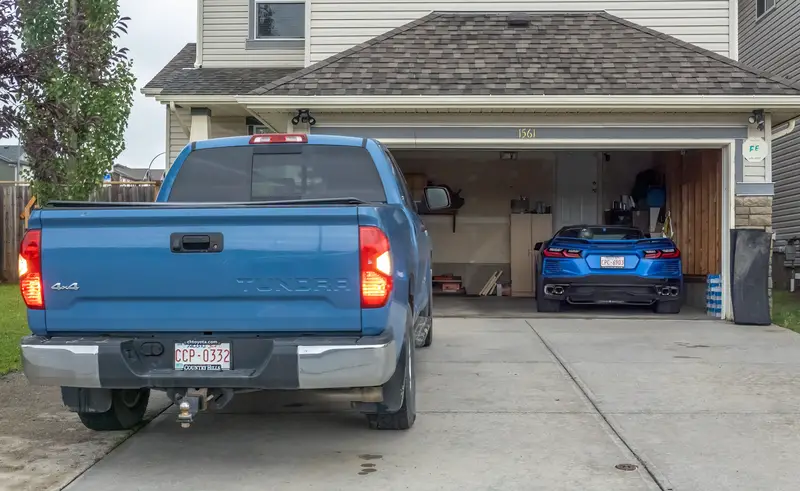
A single photo of your car sitting in your driveway can hand a stranger your home address, your license plate, your front door, and proof that you are not home. All in one frame. One picture does the job of four separate mistakes at once.
Look at what usually sneaks into the corners of these photos. The house number next to the door. The open garage. The bay window facing the street. A trash can with your address painted on the side. You meant to show off the new truck, but the camera grabbed the whole scene, and the whole scene is what someone with bad intentions actually wants.
The License Plate Is the Real Giveaway
Your plate looks like a random mix of letters and numbers. It works more like a key. The number is easy to read off a photo, and paired with a street sign or a recognizable landmark in the same post it narrows someone’s search fast.
There is a second scam that has nothing to do with break-ins. Plate cloning. Someone copies your tag, slaps a fake version on a car that looks like yours, and racks up tickets, toll charges, or worse in your name. The first you hear about it is a citation in the mail for a road you have never driven on. Documented cases mostly start with a stolen or resold plate rather than a photograph, but the tag number is the part that travels.
Here is the frustrating part. Photographing a plate in public is not illegal, and in most states neither is posting it, so a neighbor who puts your driveway online with your tag showing is doing nothing you can stop. But the federal Driver’s Privacy Protection Act bars state DMVs from releasing the name and address behind a registration except for a short list of approved purposes. The number on the metal is visible. The person it belongs to is meant to be protected. And once the image is online, strangers can save it and reuse it, and even a deleted post lives on in screenshots and cached copies you will never track down.
Your Phone Already Wrote Your Address Into the Photo
Even a driveway shot with no street sign and no plate can leak your location. Every smartphone photo carries hidden data called EXIF, and if location services are switched on for your camera, the phone stamps the exact GPS coordinates into the file the second you press the shutter. No visible geotag required. The map is baked in.
Most people have no idea this is happening. Researchers at Comparitech took publicly posted photos and worked backwards: the metadata gave them a starting point, and reverse image search and a bit of open-source digging filled in one subject’s employer, family, and four separate social accounts. The coordinates were the thread they pulled, not the whole answer.
Instagram and Facebook both strip GPS coordinates out of the public file when you upload, which helps a little. The catch is that stripping it from the public copy is not the same as never having it, because the platform still receives the original. And plenty of forums, text messages, and direct file shares do not strip anything at all, so a photo you send a buddy can carry your porch straight to whoever he forwards it to.
Burglars Really Do Scroll Before They Break In
The evidence people quote here is older than it looks. In 2011 the UK security firm Friedland surveyed 50 ex-burglars about how they thought thieves were picking targets. Around 78 percent named Facebook, Twitter and Foursquare. Around 74 percent named Google Street View, which lets someone check entry points, how close the neighbors sit, and whether there is an alarm or a camera to worry about. They were describing what they believed other people were doing, not confessing to their own jobs.
The math is simple for them. A driveway photo showing a nice car, paired with a vacation post, signals two things in one glance: there is something worth taking, and nobody is home to stop them.
Even the Rich and Famous Got Hit This Way
In 2024, a string of professional athletes had their homes burglarized, and the FBI took it seriously enough to warn sports leagues to keep pictures of valuables and real-time vacation posts offline. NBC News obtained the bulletin that December. The names on that list were not small: Travis Kelce, Patrick Mahomes, and Joe Burrow all got hit.
The FBI said organized theft groups from South America were using publicly available information and social media to learn athletes’ habits and track their comings and goings, and that homes were picked on the perception that they held designer bags, jewelry, watches and cash. These were people with real security systems and real money, and it still happened.
You do not need a stadium full of fans to be a target, though. That is the point everyone misses. A regular account with a couple hundred followers still shows a stranger your car, your neighborhood, and the week you flew to Florida. You do not have to be famous to be findable.
One Photo Can Rebuild Your Whole Life
Once something is posted, control of it is gone. It can be saved, reposted and scraped, and deleted content still sits in archives and on someone else’s phone. A reverse image search on your own pictures is a quick way to find out where they have already traveled.
The bigger risk is not one photo but the pile. Geotagged home shots give the address. Pictures of new gear show what is worth taking. A profile that looks harmless post by post reads very differently when someone reads all of it at once.
The Map You Never Meant to Draw
Constant location sharing does more than mark your house. It sketches your entire schedule. Post from the same gym, the same school pickup line, and the same driveway enough times and you have handed over a timetable of when you come and go, which is exactly what a stalker or a thief wants.
The scariest proof surfaced at the start of 2018, and it had nothing to do with homes. The Strava fitness app had published a global heatmap of user activity, and by late January an analyst had shown that all that innocent workout data traced the layout of overseas military bases and the routes soldiers ran, because they were logging their runs. The bases themselves were no secret. What the map added was which buildings got used and how people moved between them.
A driveway photo with GPS data attached does not just give up the house. It shows the make and model of your vehicles, whether a camera is watching the front, and the physical layout of the property, all of it useful to someone planning a way in.
What Actually Keeps Your House Boring to a Burglar
Most criminals want the path of least resistance. A home that looks occupied, watched, and uncertain gets skipped for the one that clearly sits empty. Your goal is to be the boring house nobody can figure out.
Wait until you are back home to post any vacation photos. It is the single best habit on this list, no matter how private your account is. A follower can screenshot your beach shot and share it in seconds.
Turn off location services for your camera app so your photos stop recording GPS coordinates in the first place. Blur any plate before you post a car photo, and crop out house numbers, street signs, and door locks. Make personal accounts private, cut followers you do not actually know, and run a quick privacy check every few months, because platforms love to reset new features to public.
Offline moves matter just as much. Ask a neighbor to grab your mail and packages and to park in your driveway now and then while you are gone. Put a few lights on timers so the place looks lived in. And if there are teenagers in the house, loop them in, because their posts count too. The whole family shares one address.

