

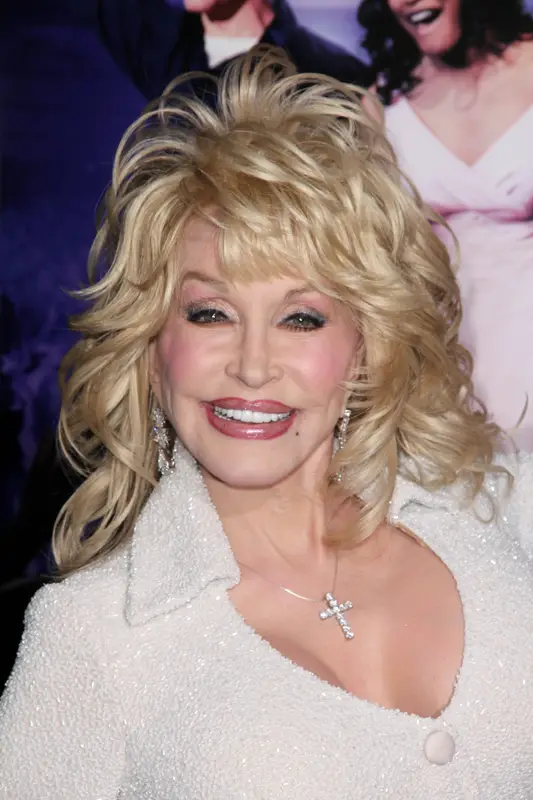
For most of the last year of her life, Dolly Parton stayed put. Her doctors pulled her off the road. She scrapped a Las Vegas run. When a new ride opened at her own theme park 11 days before she died, she taped a video from her house in Nashville instead of showing up, laughing that her Nashville doctor had clipped her wings and told her she wasn’t traveling that week. So she wasn’t flying anywhere. Except once. About a year before her death, a private jet took Parton to Frankfurt, Germany, where she spent roughly a week getting an experimental cancer treatment that almost nobody knew about.
One Week in Frankfurt, One Private Jet, Zero Announcements
The account of the trip comes from people familiar with the situation who spoke to TMZ, which reported it on September 22, 2026, roughly four weeks after she died. Those sources were not named. They said Parton privately fought cancer during the final year of her life and looked for treatment overseas.
She flew to Frankfurt by private jet, stayed about a week, and came home. What the procedure actually involved is not clear. Neither is the type of cancer she had. Those two blanks have never been filled in publicly, and that appears to be exactly how she wanted it.
What her circle did say is that she thought it worked. Parton believed the treatment gave her strength back and felt it had been effective. She was 79 years old at the time, flying across an ocean for something she wasn’t telling the public about, and then going back to work.
The Whole Time She Was Blaming Dizziness, It Was Cancer
Fans spent months piecing together a very different story, because that’s the only story they were given. Parton talked about kidney trouble and autoimmune trouble. She canceled six Las Vegas performances at Caesars Palace and explained that her immune system and digestive system had gotten all out of whack over the past couple of years. She talked about getting dizzy and dehydrated.
The Dollywood video is the one everybody remembers. She told fans she’d had a few little health issues, that she got a little dizzy, that she was dehydrated, and that her doctor had grounded her. The joke people quote back came three months earlier, in the May video canceling Vegas: hauling banjos and guitars around on five-inch heels, in heavy rhinestone outfits, with big hair and what she called her big personality. Anybody, she said, would get swimmy-headed.
The word cancer never came up while she was alive. Her representatives confirmed the diagnosis only in the statement announcing her death, and even then they never said what kind it was or when she found out. Her publicist, Marcel Pariseau, gave the cause as a brief battle with cancer, according to NPR, citing the Associated Press.
Four Days Between the Hospital and the End
Parton was admitted to Vanderbilt-Ingram Cancer Center in Nashville on Friday, August 21, 2026. She died there on Tuesday, August 25, at 80. Four days. That’s the entire window.
On the same Friday she went into the hospital, she gave an interview to People in which she said she was dealing with some health issues. That was the last thing most of the country heard from her directly.
When word got out that she’d been hospitalized and wasn’t doing well, people close to her started rushing to Nashville. Her inner circle knew she had been sick. They did not expect this. Her death landed on them as a sudden shock, which tells you something about how convincingly she’d sold the idea that she was getting better.
She Cast the Person Who Would Announce Her Death
The news didn’t come from a publicist or a press release. It came from her nephew, Bryan Seaver, in a video posted to social media. Seaver has been her head of security for more than two decades, a job his father, Larry, held before him.
He opened by explaining that the video was something Parton had asked him to do years earlier, before he fully absorbed it as a future reality. She planned her own death announcement, picked the person, and left him to live with it. In the video Seaver, a son of Parton’s sister Cassie, said he was representing the Parton and Owens family, announcing the passing of his aunt, Dolly Rebecca Parton Dean.
Then he shared the detail that stuck with people. Parton had called him and said she wanted to rest in a beautiful bed of plush cotton, because after a life of wearing heavy rhinestones, she finally deserved to be comfortable and get some rest. She was making arrangements down to the fabric.
Her Husband Died First, and She Put Herself Second
Carl Dean, her husband of 58 years, died in March 2025 at 82. They were together even longer than they were married. In a statement at the time, she said words couldn’t do justice to the love they shared for over 60 years.
In her final interview she talked about how rough the stretch after his death had been, and said she had let some of her own health problems slide while she was taking care of him. The timeline lines up uncomfortably well. Dean died in March 2025. The Frankfurt flight happened roughly a year before her August 2026 death. The woman the whole world thought was indestructible was quietly dealing with both things at once.
There’s a Song Locked in a Wooden Box Nobody Can Open Until 2046
Germany was not the only secret she was sitting on. Back in 2015, Parton recorded a track called “My Place in History” and had it sealed inside a chestnut box at the DreamMore Resort at Dollywood in Pigeon Forge, Tennessee, with instructions that it stay shut until January 19, 2046, which would have been her 100th birthday.
The recording is on both a CD and a cassette, and she stuck a player for each in the box. That is a woman thinking about format obsolescence three decades ahead of schedule.
Her longtime manager, Danny Nozell, said after her death that Parton had handpicked a creative team and built out a plan for her legacy, and that she kept working up until the day she died. More unreleased music, books, products and campaigns are set to come out through her official channels. The box in Pigeon Forge is just the one with a date on it.
A Private Funeral, Then a Very Public Goodbye
Her family held a private ceremony, and Parton was laid to rest at Woodlawn Memorial Park and Mausoleum in Nashville. Immediate family only. Her manager said a traditional memorial was not something she wanted. For someone who spent 60 years on stage, the exit was small on purpose.
Everything since has been loud. Nashville’s airport is on its way to being renamed for her, after the airport authority board voted 6-0 on September 11 to start the process. The FAA still has to sign off. She accepted the Americana Music Association’s Lifetime Achievement Award posthumously on September 16, through a speech she’d recorded in advance. Reba McEntire and Sally Field paid tribute to her during the 2026 Emmys. Her sister Stella has publicly pushed back on the AI fakes and misinformation circulating since the death.
Parton also stayed home from the Motion Picture Academy’s Governors Awards in November 2025, accepting the Jean Hersholt Humanitarian Award by video instead. She had postponed the Caesars Palace residency by then, and canceled it outright the following May. Every one of those cancellations reads differently now.
Ten Grammys, Seven Decades, and a Breakup Song for Her Boss
Parton won 10 competitive Grammys, plus the Recording Academy’s Lifetime Achievement Award, across a performing career that ran seven decades. She grew up as one of 12 kids in the Smoky Mountains of East Tennessee, in a house that at one point had no electricity, and she headed for Nashville as soon as she graduated high school in 1964.
The look got attention and she knew it. She said flat out that she was smart enough to maneuver and make that work for her. But she always insisted the writing was the real engine, the thing she took more seriously than anything else in the business, and the reason she got out of the mountains at all.
Here’s the fact that still surprises people. “I Will Always Love You” was not a romance. She wrote it as a goodbye to Porter Wagoner, the TV host who had hired her as his duet partner, when she left in 1974 to go solo. Whitney Houston’s version from the 1992 movie “The Bodyguard” turned it into a standard. Her first solo No. 1, which topped the country chart in February 1971, was a song she wrote herself called “Joshua.”
What the Frankfurt Trip Actually Tells Us
Parton controlled her own story for six decades, and she controlled the last chapter too. She got on a jet, crossed an ocean, spent a week doing something she never described to anyone outside a tiny group, came home, and went right back to telling fans she was a little dehydrated.
Nothing about the treatment itself has been confirmed by her family or her representatives, and the people describing the trip aren’t named. What is known is the shape of it: a private flight to Frankfurt, about seven days there, and a belief on her part that it had helped.
She kept the diagnosis quiet, kept working, planned her own announcement, wrote a song for people who won’t be born for years, and left a CD player in the box so it would still play. Whatever happened in Germany, it was hers, and she never handed it over.

