

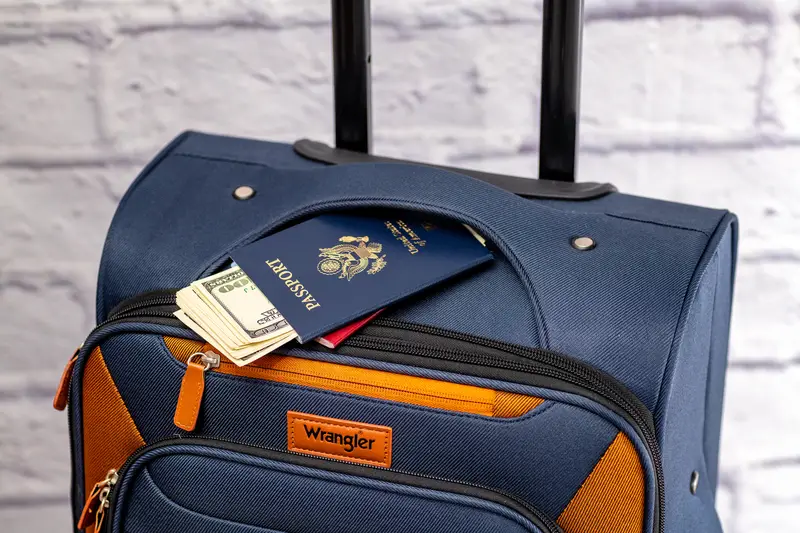
You’d think the safest move with your passport is to zip it into your carry-on bag, slide it into one of those snug little inner pockets, and forget about it until you land. That feels responsible. It feels organized. And according to the people who actually study this stuff, it could be one of the worst decisions you make on the whole trip.
Here’s a number that should make you sit up. The U.S. State Department says more than 300,000 American passports are lost or stolen every single year. That’s a packed football stadium’s worth of people standing in embassy lines, missing flights, and digging through their bags in a cold panic. A lot of them did everything they thought was right. So let’s talk about the one spot you should never use, and a bunch of other surprising stuff nobody tells you before you fly.
The Carry-On Trap Nobody Warns You About
Dan Bubb is a former airline pilot and a professor at the University of Nevada, so he’s seen the chaos from both the cockpit and the classroom. His warning is blunt: tucking your passport into a secure pocket of your carry-on suitcase “could be a major mistake.”
Why? Gate-checking. You know the drill. The overhead bins fill up, the gate agent grabs the microphone, and suddenly your roller bag is getting a yellow tag and disappearing down the jet bridge. With everybody trying to dodge checked-bag fees, this happens more and more. Now picture this scenario going wrong. You land in another country, your passport is still zipped inside that bag, and the bag is somewhere in the belly of the plane. You hit immigration before you ever see your luggage again. No passport means you could get denied entry or hit with a fine.
The cruel twist is that the carry-on feels secure. That’s exactly why it’s dangerous. It lulls you into a false sense of safety. Bubb does note one small mercy: if you accidentally gate-check your passport flying home into the U.S., border patrol will usually work with you. Going the other direction, though, you’re on your own.
Your Back Pocket Is a Pickpocket’s Favorite Place
The carry-on isn’t the only spot that gets people in trouble. The back pocket of your jeans is basically a welcome sign for pickpockets, especially in crowded train stations, busy markets, and packed airports. It’s the easiest target there is, and you won’t feel a thing.
The outer pocket of a backpack is just as bad. Those zippers are often half open or barely secured, and if you’re wearing the bag on your back, you can’t even see what’s happening behind you. Then there’s the move people make without thinking: tossing a jacket with the passport in the pocket onto a chair or up in the bin. One minute of distraction and you’ve separated yourself from the most important document you own. Even your personal bag under the seat in front of you can be a mistake if the cabin gets evacuated and you have to bolt without it. The rule the experts keep coming back to is simple. Your passport belongs on your body, not in any bag.
The First Places Hotel Thieves Actually Check
Now let’s say you make it to the hotel and decide to leave the passport in your room. Good news and bad news. The bad news is that hotel thieves are not poking around randomly. They know the layout of a hotel room before they ever walk in, because most rooms are nearly identical.
A security expert and the team at Goodstone laid out the first spots they hit. Bathroom drawers and bedside tables top the list, because those are “universally familiar spots,” as they put it. Next come zipped suitcase pockets, which a thief can check within seconds of entering. Same goes for the front pocket of a backpack. These are the obvious, logical hiding places, which is precisely why they’re the worst ones.
The smartest trick from the security pros is something most travelers never think to do: spread your valuables out. Put your cash in one place, your passport in another, your spare card somewhere else. If a thief finds one stash, you don’t lose everything. They also like hidden pockets inside packing cubes and clothing organizers, since those sit buried in folded laundry and look like nothing worth grabbing. A thief wants in and out fast. The more boring your stuff looks, the safer it is.
So Should You Trust the Hotel Safe or Not?
This is where I expected the answer to be “never use it,” and I was wrong. The hotel safe gets a worse reputation than it deserves. A 2016 study of hotel room burglaries in tourist-heavy Miami-Dade found an average of only about 20 hotel room burglaries a year, with no real evidence of safes being the target. One travel publication went hunting for actual victims of hotel safe theft and basically couldn’t find any. The risk turns out to be pretty low.
There’s a catch, though. Some hotel safes use a default master code that’s basically public knowledge. A popular YouTube locksmith who goes by LockPickingLawyer has shown how certain Saflok models can pop open even when you’ve set your own code. So it’s not bulletproof. If that makes you nervous, you’ve got options that sound almost too simple to work. Slide the passport under the dead center of the mattress, where a quick search won’t reach. Some folks tuck it into the pages of the bedside Bible. And here’s my favorite low-tech move: hang the “do not disturb” sign on your door when you leave. People who see it assume you’re inside resting and steer clear. The takeaway is that no spot is perfect, but the in-room safe is still a solid default for most people.
Your Passport Might Be For Sale Right Now
Here’s the part that genuinely creeped me out. Losing the physical booklet is only half the danger. Researchers from NordVPN and Saily dug through dark web marketplaces in June 2025 and found a busy trade in stolen travel documents. A scanned passport can go for as little as $10, and up to around $200. A verified EU passport? Over $5,000. Hacked airline accounts loaded with miles and even Booking.com reservations get resold for hundreds of dollars apiece.
Why are passport scans so valuable? Because tons of online services only ask for a passport photo and a selfie to verify your identity, and criminals can fake the selfie with deepfake tech. In August 2025, Italian authorities found a hacker called “mydocs” selling 90,600 high-resolution scans of passports and ID cards, all pulled from the computer systems of 10 hotels. Think about that. You did nothing wrong. You just checked in, handed over your passport at the front desk like everyone does, and your data ended up for sale. With a stolen passport, criminals can open fake bank accounts, apply for loans, cross borders, and hide criminal records.
The Chip Inside Your Passport You Forgot About
Flip open a modern U.S. passport and there’s a tiny RFID chip baked into it, holding the same info as your photo page. That’s why RFID-blocking gear has gone from paranoid-traveler stuff to genuinely useful. A neck wallet worn under your shirt keeps the passport out of sight and out of reach, and the good ones are made of ripstop fabric with an RFID-blocking weave. A money belt does the same job with a slim band around your waist that nobody can spot under your clothes.
Don’t want to buy anything? There’s a cheap hack that actually works. Wrap your passport and cards in a layer of aluminum foil. The metal blocks the chip from being read by a skimmer in a crowd. It looks ridiculous, but it does the trick when you’re walking through a packed plaza.
The Stuff Worth Doing Before You Leave
A few smart habits cost you nothing. Scan your passport and stash the file somewhere encrypted and secure, so you’ve got a backup if the real one walks off. Sign up for the State Department’s free Smart Traveler Enrollment Program, called STEP, which sends you safety updates and helps officials reach you in an emergency. Check whether your destination needs your passport valid for at least six months past your travel dates, because plenty of countries do.
Two more things. If you’re traveling as a family, never let one person carry everybody’s passports. Spread them out so a single theft doesn’t strand the whole crew. And watch out for fake officials. If someone dressed like a police officer suddenly pressures you to hand over your passport, that’s a classic scam in some tourist spots. The whole point here is that the smartest-feeling spot is usually the riskiest one. Keep it on your body, spread your valuables around, and stop trusting that cozy little carry-on pocket.

