

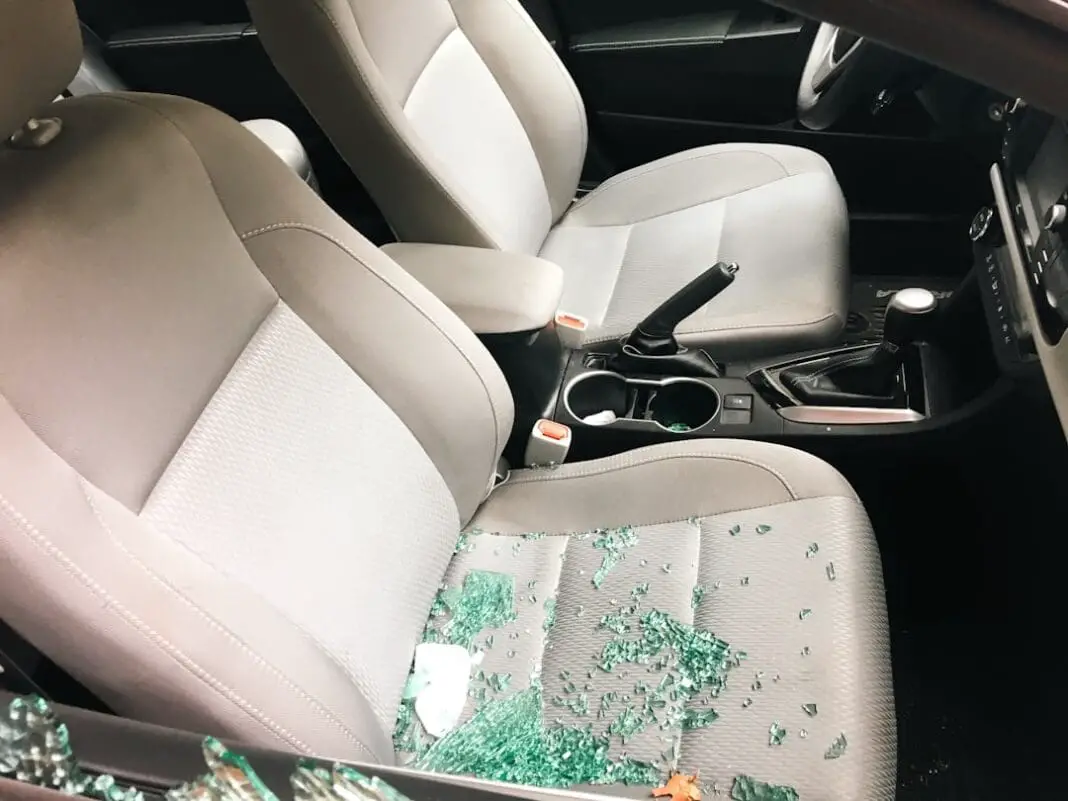
I used to think car theft meant a busted window and some sketchy guy yanking wires under the steering column. That is the movie version. The real thing in 2026 is quieter, faster, and honestly kind of creepy. A whole crew can pull up to your driveway, walk off with your car in less time than it takes to microwave a burrito, and leave behind exactly nothing. No broken glass. No blaring alarm. No clue. Just an empty parking spot and a very confused you, standing there at 7 a.m. wondering if you forgot where you parked.
The wild part is how ordinary the tools are. We are not talking about hacker geniuses in hoodies. We are talking about a small gadget that mechanics use every single day. Let me walk you through what is actually happening, because once you understand it, you will never look at your dashboard the same way again.
It Really Does Happen in Under a Minute
In April 2026, federal prosecutors in Washington, D.C. handed down a 15-count indictment against a group of men accused of running a slick, multi-state car theft ring. These guys were not smashing windows. They used a small device, often called an Autel, that plugs into a port under your dashboard. Once it is connected, it talks to your car’s computer, rewrites the code, and creates a brand new key fob right there on the spot. Then they just drive away like they own the thing.
The whole process takes under 60 seconds. That is not a rounded-up estimate to sound scary. That is the actual number. U.S. Attorney Jeanine Pirro put it bluntly: they do not need keys, and they do not need to hot-wire anything. In under a minute, the car’s brain is rewritten, and the car is gone. The crews she described were hitting streets in D.C., Maryland, and Pennsylvania in the dead of night, grabbing cars and vanishing before anyone woke up.
The Part That Has Cops Scratching Their Heads
Here is what makes this so frustrating for police. Normal car theft leaves clues. Broken glass on the pavement. A torn-up steering column. A tripped alarm that woke up the neighbors. Detectives can work with that. They can dust for prints, pull a timeline, figure out the angle of attack.
This method leaves none of that. According to the federal press conference, there is no smashed window, no forced ignition, no drama at all. The car is simply not there anymore. Investigators arrive at the scene and have basically nothing physical to go on. Owners often cannot even prove how it happened, which makes the whole thing a nightmare for insurance claims and police reports alike. When there is no evidence at the scene, piecing together who did it and how becomes a slow, painful guessing game.
And these are not crimes of opportunity by some random person. Law enforcement says this reflects a bigger shift. As carmakers got better at stopping old-school theft, organized crews moved to electronic weak spots instead. The smarter the car, the bigger the target.
They Shipped Stolen Cars Overseas Labeled as Furniture
This is the detail that genuinely floored me. The D.C. ring was not just selling stolen cars to buyers down the road. Some of those cars were being loaded into shipping containers and sent across the ocean. Where to? Ghana, in West Africa, where they fetched top dollar on the black market.
And to dodge inspection at the ports, the crews allegedly labeled the containers as furniture instead of cars, because furniture gets way less scrutiny. They used a garage in the Navy Yard neighborhood as a holding pen before shipping. Investigators connected the operation to more than 100 stolen vehicles in D.C. alone, plus more than 30 in Prince George’s County, Maryland.
Think about what that means if it is your car. Once it is in a container halfway to another continent, your odds of ever seeing it again are close to zero. It is not sitting in a chop shop a few towns over. It is gone, gone. That international angle is exactly why the feds got involved instead of leaving it to local cops.
Teenagers Are Pulling This Off Now
If you assumed this was strictly the work of seasoned pros, I have bad news. Out in Minneapolis, police say the same key-programming technology is showing up in the hands of teenagers. A local locksmith who uses these devices for legit work told reporters he has watched, over the last couple of years, more and more teen thieves pick up the exact same tools he uses professionally.
The numbers in Minneapolis are rough. By May 2026, more than 2,000 vehicles had been stolen in the city, reversing two years of steady declines. Police data also showed a 43% jump, year over year, in cars stolen without using the actual keys. A locksmith demonstrated the trick on camera: he calibrated a blank fob for a specific car brand, plugged a tablet into the target car, let it download the data, and the new fob unlocked and started the car just like the one from the dealership. The whole thing took a few minutes.
One small comfort buried in the Minneapolis reporting: the locksmith said it is rare for the method to work on the very newest models. It works best on a wide range of older vehicles. So your three-year-old sedan might be more at risk than next year’s model. Funny how that flips the usual logic on its head.
The Cars Thieves Want the Most
You might picture thieves only chasing flashy sports cars. They do love those. Corvettes and Camaros were on the D.C. crew’s shopping list. But the same ring also grabbed Honda Civics, one of the most common cars in America. That mix tells you everything: high-end performance cars and plain everyday commuters are both fair game.
The bigger 2026 theft national figures back this up. The Hyundai Sonata saw 26,720 thefts. The Chevy Silverado pickup, 21,666. The Honda Accord, 17,797. Pickups and ultra-common sedans top the list because they are everywhere, which means huge demand for both whole cars and parts. Dodge Chargers and Challengers get hit hard too, thanks to pricey performance parts and electronic weak spots. GM trucks, Toyota and Lexus SUVs, and BMWs round out the favorite targets.
The lesson here is not to feel safe because you drive something boring. Boring is popular, and popular is exactly what crews want. A Civic in your driveway is not too humble to steal.
The Device Is Legal and Costs About Fifty Bucks
This is the part that drives me a little nuts. The tools doing all this damage are completely legal to own. Mechanics, dealership techs, and locksmiths use them for honest work every day. That means a thief can buy one on Amazon or eBay without raising a single eyebrow, and the cheapest versions go for as little as fifty dollars. Fifty bucks to potentially drive off in a car worth tens of thousands. The math is grim.
And the scale of it is bigger than most people realize. Police in Victoria, Australia, which is dealing with the same plague, seized 800 key-cloning devices from car thieves in 2025 alone. They also reported that more than a quarter of all stolen cars there last year were taken using these OBD or key-cloning tools. When one country is pulling 800 of these gadgets off the street in a single year, you know this is not a rare, fringe trick. It is the new normal.
How to Make Your Car a Royal Pain to Steal
Okay, enough doom. Here is the good news. You cannot make your car theft-proof, but you can make it annoying enough that thieves move on to an easier target. These crews work on speed. Anything that costs them time is a win for you.
Start with an OBD port lock. That little port under your dash is the doorway for this whole attack, so blocking it shuts the door. The top-rated 2026 model uses rotating proprietary screw heads that get changed every 200 units, which makes it brutally hard to crack. Sneakier owners even relocate the port using an extension cable and leave a dead dummy port in the original spot, so a thief wastes precious seconds plugging into nothing.
Next, look into a hidden kill switch or what is called a ghost immobilizer. The kill switch is a cheap, high-impact move. A ghost immobilizer makes you do a secret sequence before the car will start, like tapping the volume button or flicking the high beams in a certain order. A thief cannot guess your custom code, so the engine just sits there dead.
Then add the basics. A Faraday pouch for your key fob blocks the wireless signal that relay thieves try to grab. A steering wheel lock looks old-fashioned, but that visible chunk of metal tells a thief your car is more trouble than the one next door. A GPS tracker will not stop the theft, but it gives police a real shot at recovery. Stack a couple of these together and you have got layered protection that most casual crews will not bother fighting through.
The honest truth is that car security has turned into a quiet arms race. Carmakers patch one hole, thieves find another, and the rest of us are stuck buying steering wheel locks like it is 1994. But knowing how this method actually works puts you way ahead of the average owner who still thinks a car alarm is enough. Spend a little now, or risk staring at an empty driveway later. I know which one I would pick.

