

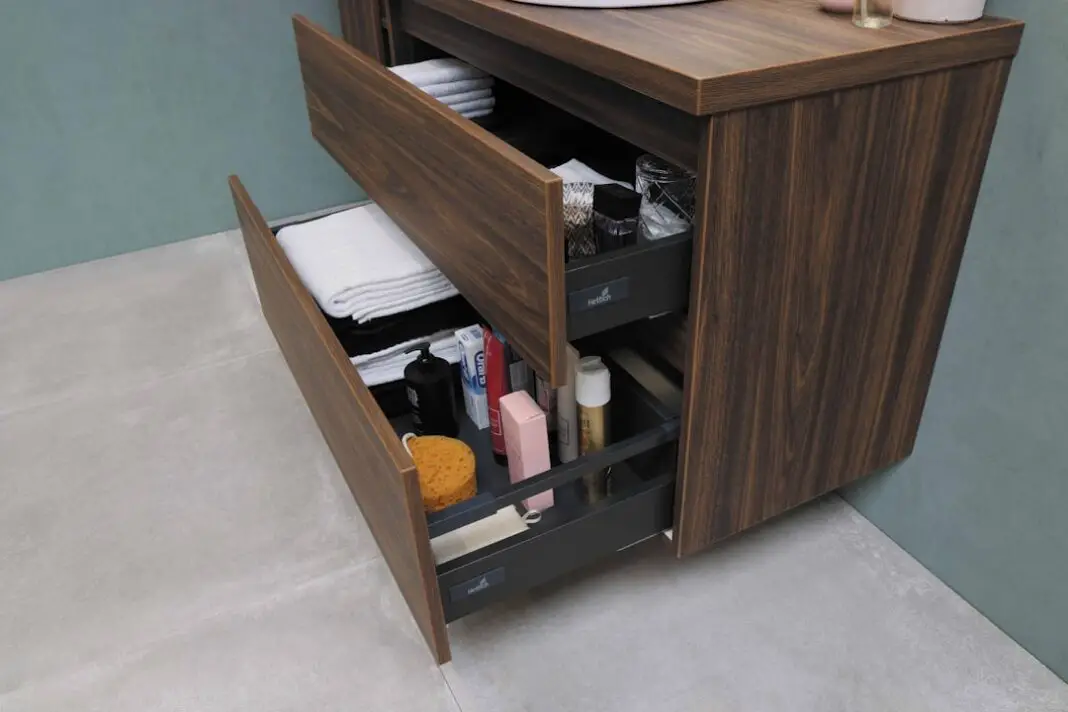
Let me ask you something. Where do you keep your pills? Your nail polish? Your nice jewelry? If you answered “the bathroom,” you’re in good company. Almost everyone does it. And almost everyone is slowly ruining their stuff without realizing it.
Here’s the thing about bathrooms that nobody really thinks about: they’re basically steam rooms. Every time you take a hot shower, humidity levels can spike to 80 or even 100 percent. Temperatures can jump 20 to 30 degrees Fahrenheit in just a few minutes. Then everything cools back down, and the cycle repeats. That constant back and forth is brutal on a surprising number of things we all casually toss into our bathroom cabinets.
I went down a rabbit hole on this topic, and honestly, some of what I found made me feel a little foolish. I’ve been storing things wrong for years. You probably have too. Let’s get into it.
The Irony of the “Medicine Cabinet”
Whoever decided to call that little mirrored box above the sink a “medicine cabinet” did the world a real disservice. Because according to pharmacy experts, the bathroom is one of the worst places in your entire house to store medicine. Think about it. Most drugs need to be stored between 59 and 86 degrees Fahrenheit, in a cool, dry environment. Your bathroom after a ten-minute shower is neither cool nor dry.
Tablets absorb moisture through a process called hydrolysis, which breaks down the active ingredients. Capsules get sticky or turn brittle. Powders clump up. And the kicker? You usually can’t tell by looking at a pill that anything has gone wrong. It looks fine, smells fine. But it might not be doing what it’s supposed to do anymore.
Amanda Savage, an assistant professor at the UNC Eshelman School of Pharmacy, has been pretty blunt about this. She’s said the bathroom is “one of the worst places” you can keep your prescriptions. A better spot? A nightstand drawer, a bedroom dresser, or a hallway closet where the temperature stays steady. Basically, anywhere that doesn’t turn into a sauna twice a day.
Diagnostic Test Strips Are Especially Vulnerable
This one surprised me. If you or someone in your household uses blood glucose test strips, pregnancy tests, or ovulation strips, keeping those in the bathroom can give you false readings. The moisture in the air dilutes the test liquid and throws off the chemistry entirely. Imagine making a major life decision based on a test result that was wrong because of where you stored the strip. That’s genuinely alarming, and almost nobody talks about it.
Roughly 58% of prescription bottles now come with desiccant packets inside (those little “DO NOT EAT” pouches). That tells you something about how seriously manufacturers take the moisture problem. But even those packets can only do so much when you’re steaming up the room every morning and evening.
Your Jewelry Is Tarnishing Faster Than It Should
I used to leave rings and earrings on the bathroom counter after a shower. Turns out that’s one of the quickest ways to ruin jewelry, especially sterling silver. Humidity speeds up oxidation, which is a fancy way of saying your silver turns dark and gross way faster than it should. Hugo Guerrero, a certified house cleaning technician, recommends keeping jewelry in a dry, cool place like a bedroom drawer or closet.
And it’s not just silver. Gold-plated items, costume jewelry, and even some gold alloys can lose their luster faster in a humid bathroom. If you’ve ever wondered why your favorite necklace seems to look duller every month, the answer might not be that you bought cheap jewelry. It might be that you’re storing it in the wrong room.
Nail Polish Turns Into a Gloopy Mess
If your nail polish has ever turned thick, clumpy, or separated into weird layers, you might have blamed the brand. But the real culprit could be your bathroom cabinet. Nail polish is a mix of solvents, resins, pigments, and film-forming agents, and all of those things are sensitive to temperature swings and humidity.
Heat makes the formula break down and separate. Moisture encourages thickening. Even the color can fade, especially if you like sheer or pastel shades. And here’s a specific detail I love: the ideal humidity level for nail polish storage is between 40 and 50 percent. Your bathroom after a shower is often double that.
The fix is simple. Store your polishes upright in an opaque box or drawer where temperatures stay consistent. A vanity in the bedroom, a closet shelf, or even a desk drawer all work. Just keep them away from heating vents and sunlight too.
Makeup and Skincare Products Are Losing Their Potency
Here’s where it gets interesting for anyone who keeps their whole beauty routine in the bathroom. Cream and liquid products can separate when exposed to heat. Preservatives in those formulas break down faster, which means your $40 moisturizer might go bad months before it should. Blush and eyeshadow palettes absorb moisture and start to cake, making them impossible to apply evenly.
Phi Dang, from the home services company Sidepost, says moisture and heat in the bathroom cause bacteria to grow on makeup products, leading to breakouts. But beyond the bacteria issue, it’s the active ingredients that take the biggest hit. Vitamin C serums, retinol, natural oils, peptide serums, and even fragrances are all actively degraded by bathroom humidity. If you’ve ever felt like your expensive serum stopped working after a few weeks, it might not be your skin getting used to it. It might be the product falling apart because of where you stored it.
The recommendation from organizing pros? Only keep daily essentials like your toothbrush and face wash in the bathroom. Everything else, especially anything with active ingredients, should live in a bedroom dresser or closet.
Razor Blades Rust Faster Than You Think
This one seems obvious once you hear it, but most of us still do it. Extra razor blades stored in the bathroom, especially near the shower, are just sitting there rusting. Steel and humidity are not friends. You might grab a “fresh” blade from the pack and wonder why it’s already pulling and tugging at your skin. Turns out it’s been slowly corroding in its packaging while sitting six feet from your showerhead.
Keep your spare blades in a bedroom drawer or closet. The blade you’re actively using is going to get wet no matter what, fine. But there’s no reason the backups need to suffer too.
Extra Towels and Linens Are Growing Mold
Storing a big stack of clean towels in the bathroom seems logical. They’re right where you need them! But that convenience comes at a cost. High humidity causes mold and mildew to settle into the fibers, and that’s where that musty, sort of “old” smell comes from. You know the smell I’m talking about. You pull out a towel that’s been in the bathroom closet for a month and it smells like a damp basement.
Interior designer Kate Diaz, co-founder of Swanky Den, recommends keeping clean towels and bathrobes in a well-ventilated area outside the bathroom. Steven Ip from Cleanzen Cleaning Services adds another gross detail: storing towels near the toilet exposes them to bacteria every time you flush. That one’s going to stick with me for a while.
Hair Tools Can Actually Be Dangerous
Professional organizer Shantae Duckworth, founder of Shantaeize Your Space, warns that tossing your hair dryer, curling iron, or flat iron loose into a bathroom cabinet is a fire risk. If water gets onto exposed cords (which is pretty likely in a room with running water and steam), it can cause a short circuit. Her advice? If you must keep them in the bathroom, use storage bins with closed lids. Better yet, store them in a drawer or cabinet that’s not right next to the sink.
Books, Magazines, and Even Toilet Paper
Got a little stack of reading material in the bathroom? Interior designer Jason Farr says moisture in the air causes paper products to warp, discolor, and break down. And it’s not just your bathroom reading collection. Even excess toilet paper stored under the sink can develop mildew if there’s any moisture from the plumbing. Keep a roll or two within reach and store the rest in a hallway closet.
Sunscreen Loses Its Power
This one is a real “wait, really?” moment. High temperatures in a steamy bathroom can break down the active ingredients in sunscreen. The formula separates into oil and water layers and stops doing its job. You squeeze it on, rub it in, and head outside thinking you’re protected. But the product is basically useless at that point. Store your sunscreen in a cool, dry spot outside the bathroom.
The One Rule That Fixes Everything
Professional organizers keep coming back to the same simple principle: only keep items in the bathroom that you use every single day. Your toothbrush, your face wash, your daily moisturizer. Everything else, from backup supplies to weekly-use products, should be stored somewhere with a stable temperature and low humidity. A 2023 study found that when people received daily reminders to check where they stored certain items, proper storage habits improved by 47%. Sometimes we just need the nudge.
The bathroom is designed for water, steam, and heat. That’s exactly what makes it great for showers and terrible for just about everything else you’ve been keeping in there. Take fifteen minutes this weekend, grab a basket, and relocate the stuff that doesn’t belong. Your future self (and your wallet) will appreciate it.

