

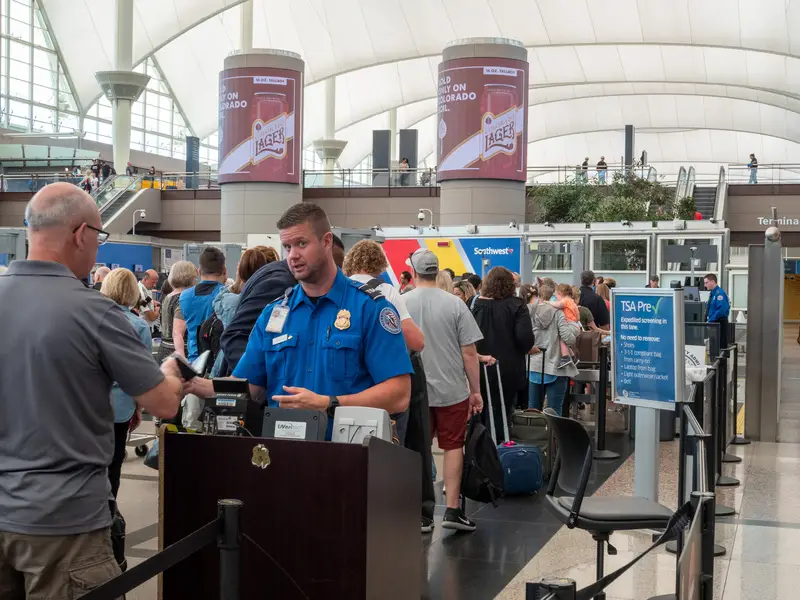
If you thought flying in America couldn’t get any more expensive or annoying, the TSA just proved you wrong. Starting February 1, 2026, any traveler who shows up at an airport security checkpoint without a REAL ID or other acceptable form of identification now has to pay $45 just to get through the line. Not $45 for a better seat. Not $45 for lounge access. Forty-five dollars for the privilege of proving you are who you say you are.
The program is called TSA ConfirmID, and it has people losing their minds. Here’s why, and what you actually need to know before your next flight.
The Fee Was Supposed to Be $18, Then It More Than Doubled
This is one of the details that really gets under people’s skin. When the TSA first proposed this fee in a Federal Register notice back in November 2025, the number they floated was $18. That’s still annoying, but $18 feels like a parking ticket. Something you grumble about and move on from. But by December 1, 2025, when the TSA officially confirmed the program, the fee had jumped to $45. The agency said costs for the new technology and operations came in higher than originally projected.
So in the span of about two weeks, the price tag more than doubled. That kind of price hike would be outrageous coming from an airline. Coming from a government agency, it feels even worse because there’s literally no competition. You can’t shop around for a different TSA.
Paying $45 Doesn’t Even Guarantee You’ll Get to Fly
This is the part that genuinely shocked me. You’d think handing over $45 would at least buy you a guaranteed spot on your flight. It doesn’t. The TSA’s own payment portal states clearly: “There is no guarantee TSA can verify your identity.” Read that again. You pay $45, answer a bunch of identity verification questions, and if the system still can’t confirm who you are, you’re not getting on that plane. And the fee? Nonrefundable.
So you could show up at the airport, fork over $45, spend up to 30 minutes going through additional screening, and still get turned away. That’s a scenario that would make anyone furious, especially if you’re standing there watching your flight board without you.
The 10-Day Window Creates a Hidden Double Charge
The $45 fee is valid for a 10-day travel period. For a quick weekend trip or even a week-long vacation, that’s fine. One payment covers you there and back. But if your trip runs longer than 10 days? You’re paying again.
John Breyault, vice president of public policy at the National Consumers League, pointed out a perfect example to one outlet: “If you go to Honolulu for two weeks, you may have to pay on the way back, too.” That means a single traveler could end up paying $90 total for a two-week trip. A family of four where all the kids are 18 or older? That’s potentially over $200 in fees that didn’t exist six months ago.
Children under 18 don’t need to show ID for domestic flights, so younger kids are off the hook. But college-age kids flying home for the holidays with an expired learner’s permit? They’re paying up.
Most People Are Already Compliant, So Why Does This Feel So Big?
The TSA says about 94% of travelers already have a REAL ID or an acceptable alternative like a passport, Global Entry card, or military ID. That leaves roughly 6% of flyers who are non-compliant. Six percent doesn’t sound like a lot until you do the math on how many people fly in the United States every year. The TSA itself estimates the ConfirmID program will be used approximately 10.6 million times over the next five years. That’s millions of transactions at $45 a pop.
And here’s the thing about that 6%. It’s not all people who just couldn’t be bothered. Some of them live in states where getting a REAL ID appointment is a nightmare. Some of them lost their wallet on the first leg of a trip. Some of them are elderly and confused about the requirements. A former TSA officer speaking anonymously to one report described it as “the first time the TSA is charging fines” for non-compliance. Whether you call it a fee or a fine, it’s money out of your pocket at the worst possible moment.
This Used to Be Free (and It Wasn’t Even New)
Here’s what really makes people angry. The TSA has been doing alternative identity verification for years. If you lost your wallet or forgot your license at home, a TSA agent would ask you some questions, do some checks, and eventually let you through. It took extra time, sure, but it was free. The process itself isn’t new. The $45 price tag is.
Julian Kheel, CEO and founder of Points Path, put it simply: “It’s a longstanding policy. What has changed here is that they are now charging for it.” So a service that taxpayers were already funding through existing security fees is now an additional out-of-pocket expense. Which brings up another frustrating point.
You’re Already Paying TSA Fees on Every Single Ticket
Every time you buy a plane ticket in the United States, you’re paying a passenger security fee. It’s $5.60 per one-way flight and $11.20 for a round trip. Even if you booked with miles or points and paid nothing for the ticket itself, you still owe the security fee. This has been the case for years, and the fee was last raised in 2014.
In fiscal year 2024, those passenger fees brought in about $3.5 billion. The TSA’s total operating costs that year were around $9.8 billion, with Congress covering the rest. On top of that, federal law requires $1.64 billion of those passenger security fees to go straight into the government’s general fund in fiscal 2026. Not to the TSA. Not to airport security improvements. To the general fund.
So travelers are already subsidizing TSA operations billions of dollars a year, and now non-compliant passengers are being told they need to pay even more. The TSA’s argument is that the $45 fee ensures non-compliant travelers cover their own processing costs instead of sticking taxpayers with the bill. But when you look at how much money is already flowing from passengers to the government, that argument feels a little thin.
If You Don’t Pay Before You Get to the Airport, It Gets Worse
The TSA strongly recommends paying the $45 fee online through the Pay.gov website before you even leave for the airport. You enter your legal name, your travel start date, and pay with a credit card, debit card, bank account, Venmo, or PayPal. You get an email receipt that you show to the TSA officer at the checkpoint.
If you don’t do this beforehand and show up at the checkpoint without acceptable ID and without a receipt? You get pulled out of line. You’ll need to fill out the online verification process right there, pay the fee on your phone, and then get back in line for additional screening. The TSA estimates this could take up to 30 minutes. And the agency has warned that this delay may result in a missed flight. No refund. No sympathy.
Military Recruits Got an Exemption, But Almost Nobody Else Did
In a small bit of good news, military recruits flying to basic training are exempt from the $45 fee. The Office of Personnel and Readiness for the U.S. Department of War organized a partnership with the TSA to make sure young recruits heading to boot camp don’t have to pay for the privilege of passing through security. That’s a reasonable exception.
But beyond that, the exemptions are basically nonexistent. If you’re 18 or older and you don’t have an acceptable ID, you’re paying. Low-income travelers, elderly passengers, people whose wallets were stolen, people who just moved states and are waiting on their new license. Everybody pays the same $45. There’s no income-based adjustment, no waiver process, no hardship exception.
What Actually Counts as Acceptable ID
Before you panic, here’s the good news: you might already be fine without even knowing it. A REAL ID is identified by a black or gold star in the upper right corner of your state driver’s license, learner’s permit, or nondriver ID card. But a REAL ID isn’t the only thing that works. The TSA also accepts a U.S. passport, a passport card, a Global Entry card, a military ID, and several other federal documents. Apple Wallet now stores digital passports accepted at over 250 U.S. airports for domestic travel.
Julian Kheel noted that many travelers may already have an acceptable ID in their wallet and not even realize it. So before you assume you’re going to get hit with this fee, check the star on your license, dig out your passport, or look at what’s loaded on your phone.
The REAL ID Law Is Over 20 Years Old, But It Just Got Teeth
The REAL ID Act was signed into law way back in 2005. For two decades, the government kept pushing back the enforcement deadline. It was delayed in 2009, 2011, 2013, 2017, 2020, 2023, and again during COVID. The law finally started being enforced on May 7, 2025, under Secretary Kristi Noem. TSA deputy executive assistant administrator Steve Lorincz confirmed that before the February 2026 enforcement of the fee, REAL ID rules were inconsistently applied. “There’s now no exception,” he said.
So for 20 years, Americans heard “REAL ID is coming” and nothing happened. Now it’s here, the fee is real, and millions of people are scrambling. If your state DMV is anything like mine, that scramble is going to involve a very long wait. In New Jersey, a REAL ID costs $35 from the DMV. Which means, ironically, it’s cheaper to just get the REAL ID than to pay the TSA fee once.
The frustration here isn’t really about $45. It’s about the feeling that flying in America has become a death-by-a-thousand-cuts experience. Baggage fees. Seat selection fees. Wi-Fi fees. And now, an identity fee. Travelers are tired of it, and this one just happened to be the straw that broke the camel’s back.

