

Here’s something that should make you sit up straight the next time you see flashing lights in your mirror. Not every set of blue and red lights belongs to a real cop. Some belong to a guy who spent less than a hundred bucks at an auto parts store, slapped a light bar in his pickup, and decided he wanted to play officer for the night. Police across the country are now telling drivers the same thing: do not roll your window all the way down for a stop you haven’t confirmed is real.
That sounds dramatic until you read the actual cases. And once you do, you’ll never look at an unmarked vehicle with a single flashing light the same way again. The scary part isn’t that fake cops exist. It’s how easy it has become to look exactly like the real thing.
The window is the whole point of the scam
Think about what happens the second your window drops. A complete stranger now has access to you, your wallet, your phone, and whatever else is in reach. That moment, that little gap of glass coming down, is exactly what a fake cop is fishing for. In December 2025, a man in Norwalk, Connecticut was arrested after he allegedly mounted strobe light bars inside his Nissan and pulled a driver over on a dark street. He never even walked up to the car. The driver sat there a few minutes, got a bad feeling, and the fake cop took off into the night.
That driver did the right thing by trusting their gut. According to the police warning, the gear needed to pull off a convincing fake stop costs about as much as a nice dinner for two. A light bar and a decal run under $100. That’s it. That’s the entire price of looking like law enforcement to a driver who’s nervous and just wants the encounter to end.
The fake cop who pulled over an actual deputy
Some of these stories are so bold they’d be funny if they weren’t terrifying. On June 24, 2026, a 46-year-old man named Nadi Jabari was arrested after he allegedly rigged his black Chevrolet Suburban with red and blue emergency lights and started using them on U.S. Highway 301 in Thonotosassa, Florida. He apparently tried to pull over a vehicle. The problem for him? That vehicle belonged to the Hillsborough County Sheriff’s Office. It was an undercover unit.
You really can’t script that better. The fake cop tried to stop a real cop. Impersonating law enforcement is a felony in Florida, and the illegal lights are a separate charge on top of it. The sheriff used the arrest to drive home a point worth tattooing on your brain: if you’re ever unsure whether a stop is real, you don’t have to pull over right there in some dark, isolated spot. Drive to a well-lit public area and call 911. A real officer will understand. The fake one is counting on you being too scared to do exactly that.
A vest, latex gloves, and fake parking tickets
The details inside these guys’ cars are what really get me. In Kentucky, a 53-year-old man from Stanford was arrested after allegedly using emergency-style flashing lights in a Honda Pilot to try to pull over another vehicle on Danville Road. When police caught up with him, they found a reflective vest, latex gloves, and cards that looked like parking citations sitting in his SUV. He even had a decal ending in “PD” on the back glass to mimic a cruiser.
He told officers he was just trying to slow down speeders. Sure. The driver he tried to stop happened to be a constable from a neighboring county, meaning he picked another real law enforcement officer by total accident. The police chief said straight up that he was grateful it was a cop in that car, because nobody knows what might have happened if it had been a regular civilian. You can read the full bodycam breakdown and see just how convincing the setup looked from the outside.
One guy worked across two states
Now here’s where it gets unsettling. Some impersonators don’t stick to one town. In early 2025, law enforcement agencies across Georgia and North Carolina put out warnings about a fake cop driving a black Dodge Charger with tinted windows and a single emergency light, pulling drivers over in multiple counties. The Towns County Sheriff’s Office flat out told residents they don’t even use Charger patrol cars, so if a Charger lights you up, something is wrong.
The witness description was the chilling part. The suspect was reportedly wearing a gray and dark blue uniform with a vest holding a radio and handcuffs. That’s a surprisingly convincing setup for someone with zero badge. Because he was crossing county and state lines, no single department could pin him down fast. That’s the loophole. When a fake cop moves around, your own awareness becomes the first line of defense, not the police.
But here’s the twist: with a real cop, you DO have to roll it down
This is where people get tripped up, so pay attention. The warning is about fake stops and stops you haven’t confirmed. When it’s a genuine officer in a marked car, refusing to lower your window can blow up in your face fast. Most states don’t have a specific law that says “thou shalt roll down thy window,” but that doesn’t mean you can sit there sealed shut like a turtle.
The Supreme Court already settled the bigger question. In Pennsylvania v. Mimms back in 1977, the Court ruled officers can order a driver out of the car entirely during a lawful stop. Twenty years later, Maryland v. Wilson extended that to passengers too. So if an officer can legally make you step out onto the pavement, asking you to crack a window is a far smaller request. As the legal breakdown puts it, no court has struck down a window order during a valid stop, because the authority to do something much more intrusive already exists.
You don’t have to roll it ALL the way down
Here’s a detail a lot of drivers miss. With a real officer, you’re not required to drop the glass all the way. You just need enough of a gap to talk clearly and pass your license, registration, and insurance through. One DUI attorney in Atlanta explained that lowering it part of the way still shows you’re cooperating, which keeps tension low.
Keeping it completely shut, on the other hand, can make an officer suspect you’re hiding something, and that can turn a quick ticket into a much longer ordeal with backup called and a search on the table. If it’s dark or you’re in a sketchy area and you’re genuinely uneasy, you can calmly explain your concern while still cracking the window enough to communicate. Communication is the magic word. Silence and a sealed window read as a threat to a cop who doesn’t know your intentions.
Why rolling it back UP can be a mistake too
This one surprised me. Even after you’ve handed over your documents to a real officer, rolling your window back up can escalate things badly. NFL star Tyreek Hill found that out during a 2024 traffic stop in Florida, where closing the window back up after handing over paperwork helped turn the encounter ugly fast. From the officer’s side, a window going back up reads like you’re cutting off communication or getting ready to do something.
From a training standpoint, the rule is consistent. Officers are taught they can order both drivers and passengers to lower windows or even exit, all in the name of safety, and courts back them on it. One law enforcement training resource explains that an open door without a real reason crosses into search territory, but a window request almost never does. The takeaway is simple. Keep things calm and open until the real cop tells you the stop is over.
The red flags that scream fake
So how do you tell a real stop from a con job in the moment? A few things stand out. A refusal to show real credentials or badge info is a giant warning sign. Aggressive, unprofessional behavior goes against how real cops are trained to de-escalate with nervous drivers. A poorly maintained or obviously modified personal vehicle should make you suspicious too, because real departments keep their fleets to a certain standard.
If something feels off, you’re legally allowed to keep driving at a slow, signaling, hazard-lights-on pace to a public, lit spot. While you do, call 911, give your location and direction, and ask the dispatcher to confirm a real stop is happening. You can even request a marked car be sent to you. A legitimate officer will get it. They’re trained for exactly this kind of nervous-driver verification.
What to actually do, start to finish
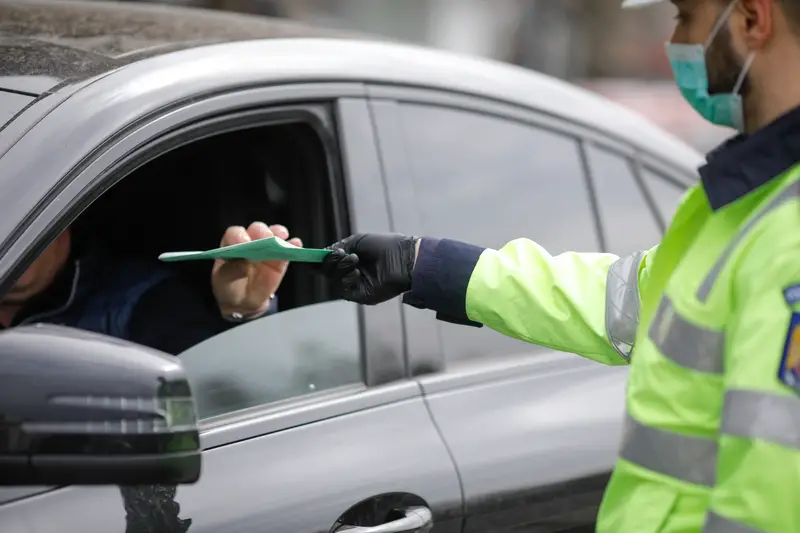
Put it all together and it’s not complicated. Pull over fast in a safe, well-lit spot using your turn signal. Turn off the engine, flip on your dome light at night, and put your hands on the wheel where they can be seen. If a uniformed officer in a marked car walks up, lower your window enough to talk and pass documents, and stay calm.
But if the vehicle is unmarked, nobody approaches, or the whole thing feels staged, that’s your cue. Keep the glass up, doors locked, and call 911 first. Maryland’s own driver guidance and similar best-practice advice stress the same balance: cooperate fully with the real thing, verify the questionable. With roughly 50,000 traffic stops happening every single day in this country, the odds say the person behind you is legit. But the rare fake is getting bolder, and the only thing standing between you and a $100 light bar con is your own willingness to slow down and ask one simple question. Is this real?

