

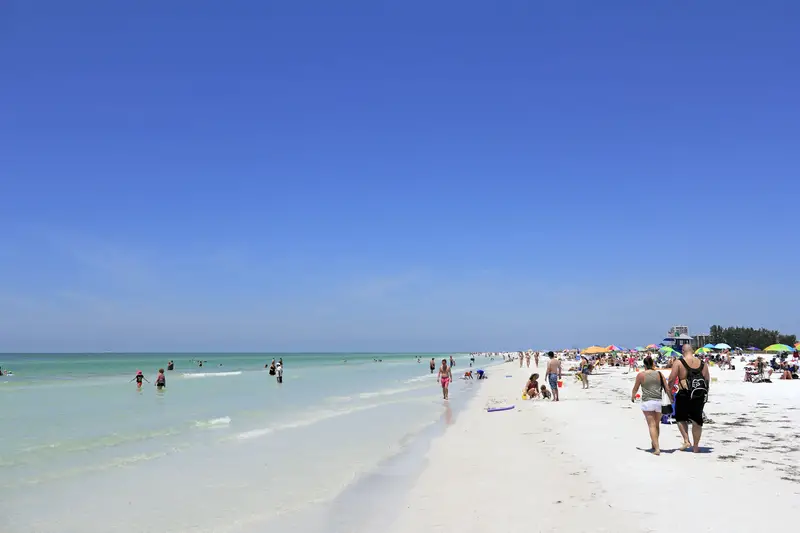
New Smyrna Beach in Florida looks like a postcard. Sugar-white sand, easy little waves, families dragging coolers and cheap boogie boards down to the water. It also happens to be the single most likely place in America to get bitten by a shark. That is not me being dramatic. Locals actually call it the Shark Bite Capital of the World, and the nickname is earned. Since the 1880s, this one stretch of coast has recorded more than 300 shark bites, which is more than any other spot on the planet. So why do millions of people still show up every summer? Because the real story is way stranger than the movie playing in your head.
The Craziest Part Is That Nobody Has Ever Died There
Here is the fact that stops people cold. With 300-plus bites on the books, there has never been a single death from a shark at New Smyrna Beach or anywhere in Volusia County. Zero. The whole county holds the Guinness World Record for most recorded shark attacks, and yet the body count is nothing. That is because most of the bites are barely bites at all. A lot of them leave nothing worse than a few scratches, and almost all of them land on a leg or a foot. The sharks doing the biting are mostly juveniles that grab, realize you are not a fish, and take off. In July 2025, surf instructor Sam Hollis got bitten on the foot while surfing there. He kicked the shark, it let go, and he planned to be back in the water almost right away.
Why Sharks Basically Live In Your Swim Zone
New Smyrna is not unlucky. It is a shark hotel. The water is home to blacktip sharks, spinner sharks, and bull sharks, and all three like to hang out close to shore. Blacktips actually leap out of the water, and you can spot them cruising the shallows. Spinners do these wild spinning jumps. Bull sharks can handle both salt and fresh water, so they go wherever they want. The bigger problem is that the water is murky, so a shark honestly cannot tell if that pale thing kicking near the surface is a mullet or a person. Add in the baitfish and the steady surf breaks, and you have a buffet. Shark activity peaks from April through October, which lines up with both migration season and the exact months you want to be at the beach. July and August are the busiest of all, for people and sharks.
One Surfer Compared It To A Bear Trap
Every so often, though, the bites are not minor. A 40-year-old named Matthew Bender was surfing off New Smyrna when something grabbed his right forearm. His description is the kind of thing you do not forget. He said he felt it clamp down like a bear trap out of nowhere, and by the time he looked, it was already gone. He never even saw the shark. He said it felt like electricity and extreme pressure at the same time. Then he did something wild. He made a tourniquet out of his surfboard leash, laid on his belly, and rode his own board back to shore, where he flagged down a stranger for help. He had surgery in Daytona and could still move his hand. The local surfers I would trust know the deal. As one of them put it, every time he paddles out he knows he could get bit.
It Is Not Just New Smyrna Either
If you think you can just drive up the coast to dodge the sharks, I have bad news. Daytona Beach, the spring break and race car town, sits in the same county and ranks second in the country for recorded shark attacks with 67 of them. This past January, trackers followed a great white named Contender right past it. He measured nearly 14 feet and topped 1,600 pounds, making him the largest male white shark ever recorded in the Atlantic. Cocoa Beach, where surf legend Kelly Slater grew up, ranks third with 39 incidents. In 2023, a 12-year-old girl named Magnolia Woodhead was bitten there and needed 50 stitches. Over in Southern California, Solana Beach sits right next to a nursery where young great whites gather in the shallows. Sharks are everywhere along the coast. We just do not usually see them.
Sharks Even Showed Up In New York City
This one surprised me the most. On July 2, 2026, on what turned out to be the hottest day of the year with Central Park hitting 100 degrees, NYC Parks had to close Rockaway Beach in Queens after multiple bull sharks were spotted just off the coast. A drone caught an image of two of them swimming together. The city has a rule where one shark means they shut down a mile in each direction for an hour, but multiple sharks on the same day means the whole beach closes. That same morning on Long Island, lifeguards at Point Lookout spotted an 8-foot shark in the most crowded part of the beach. One beachgoer described it as a huge fin in the water, not that far off shore. Another local shrugged and said it is their home, so just be careful. Honestly, fair point.
Why The Warnings Keep Coming Back Every Summer
Before you assume sharks are suddenly out for blood, the people who study them say to relax. Officials describe what is happening on the East Coast as a plain old summer migration that runs from June through September, and they say there is no evidence sharks in these waters are chasing people on purpose. More than 13 shark species pass through New York waters every year, and their presence is actually a sign the ocean is doing well. New York got serious about watching for them, too. Long Island State Parks stocked up with 46 drones and 67 certified drone operators for peak season. Meanwhile, up in Harpswell, Maine, officials raised a shark flag at Cedar Beach after a great white was reported offshore. That is the same area where Maine had its first fatal shark attack back in 2020, so people there take it seriously.
Hawaii Has Its Own Shark Hangout
The mainland does not get to hog all the drama. On June 22, 2026, warning signs went up at Ke Iki Beach on Oahu’s North Shore after lifeguards spotted a tiger shark cruising about 50 yards from shore. That came right after observers reported two aggressive sharks near the famous Banzai Pipeline. In Hawaii, the rule is simple and I like it. When the yellow signs are up, the water is closed, no debate. Maui gets bitten more than any other Hawaiian island, and researchers recently figured out why. A spot called Olowalu is a mating hub where tiger sharks gather during whale season. In May 2026, a couple kayaking off Olowalu had to fight off a large tiger shark after it bit their kayak. Nobody was hurt, but I would probably need a new hobby after that.
How To Actually Lower Your Odds
So should you cancel the beach trip? Nah. More people drown every year than get bitten by sharks, and the wildlife folks say getting bitten in Florida is extremely unlikely to begin with. But there are easy things you can do to stack the odds in your favor. Swim in a group, because sharks are more likely to approach a person swimming alone. Skip the water at dawn and dusk, when sharks are most active. Lose the shiny jewelry, since a flash of metal looks a lot like fish scales to a shark. Stay out of murky water and away from any spot where people are fishing or where you see baitfish jumping. Do not splash around like a wounded seal, and leave the dog on the sand. And swim where there are lifeguards. That last one is the whole game. The people watching that water know it better than you do.
New Smyrna will keep its scary title for a long time, and it probably should. But the numbers tell a calmer story than the reputation does. Hundreds of bites, zero deaths, and a bunch of surfers who go right back in the next morning. Sharks are out there. They always were. You just know it now.

