

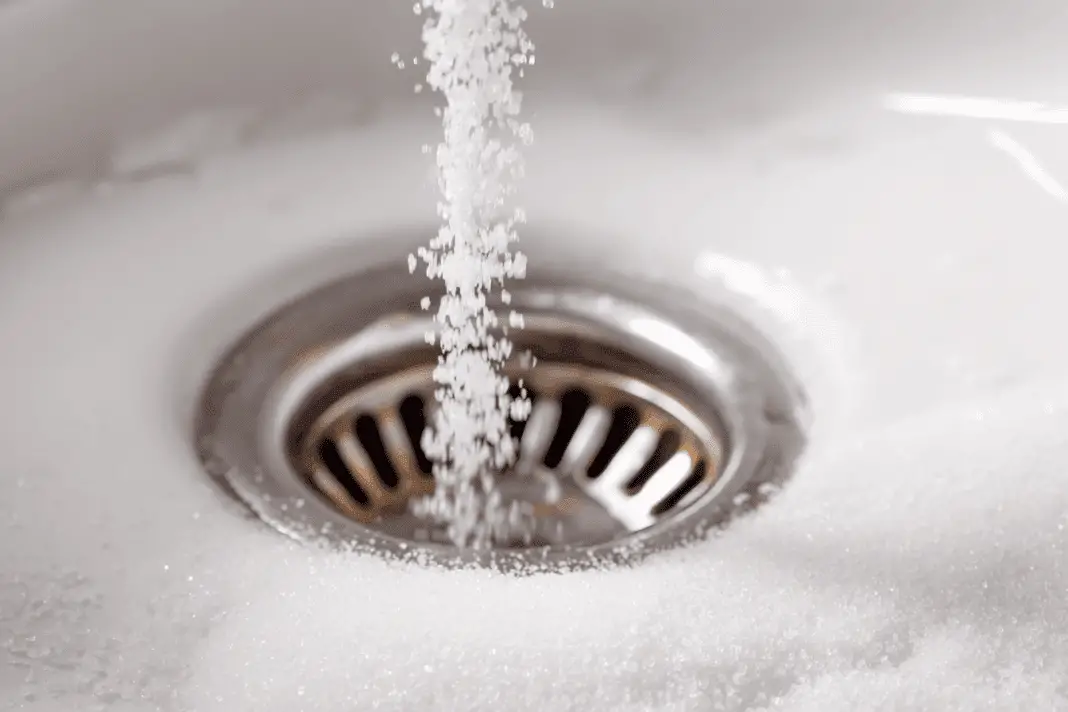
That half-empty container of table salt sitting in your kitchen cabinet might seem like the perfect solution for a slow-draining bathroom sink. After all, countless online posts swear by this simple trick, claiming salt can blast through clogs and keep pipes running smoothly. But before you start dumping sodium chloride down your drain, professional plumbers have some surprising insights that might change your mind completely.
Salt alone won’t clear serious blockages
Most bathroom drain clogs consist of hair, soap scum, and toothpaste buildup that have hardened over time. Salt’s coarse texture might seem abrasive enough to break through these materials, but the reality is far different. Hair clogs, which make up the majority of bathroom drain problems, simply won’t dissolve when exposed to salt crystals. The blockage will remain intact, leaving you with the same sluggish drain and a handful of wasted salt.
Even when combined with hot water, salt only works on specific types of minor clogs like grease or mineral deposits. Solid debris and fibrous materials will laugh in the face of your DIY salt solution. Professional plumbers report that homeowners often try this method multiple times before calling for help, meaning the problem persists while valuable time is wasted on ineffective remedies.
Metal pipes can suffer long-term corrosion damage
Older homes with metal plumbing face a hidden danger when salt becomes a regular drain treatment. Sodium chloride naturally accelerates corrosion in iron, steel, and even copper pipes over extended periods. What starts as an innocent attempt to maintain clean drains can gradually weaken pipe walls, leading to pinhole leaks and eventual pipe failure. These problems often develop slowly, making the connection between salt use and pipe damage difficult to recognize.
The combination of salt and hot water creates an especially aggressive environment for metal corrosion. Professional plumbers warn that repeated exposure can cause joints to fail and create leaks behind walls where they go unnoticed for months. Replacing corroded pipes costs thousands of dollars compared to the few cents worth of salt that seemed like such a bargain solution. The financial math simply doesn’t work in favor of this home remedy.
Boiling water poses serious safety risks
Many salt drain treatments involve pouring boiling water down the pipes to activate the cleaning process. This seemingly harmless step creates multiple hazards that most homeowners never consider. Splashback from boiling water can cause severe burns, especially when the liquid hits obstacles in the drain and rebounds upward. Emergency room visits for scalding injuries far exceed the cost of professional drain cleaning services.
Porcelain sinks and fixtures face another serious threat from extreme temperature changes. Thermal shock can crack or completely shatter bathroom sinks, creating expensive replacement projects from what started as a simple maintenance task. Modern PVC pipes also have temperature limits that boiling water can exceed, potentially warping or softening the plastic and causing joint failures throughout the plumbing system.
Salt deposits can create new blockage problems
Excessive salt use sometimes backfires by creating the very problem it’s supposed to solve. When large amounts of salt don’t fully dissolve, they can crystallize and form solid deposits inside pipes. These salt barriers then trap other debris flowing through the system, creating combination clogs that are more difficult to remove than the original blockage. The irony of using a drain cleaner that actually clogs drains isn’t lost on experienced plumbers.
PVC pipe systems are particularly vulnerable to salt buildup over time. While these plastic pipes resist corrosion better than metal alternatives, they can still accumulate crystallized salt deposits that narrow the internal diameter. Salt deposits combined with soap residue create stubborn blockages that require professional equipment to remove completely. What began as a money-saving measure ends up costing more in professional services than proper maintenance would have required.
Baking soda combinations offer limited effectiveness
Popular online recipes combine salt with baking soda to create supposedly powerful drain cleaning mixtures. While these combinations can neutralize odors and provide minimal cleaning action, they fall short when dealing with substantial blockages. The chemical reaction between these household ingredients produces some fizzing action, but lacks the strength needed to dissolve hair clogs or break up hardened soap deposits that typically plague bathroom drains.
These homemade mixtures work best as preventive maintenance rather than problem solvers. Professional technicians note that baking soda and salt combinations can help maintain clean-running drains, but only when pipes are already flowing freely. Expecting these gentle ingredients to power through significant blockages sets up homeowners for disappointment and wasted time when quick action might prevent more serious plumbing issues.
Chemical drain cleaners provide stronger results
Store-bought drain cleaners contain powerful chemicals specifically designed to dissolve hair, soap scum, and organic debris that commonly block bathroom drains. Products like Drano or Liquid-Plumr use sodium hydroxide and other active ingredients that actually break down clog materials rather than simply providing abrasive action. These formulated solutions offer much higher success rates for typical bathroom drain problems than improvised salt treatments.
Commercial drain cleaners also include safety features and usage instructions that help prevent pipe damage when used correctly. Unlike homemade salt mixtures with unpredictable results, manufactured products undergo testing to ensure compatibility with modern plumbing systems. However, even these stronger solutions have limitations and shouldn’t be overused, as repeated chemical treatments can still damage pipes over time if applied excessively.
Professional tools remove blockages completely
Plumbing snakes, hydro-jetting equipment, and camera inspection tools give professional technicians distinct advantages over home remedies. These specialized instruments can physically remove hair clogs, break up mineral deposits, and clear blockages throughout the entire drain system. Unlike chemical or salt treatments that may only partially dissolve problems, mechanical removal ensures that obstructions are completely eliminated from the pipes.
Professional assessment also identifies underlying issues that cause recurring drain problems. Tree roots, pipe damage, or structural defects won’t respond to any amount of salt treatment, but trained technicians can spot these problems and recommend appropriate solutions. Investing in professional drain cleaning often prevents future blockages and extends the life of plumbing systems far beyond what DIY methods can achieve.
Simple prevention beats emergency repairs
Regular maintenance prevents most bathroom drain clogs before they require any intervention. Installing inexpensive hair catchers, wiping down sinks after use, and running hot water weekly keeps debris from accumulating in the first place. These simple habits eliminate the need for salt treatments, chemical cleaners, or emergency plumber visits while maintaining smooth-flowing drains throughout the year.
Monthly professional inspections cost less than major pipe repairs and catch small problems before they become expensive emergencies. Preventive maintenance plans offered by plumbing companies provide regular check-ups that keep entire systems running efficiently. This proactive approach saves money compared to reactive repairs and eliminates the temptation to experiment with potentially harmful home remedies like salt treatments.
Multiple drain backups signal major problems
When several bathroom fixtures start draining slowly at once, the problem extends far beyond what any home remedy can address. Main sewer line blockages affect multiple drains simultaneously and require immediate professional attention to prevent sewage backups into living spaces. Salt treatments become completely irrelevant when dealing with system-wide plumbing failures that threaten property damage and health hazards.
Warning signs like gurgling sounds, sewer odors, or water backing up in floor drains indicate serious blockages that demand emergency plumbing services. Main line clogs can cause thousands of dollars in damage within hours if not addressed promptly. Attempting DIY solutions during these emergencies wastes precious time while sewage systems continue backing up throughout the home, creating much more expensive cleanup and repair projects.
The salt-down-the-drain trend represents wishful thinking more than practical plumbing maintenance. While this method might provide psychological satisfaction and minor odor control, it fails to address real blockage problems and can create new issues in the process. Professional drain cleaning services offer reliable results without risking pipe damage or personal injury, making them the smarter long-term investment for bathroom drain maintenance.

