

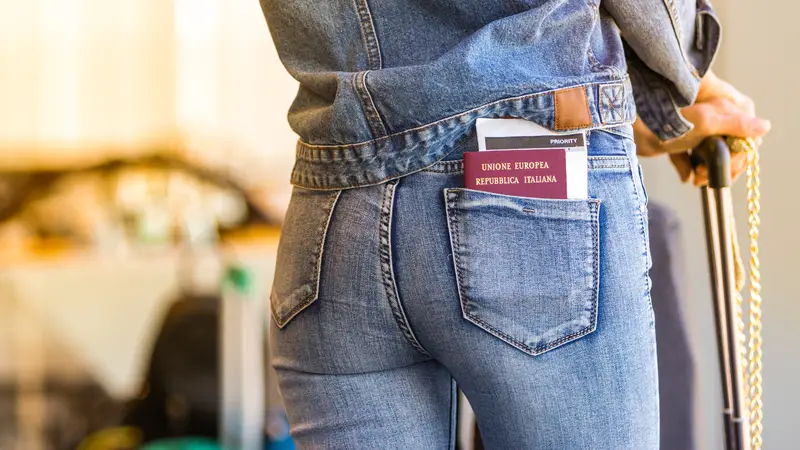
Over 300,000 American passports are lost or stolen every single year, according to the U.S. State Department. That is a staggering number. And a huge chunk of those losses come down to one simple thing—where people decided to stash their passport. Whether you’re heading to Italy for two weeks or catching a quick flight to Canada, your passport is the single most important item you carry. Lose it, and your dream trip turns into a paperwork nightmare involving embassies and emergency phone calls. So where should you absolutely never keep it? There are more wrong answers than you might think.
Your back pocket is the worst spot possible
It might seem convenient to slide your passport into your back pocket, but this is basically handing it to a thief on a silver platter. Pickpockets are incredibly skilled. They operate in busy tourist areas, crowded subway cars, and open-air markets. A passport has a very recognizable shape and size, making it easy for a trained thief to spot and swipe in seconds. You might not even realize it’s gone until you reach border control or head back to your hotel room hours later.
According to a 2024 report, Italy tops the list with 478 reported pickpocketing incidents per million visitors. France follows with 251 mentions. Spain and Germany each had 111 mentions per million visitors. These aren’t rare events. They happen every single day in popular tourist cities. Travel expert Katy Nastro warns that keeping your passport in any pocket or in a bag in plain sight is never smart. The shape alone gives it away to anyone looking for an easy target.
Never put your passport in your carry-on bag
This one catches a lot of people off guard. Your wheeled carry-on suitcase seems like a reasonable place for your passport, right? Wrong. Airlines regularly force passengers to gate-check their carry-on bags when overhead bins fill up. If your passport is inside that bag and it gets whisked away to the cargo hold, you’ve got a serious problem. You won’t see that bag again until after you go through immigration—which requires your passport.
This issue is becoming more common as airlines update their baggage policies and more people travel with carry-ons to dodge checked bag fees. If you’re flying internationally and your bag gets gate-checked with your passport inside, you could be denied entry at your destination. You could miss a connecting flight. You could even face a fine. American-based airlines may soon adopt stricter size limits for carry-on luggage, making gate-checking even more likely. The bottom line? Your passport should never go into any bag that could be taken from you before you leave the plane.
Overhead bins are not as safe as they seem
Even if your carry-on isn’t gate-checked, storing your passport in a bag in the overhead bin is risky. There’s often no room directly above your seat. Your bag might end up several rows ahead or behind you, completely out of your line of sight. That makes it tough to keep track of your belongings. And here’s something most people don’t think about—in-flight theft is a real thing. While exact numbers are hard to find, it happens more often than anyone wants to admit.
Beyond theft, there’s also the risk of simply forgetting your bag on the plane. Vacation brain is real. Once you stand up and start shuffling toward the exit, it’s easy to leave something behind. A young couple from the U.K. once left their passports on a plane heading to Greece. They were sent straight back home on the next flight without any choice in the matter. Their passports were never found. Retrieving items from a plane that’s about to take off again is nearly impossible. Don’t gamble with your passport like that.
Your outer jacket pocket is too easy to reach
When it’s cold outside, tossing your passport into your coat pocket feels natural. But jacket pockets are wide, shallow, and easy for someone else to access. In crowded areas like train stations, festivals, or busy sidewalks, a skilled pickpocket can unzip or reach into an outer pocket without you noticing. Coats also get removed and hung up, tossed over chairs at restaurants, or left draped on a seat. Every time your jacket leaves your body, your passport is at risk.
On top of that, items in jacket pockets can fall out more easily than you’d expect. Sitting down, bending over, or pulling out your phone can nudge your passport right out of your pocket. You might not feel it happen. Zippered internal pockets are a much better option if you absolutely must keep your passport on your body. Some travel pants and tops with deep pockets are designed specifically for this purpose. Brands like Alo Yoga even offer pants and shorts with zippered pockets that keep things secure while you’re on the move.
A hotel room left out in the open is risky
Some people leave their passport sitting on the nightstand or tossed on the desk in their hotel room. This is a bad idea. Housekeeping staff, maintenance workers, and occasionally other guests have access to hotel rooms throughout the day. While most people are honest, a U.S. or U.K. passport can be worth over $20,000 on the black market to smugglers. That temptation is real, and leaving your passport out in the open makes it an easy grab for anyone who walks in.
If you’re going to leave your passport at the hotel, the room safe is the better option. Travel expert Katy Nastro calls it “the default for many people” and often the safest option. But make sure the safe actually works before you trust it with your most important document. Test the lock and call the front desk if anything seems off. And here’s a great trick to avoid forgetting your passport inside the safe—put one shoe in there with it the night before you check out. You won’t pack without both shoes, so you’ll always remember to open that safe.
A crossbody bag worn loosely is still a target
Crossbody bags and fanny packs are popular travel accessories, and for good reason. They keep your hands free and your stuff close. But wearing one loosely or with the opening facing outward is almost as bad as putting your passport in your back pocket. Thieves on bikes or scooters can slash a loose strap and take off with your entire bag before you even process what happened. It’s a common tactic in cities across Europe and South America.
If you do use a crossbody bag or belt bag, wear it tight against your body with the zipper facing inward. Better yet, use a small bag that connects securely to your main bag or sits under a layer of clothing. Some travelers go even further and wear money holders under their clothes. It might feel a bit much, but when you’re walking through a crowded market in Rome with 478 pickpocketing incidents per million visitors, a little extra caution goes a long way.
Checked luggage is one of the riskiest choices
This should be obvious, but it still needs to be said—never put your passport in your checked luggage. Bags get lost, delayed, and misrouted all the time. Airlines handle millions of bags every day, and mistakes happen. If your checked bag ends up in a different city or doesn’t make it to the carousel, your passport goes with it. And since you need your passport before you can collect checked bags at international destinations, you’d be stuck in a terrible loop.
Replacing a lost passport abroad is expensive and time-consuming. You’d need to contact the nearest U.S. embassy or consulate and show up in person. You’d need a passport photo, identification, your travel plans, and a healthy dose of patience. The process can take days depending on where you are. And here’s a fun fact—if you report your passport lost or stolen and then find it later, it’s no longer valid. It’s essentially treated like an expired passport. So the stakes are high every time your passport leaves your possession.
Some countries require you to carry it at all times
Here’s something many Americans don’t realize—certain countries legally require you to have your passport on your person at all times. Japan is a well-known example. The U.S. Department of State specifically warns that in Japan, you must carry your passport or a Japanese Residence Card with you at all times. If police stop you and you can’t produce identification, you could be taken in for questioning. That’s not a situation anyone wants to deal with on vacation.
Other countries have similar rules, including Russia and Hong Kong. In Russia, police can demand to see your documents at any time for any reason. In Hong Kong, all adults and children over 12 must carry identification. The rules vary widely from country to country, so it’s important to check the entry and ID requirements for wherever you’re headed before you leave. Even if you prefer leaving your passport at the hotel, some destinations simply don’t give you that option. A quick check of the State Department’s travel advisories can save you from an awkward encounter with local authorities.
Smart backup plans can save your entire trip
No matter where you decide to keep your passport, always have a backup plan. Keep a clear photo of your passport’s main page on your phone. Print out a paper copy and pack it separately from the original. These won’t replace your actual passport at a border crossing, but they can speed things up enormously if you need to visit an embassy. Katy Nastro also recommends attaching a small tracking device like an Apple AirTag or Tile to your passport case so you can always locate it.
Another helpful strategy is using a TSA-approved lock on your luggage if you’re storing your passport inside it at the hotel. This ensures only you can access it, and it keeps things organized. Some travelers also keep their passport in a Ziploc bag to protect it from water damage, since even a slightly damaged passport can be rejected at certain borders. A ripped page, a water stain, or a bent cover could cause major headaches. These small steps take almost no effort but can make the difference between a smooth trip and a total mess.
Your passport is the one thing that can make or break an international trip, and where you store it matters more than most people think. From back pockets and carry-on bags to loosely worn purses and hotel nightstands, the wrong choice can lead to stolen documents, missed flights, and stressful embassy visits. Take a few extra seconds to think about where your passport is every time you move from one place to another. A little awareness now means a lot less panic later.

