

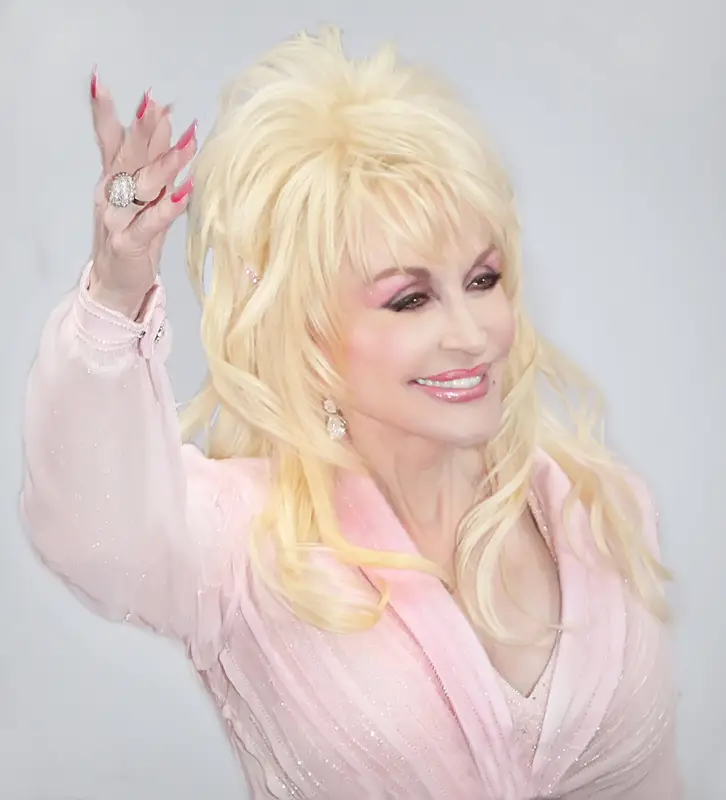
Dolly Parton sold 100 million records, wrote more than 3,000 songs, and stuck her name on a theme park, a dinner show, a wine label and a line of bakeware. So when she died in Nashville on August 25, 2026, at the age of 80, a lot of people assumed the number at the end of all that started with a B. It did not. Forbes had her at $450 million. Other tallies put her closer to $650 million. She never became a billionaire, and the reason why is the most interesting line on her balance sheet.
Two Numbers, $200 Million Apart
Forbes estimated Parton’s net worth at $450 million in its June 2025 ranking, which put her at No. 78 on its list of America’s Richest Self-Made Women. Celebrity Net Worth’s own estimate lands near $650 million. Nobody is wrong, exactly. These are estimates of privately held assets, not audited books.
Analysts looking at the same private company can value it differently depending on what they assume about taxes, debt, how easily an asset could actually be sold, and whether a famous name counts as an asset on top of the business it’s attached to. A sensible working estimate is a range of $450 million to $650 million, and that’s as precise as anyone outside her attorneys can honestly get.
One more thing gets mangled constantly: career earnings are not net worth. Money from a record, a tour or a movie has to cover production, management fees, agent commissions, payroll, travel and taxes before anybody counts it as wealth.
The Theme Park Outweighed the Music
Her biggest single asset wasn’t “Jolene.” It was a roller coaster park in the Tennessee foothills. In 1986 Parton went into business with the Herschend family, and Silver Dollar City in Pigeon Forge reopened that year as Dollywood. The two sides are reported as 50/50 co-owners, and in 2021 Forbes valued her half at roughly $165 million.
That stake accounted for the largest share of her fortune, bigger than the songs, bigger than the acting, bigger than the licensing. The park grew to include a water park, resorts and lodging, restaurants and retail, and it drew a record of nearly 4 million visitors in 2025.
The ripple effect dwarfs her own cut. A University of Tennessee study, reported in 2021, put Dollywood’s yearly economic impact at about $1.8 billion and credited it with more than 23,000 jobs in the region. None of that is her paycheck. Ticket money becomes company revenue first, and wages, maintenance, marketing and new rides come out before owners see a dime.
She Told Elvis No and Cried All Night
In the mid-1970s, Elvis Presley wanted to record “I Will Always Love You.” The session was booked. Then, the night before, Presley’s manager Colonel Tom Parker called with a condition: the Presley operation didn’t cut a song without owning at least half the publishing rights.
She turned down the King of Rock and Roll. “This is the most important copyright in my whole publishing company, and I can’t do that,” she told Parker. The session was cancelled. She later admitted she cried all night over it.
Then 1992 happened. Whitney Houston recorded the song for The Bodyguard soundtrack, and it sat at No. 1 on the Billboard Hot 100 for 14 weeks, a record at the time. Parton was the sole songwriter and publisher, so she collected on every copy sold and, decades later, every stream. Forbes estimated that one cover paid her about $10 million in the 1990s alone, roughly $20 million in today’s money.
She Was a Publisher Before She Was a Star
The Elvis decision wasn’t a flash of instinct. It was policy, set years earlier. In 1966, Parton and her uncle Bill Owens founded Owe-Par Publishing Company so they could copyright their own material. Her breakthrough on The Porter Wagoner Show came the following year. She owned the store before the customers showed up.
The catalog she built holds more than 3,000 songs, including “Jolene,” “9 to 5” and “I Will Always Love You,” and Forbes valued it at about $120 million in 2025. Sony/ATV signed a deal in 2019 to represent the catalog in North America and other territories, which people keep misreading as a sale. She didn’t sell it. Forbes estimated in 2021 that the royalties ran $6 million to $8 million a year, decades after most of those songs were written.
The House That Whitney Built
What she did with the Houston money is the part most people have never heard. She took a chunk of those royalties and bought a commercial office and retail complex off 16th Avenue in Nashville, in a historically Black neighborhood.
“I bought a property down in what was the Black area of town, and it was mostly just Black families and people that lived around there,” she said on Watch What Happens Live in 2021. “I love the fact that I spent that money on a complex and I think, ‘This is the house that Whitney built.'”
Follow the chain: a song became a copyright, the copyright threw off royalties, and the royalties turned into a building that collects rent. That’s three different kinds of asset from one refusal to give away half a publishing share.
Hardware Stores, Hogs and Macadamia Trees
Long before Dollywood, she was already quietly a diversified operator. In a 1984 interview with Interview magazine, Parton said her outside ventures, things like farm equipment and garden centers, were bringing in more than her record royalties. She listed off property, farms, cows, hardware stores, hogs and macadamia trees.
Asked which investment she was proudest of, she named her publishing company. That was 1984, eight years before Whitney Houston walked into a studio.
The pattern never changed, it just got bigger. Dolly Parton’s Stampede and Pirates Voyage dinner attractions. A fragrance line. Cookbooks and bakeware. Cosmetics. A wine label. Home decor and clothing. Licensing deals across dozens of categories, plus film and television work including deals with companies like Netflix. If one income stream dried up, six others kept running.
From a One-Room Cabin
She was one of 12 children born to Robert Lee Parton Sr. and Avie Lee Owens Parton, raised in a one-room cabin in rural Tennessee.
Her home base for decades was an estate in Brentwood, outside Nashville. She also once owned a small West Hollywood house, bought for $1.2 million in 2007.
The Fortune She Gave Away Instead
The simplest explanation for why she never hit ten figures is that enormous amounts of what her businesses produced went back out the door. One estimate puts her lifetime giving at as much as $500 million, more than the fortune Forbes credited her with.
Dolly Parton’s Imagination Library started in 1995 and mails free books to children. The organization’s official 2025 figures counted more than 304 million books gifted since it began, including more than 40 million in 2025 alone, across the United States, Canada, the United Kingdom, Australia and the Republic of Ireland.
The Dollywood Foundation, launched in 1988, went after the dropout rate in her home county of Sevier County, Tennessee. In the early 1990s she promised every seventh and eighth grader $500 if they finished high school, and the foundation says the dropout rate for those classes fell from 35% to 6%. She donated $1 million toward COVID research. Jeff Bezos handed her $100 million to direct to causes of her choosing. She was never a billionaire, and by every account she wasn’t trying to be.
Nobody Knows Who Gets It
Parton and her husband Carl Dean were married nearly six decades and never had children. Dean died in March 2025. As of August 26, 2026, no verified public estate filing had identified who receives her fortune, which means any story naming a specific sibling, niece or charity as the heir is running ahead of the evidence.
She had thought about it. In a 2020 Billboard interview she said she was working with an estate attorney and pressed the point that artists need a plan for their assets before they die. Much of her wealth may already sit in trusts rather than passing through public probate.
Dean’s paperwork offers a hint about the family, not an answer about hers. He signed a will more than a decade before he died, and court documents after his death showed the Carl Thomas Dean Trust as the sole beneficiary of his estate, with Parton serving as trustee. His will referenced five nieces and nephews on his side and 14 on hers. Her death was announced by her nephew Bryan Seaver on Instagram.
Asked by Oprah Winfrey in 2020 why she never had children, Parton put it plainly: “Since I had no kids, and my husband was pretty independent, I had freedom. So I think a big part of my whole success is the fact that I was free to work.” Dollywood reopened the day after she died, and park president Eugene Naughton said it was committed to carrying her light forward. The songs keep paying. The books keep shipping. Whoever ends up holding the paperwork, that machine was built to run without her.

