

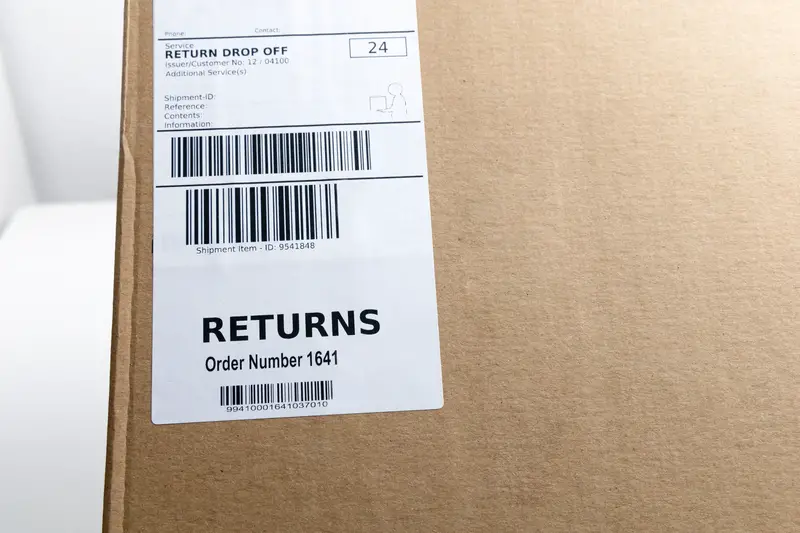
There is a good chance something in your house is waiting by the door with a shipping label slapped on it. You have company. Retailers expected Americans to send back $849.9 billion worth of merchandise in 2025, and in a November 2025 survey of 2,013 shoppers, 91% said they had returned at least one thing in the past year. The average person mailed or carried back close to five items.
So what is actually inside all those boxes? Not TVs. Not air fryers. Not the gadget your uncle bought you. The most returned item in America is clothing, and the gap between it and everything else is not close.
Clothing Isn’t Just First. It’s Lapping The Field.
Eighty-two percent of American consumers have returned an item of clothing at some point. Shoes come in second at 51%. At the very bottom of the list sit computers, which only 9% of shoppers have ever sent back.
In one consumer survey, 25% of online shoppers said they had sent back clothing in the past year, against 17% for shoes. When American shoppers were asked what they personally send back, two-thirds named clothing. Electronics got 17%. Home goods got 5%.
The rate is what makes apparel brutal for stores. Industry estimates put the return rate on clothing bought online at roughly one in four, and some put luxury apparel near 50%, which means for those brands, selling a dress is close to a coin flip on whether they get to keep the money.
Your Living Room Is The New Fitting Room
Fit drives almost everything. Sizing, fit and color are the reason behind 45% of all retail returns, and 75% of shoppers say they have returned something because it did not fit.
That has created a habit the industry calls bracketing: ordering the same item in two or three sizes, keeping one, shipping the rest back. The retailer pays to ship all three and pays again to take two of them home.
Then there is the move everyone pretends they have never pulled. Sixty-nine percent of people who buy clothes online say they have bought something to wear to a specific event and returned it afterward. In a 2024 Loop Returns study, about 35% of online shoppers admitted they had sent back an item they already used. Stores call it wardrobing, and it is why some brands now attach giant plastic tags that have to be cut off before you can wear the thing in public.
More Shoppers Return Food Than Televisions
Here is the category ranking almost nobody guesses correctly. Measured by the share of online shoppers who sent something back, clothing sits at 25% and shoes at 17%, and the next two spots are tied at 12%: accessories and food and beverage. More shoppers have sent back groceries and snacks than consumer electronics, at 10%.
Food gets returned because of freshness windows. A late truck turns a box of groceries into a refund. Furniture is dead last at 8%, mostly because people misjudge how big a couch is and because heavy things arrive dented.
Beauty products barely move the needle, largely because once a bottle is opened most retailers will not take it back. Electronics are the sneaky expensive one. Fewer come back, but each returned unit costs far more to inspect, repack and resell than a sweater does.
Online Purchases Come Back Far More Often
Retailers expected 19.3% of online sales to come back in 2025, against 15.8% across all sales, which means for every $100 Americans spend, $15.80 worth of stuff gets returned.
That number has exploded. In 2019 the retail return rate was 8.1%. In 2020 it hit 10.6%. By 2021 it was 16.6%. The dollar value of returned merchandise nearly doubled between 2020 and 2025.
Much of it does not go back in the mail, either. On 2024 figures, Capital One Shopping estimated nearly 60% of online returns were walked into a physical store, which is why the customer service counter at your local department store looks like a loading dock in January.
Gen Z Returns The Most, And Mostly In Person
Shoppers aged 18 to 30 made an average of 7.7 returns of online purchases over the past year, according to the NRF. Capital One Shopping puts Millennials at 7.1, Gen X at 6.5 and Baby Boomers at just 4.8, the fewest of any group by a wide margin.
The twist is where Gen Z does it. Forty-five percent of them say they are more likely to return something they bought in a store, versus 21% who lean toward returning online purchases. And 17% of Gen Z shoppers say they never return anything they bought online at all, the highest share of any generation.
Women are 8.33% more likely than men to return an online purchase, which tracks with apparel sitting at the top of the list.
January Is The Busiest Return Month Of The Year
Retailers expect 17% of holiday sales to come back, about a point above the rest of the year, and January is reliably the month when it all comes flooding back.
Sixty-five percent of consumers say they have returned a gift during the holidays. And 65% of those holiday returns are, once again, clothing. Sweaters are the national scapegoat for a reason.
Plenty of unwanted presents never make it back to a register. More than half of shoppers (54%) admit to regifting. Nearly one in five have pretended to like or use a gift in front of the person who gave it to them. And 48% have skipped returning a gift entirely because they were afraid of offending the giver.
Atlanta Googles Returns More Than Any Other City
Search data for return-related terms, everything from how to return an Amazon package to finding a UPS drop-off, was ranked per 100,000 residents across the most populated U.S. cities. Atlanta came out on top.
Orlando took second, then Las Vegas, Minneapolis and Miami. Two of those are tourist towns where people buy on impulse and think about it later. One is a city where it is too cold to go to the mall for four months a year, so everything gets ordered sight unseen.
Roughly One In Seven Returns Is A Scam
An estimated 15.14% of U.S. retail returns in 2024 were fraudulent or abusive, costing retailers $103 billion, according to Appriss Retail and Deloitte. Appriss put the 2023 figure at 13.7% and $101 billion. The National Retail Federation’s own survey puts the figure lower, around 9%, using a different method.
The tactics retailers told the NRF they see most often: claiming you sent back more items than you did (71%), shipping an empty box or a box of rocks (65%), and returning a decoy or counterfeit item in place of the real one (64%).
What makes this spiral is how normal it feels to people. Forty-five percent of consumers say it is acceptable to bend the truth when returning something. Retailers have answered with software: 85% now use AI to detect or prevent return fraud.
Stores Are Done Eating The Cost
Mail-in returns now come with a price tag at plenty of big names. Macy’s charges $9.99 to non-members. Nordstrom Rack charges $9.95. JCPenney takes $8, and J.Crew takes $7.50. In 2025, 72% of surveyed retailers said they charge for at least one return option, up from 66% the year before.
Windows are shrinking too. Sephora cut its return window from 60 days to 30, and Ulta now gives a full refund only within 30 days.
Shoppers have noticed. Half of consumers say return policies have gotten more restrictive. They are not imagining it. And it is a real risk for stores, because 57% of people say they will not shop again with a retailer that charged them for a return, and 71% are less likely to go back after one bad return experience.
Much Of What You Send Back Never Sells At Full Price
Plenty of returned items never go back out the door at their original price. They get marked down, bundled off to liquidators, or written off completely. A growing number of merchants do not even want the item back on their shelves and route it straight to a liquidator.
Timing is part of it. A coat returned in February is worth a lot less than a coat returned in November, and by the time it is inspected, steamed and repacked, the season may have moved on without it.
Your money takes a while to come back, too, because the box has to ship and be inspected before a refund goes out.
The Returns Nobody Ever Makes
Nearly 7 in 10 consumers (69%) have kept something they wanted to return purely because the process was too much of a hassle. Printers, confusing instructions, fees, long lines. Retailers are collecting money on items people actively did not want.
Packaging makes it worse. Eighty-seven percent of shoppers say they have received an item in a box far too big for it, and 73% have returned something because it got damaged in transit.
Forty percent of us feel guilty about returning things anyway, which is a strange emotion to attach to a transaction. My honest take: stop bracketing three sizes of the same shirt, because that habit is exactly what killed the generous policies everyone misses. And read the return window before you buy, not after. One in four shoppers does not check the return policy before buying, and the window is a lot shorter than it used to be.

