

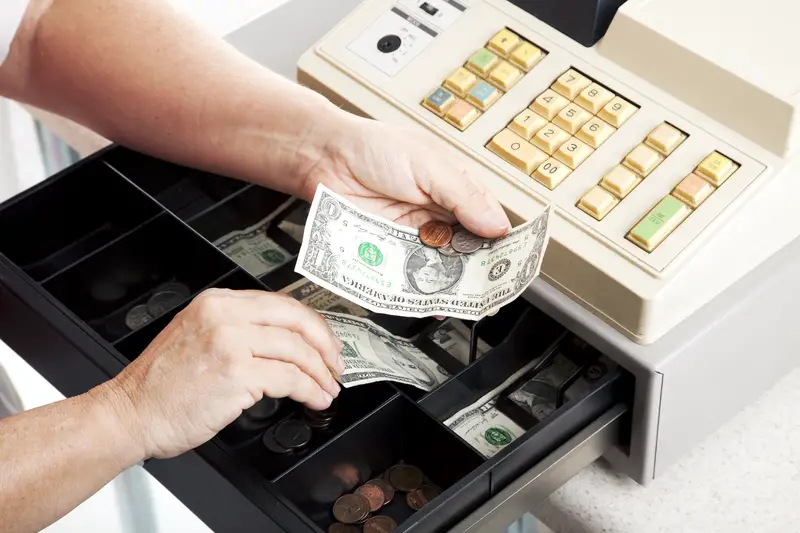
Ask anyone who’s never worked retail what the worst part of the job is, and they’ll probably say shoplifting. It makes sense — theft is dramatic, it’s in the news constantly, and it costs the industry billions every year. But talk to the people who actually stand behind those counters, fold those clothes, and scan those barcodes, and you’ll hear a very different answer.
The thing retail workers dread most isn’t the person stuffing a jacket under their shirt and bolting for the door. It’s the customer who screams at them over a coupon. It’s the woman who wears a dress to a wedding and returns it Monday. It’s the guy who guts a laptop and ships back a box of clay. And it’s the company policies that leave workers standing there, absorbing all of it, with zero backup.
Shoplifting Isn’t Even the Biggest Source of Retail Loss
Here’s something most people don’t know: in the United States, employee theft actually costs retailers more than shoplifting. According to the Global Retail Theft Barometer, employee theft accounts for 45% of retail shrink in the U.S., compared to 36% from shoplifting. Out of 24 countries surveyed, the U.S. was one of only six where internal theft outpaced external theft.
Researchers believe low wages and wage theft create a sense of resentment that makes employees feel justified in taking from their employers. That’s not an excuse — it’s a pattern. And it tells you something about how broken the relationship between retail companies and their workers has become.
But even employee theft, as big as it is, doesn’t capture what front-line workers say makes their jobs unbearable. That honor goes to something retailers have been slow to address: abusive customers and a return fraud epidemic that’s spiraling out of control.
Return Fraud Is a $103 Billion Problem — and It’s Getting Worse
In 2024, consumers returned $685 billion worth of merchandise. That’s 13.21% of all retail sales. Of those returns, 15.14% were fraudulent, adding up to $103 billion in losses tied directly to return and claims fraud.
Let that number sit for a second. One hundred and three billion dollars. That’s more than the GDP of over 100 countries. And it’s being drained from the retail industry by people gaming return policies in ways that range from sneaky to genuinely criminal.
For every $100 in returned merchandise, retailers lose $13.70 to fraud. And the cost of just processing a return — any return, legitimate or not — eats up 66% of the original item’s price. When you factor in shipping, inspection, repackaging, and the reality that more than half of returned goods can’t even be restocked, most returns are a net loss for the store.
Wardrobing: The Fraud That 69% of Shoppers Admit To
One of the most common types of return fraud has a name that makes it sound almost cute: wardrobing. It’s the practice of buying something — a dress, a power tool, a TV — using it once, and then returning it for a full refund. Wore a suit to a job interview? Return it. Hosted a Super Bowl party with a brand new sound system? Box it back up Monday morning.
According to one 2024 study, 69% of shoppers admitted to wardrobing, with 64% doing it at least once a month. Once a month. That’s not a handful of bad actors — that’s a mainstream behavior. Sixty percent of retail executives now identify wardrobing as one of the top forms of return fraud they deal with.
Research from ECR Retail Loss found that 97% of people who wardrobed said they had no trouble returning the items, and 63% said they’d do it again. The National Retail Federation estimates wardrobing alone costs U.S. retailers around $13 billion annually.
And wardrobing is just one flavor. There’s switch fraud — buying a new item and returning an old, worn-out version of the same product in the new box. There’s bricking — buying electronics, stripping out valuable components, and returning a gutted shell. There’s price switching, where someone slaps a cheaper label on an expensive product before buying it, then returns it at the higher price. Fraudsters have even figured out fake tracking ID schemes that trick shipping systems into triggering a refund before the retailer realizes nothing was actually sent back.
Workers Are Told to Just Take It
Here’s where things get really frustrating for the people on the front lines. Retailers have been firing employees who try to intervene in theft — not just return fraud, but basic shoplifting. In 2023, Lululemon fired two Atlanta-area employees who followed masked thieves out of the store and called the police. The company said the terminations were for following the shoplifters, not for calling 911, as if that distinction makes it better.
That same year, a Kroger-owned King Soopers in Colorado fired employee Santino Burrola after he recorded three shoplifters walking out with $500 worth of laundry detergent on Father’s Day. He posted the video on TikTok, where Snoop Dogg reposted it. He still got fired.
In Georgia, a 68-year-old Lowe’s employee named Donna Hansbrough tried to stop three shoplifters making off with $2,000 in goods. One of them punched her in the face three times. Lowe’s response? They fired her. They only reversed the decision after the story went viral and public backlash forced their hand.
The logic behind these policies is cold but simple: a $500 theft costs less than a lawsuit if an employee gets hurt. Retailers would rather absorb the loss than pay medical bills or deal with liability. Dallas-based attorney Jason Friedman has said as much publicly. And while that math might make sense in a boardroom, it sends a very clear message to workers — you’re on your own, and the company will side with the thief over you.
Angry Customers Are Driving Workers Out of the Industry
Beyond theft and fraud, there’s the daily grind of abuse that retail workers say is the most exhausting part of the job. Nearly 70% of retail employees report regularly dealing with frustrated or angry customers. Long wait times are the number one trigger, and 73% of front-line workers say long lines are a persistent, unresolved problem at their stores.
But it goes well beyond grumbling. In the past year, 25% of store associates reported actual threats and physical assaults from shoppers. Seventy percent experienced some form of customer incivility on a regular basis. A 2017 survey found 88% of retail and food service workers experienced verbal abuse — and by all accounts, it’s only gotten worse since then.
Alicia Grandey, a psychology professor at Penn State, has studied the effects of this mistreatment on front-line workers. Her research shows that being the target of incivility — or even just watching it happen to a coworker — triggers a fight-or-flight response that drains cognitive processing. Workers who have to suppress their emotions while being screamed at experience what researchers call “surface acting,” and it leads directly to burnout.
The numbers bear this out. Forty-one percent of retail workers report burnout from dealing with hostile customers. Twenty-eight percent have left the industry entirely because of it. Only about half of retail workers say they’re happy or find their work meaningful. Seventy-two percent say they’re regularly bored. The retail unemployment rate sits at 5.3% even with 721,000 new jobs added in 2024 — a sign that stores can’t keep people even when positions are available.
The Return Policy Arms Race
Retailers are fighting back against return fraud, but it’s creating its own problems. Sixty-three percent of retailers now charge a shipping or restocking fee on returns. Among those that don’t, 55% are considering adding one. These fees exist because the alternative — eating billions in fraudulent returns — is unsustainable.
But 58% of shoppers say restocking fees are the most frustrating part of the return experience. And in a twist that surprises absolutely nobody who’s worked retail, 76% of shoppers admit they’ve lied about or exaggerated their return reason to dodge a fee — a 39% jump from the year before.
Companies like Amazon and Sephora have started banning customers who make too many returns. But for every policy tightened, legitimate customers get caught in the crossfire. Eighty-four percent of shoppers say they’ve chosen one retailer over another specifically because of a better return policy. Cracking down on fraud means risking the loyalty of honest buyers.
U.S. consumers returned nearly $1 trillion in merchandise in 2024 — more than double the total from four years earlier. Retailers are now spending an estimated $200 billion a year just trying to recover value from returned goods. The system is buckling.
Why This All Falls on the Same People
The common thread here is that every one of these problems — the fraud, the abuse, the shoplifting, the understaffing — lands squarely on the shoulders of the person making $14 an hour behind the register. They can’t stop the shoplifter or they’ll get fired. They can’t refuse the suspicious return without risking a confrontation that could turn violent. They can’t make the line shorter because there aren’t enough workers. And they can’t respond honestly to the customer screaming in their face without losing their job.
Fifty-one percent of retail workers want more security protocols. Thirty-two percent want conflict training. What they’re getting instead is a growing list of things they’re not allowed to do, paired with a growing list of things they’re expected to absorb. Shoplifting may grab the headlines, but the people living through it every day will tell you: the stuff that doesn’t make the news is so much worse.

