

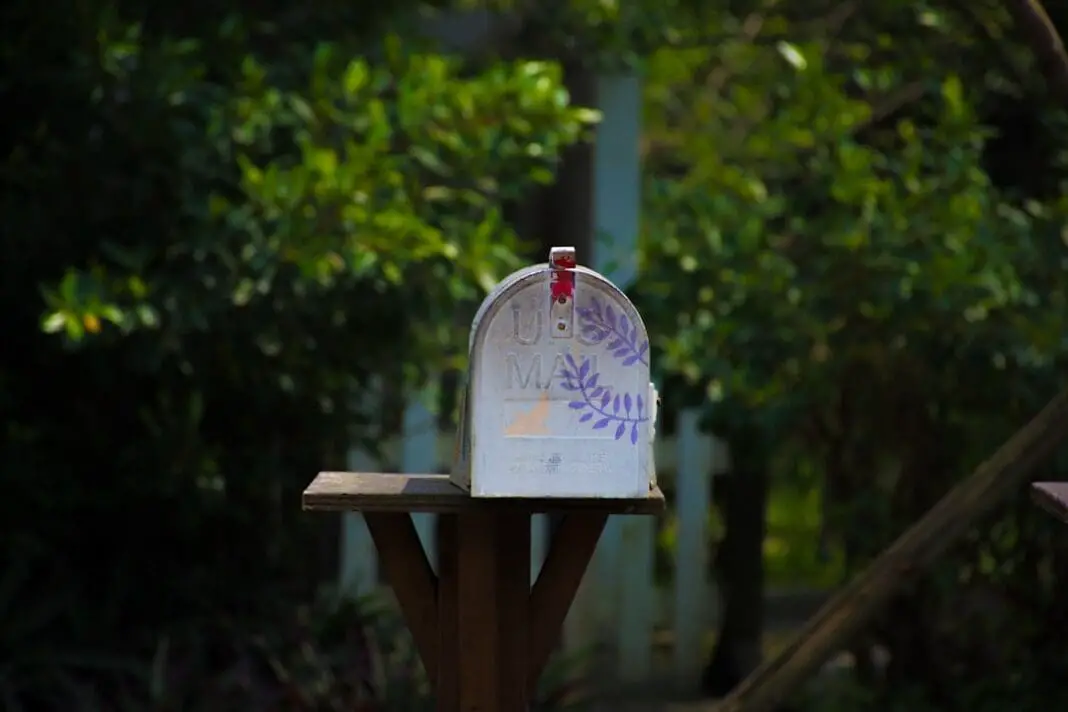
If you’ve ever worried about a porch pirate swiping an Amazon box off your doorstep, you’re focused on the wrong thing. The real threat sitting in your mailbox right now is way more old-school — and way more dangerous. Mail thieves across the country are overwhelmingly hunting for one specific item, and it’s probably something you mailed last month without thinking twice about it.
They want your checks.
Not your junk mail. Not your birthday cards (well, unless there’s a check inside). Not even your credit cards, though those get grabbed too. The number one prize for mail thieves in 2025 is a plain old paper check — your rent payment, your insurance premium, your kid’s school fee. And what they can do with a single stolen check is honestly wild.
The Numbers Are Staggering and Getting Worse
Here’s where it gets real. In fiscal year 2024, the Postal Service recorded over 52,000 high-volume mail theft attacks. That’s not 52,000 individual letters getting snatched — those are coordinated, large-scale hits on collection boxes, postal trucks, apartment mail panels, loading docks, and even letter carrier pushcarts. That number represents a 2,238% increase since 2010. Read that again. Two thousand, two hundred and thirty-eight percent.
These aren’t some teenagers rifling through mailboxes for fun. These are organized operations that target points in the delivery chain where the most mail can be grabbed at once. We’re talking about blue collection boxes on street corners, those green relay boxes, cluster mailbox units in subdivisions — anywhere a criminal can grab a fistful of envelopes and disappear.
And the fallout is enormous. Financial institutions filed more than 682,000 Suspicious Activity Reports related to check fraud in 2024 alone — a 139% jump from 2020. The FBI and USPS issued a joint warning earlier this year confirming that check fraud reports have nearly doubled between 2021 and 2023.
What “Check Washing” Actually Looks Like
So a thief steals your check. Then what? This is the part most people don’t know about, and it sounds like something out of a crime movie.
The most common technique is called check washing. The criminal takes your signed, filled-out check and uses household chemicals — acetone, bleach, even nail polish remover — to erase the handwritten portions. The pre-printed stuff (your name, bank info, routing number) stays perfectly intact. But the payee line and the dollar amount? Wiped clean. Now your $150 check to the electric company becomes a $4,500 check made out to whoever they want.
And here’s the kicker: the old advice about using a ballpoint pen? It doesn’t work anymore. The chemicals and techniques have gotten good enough that standard ballpoint ink washes right off. Only gel pens or pens with permanent black ink hold up.
Then there’s “check cooking,” which is even more sophisticated. Criminals take a photo of your stolen check, load it into photo editing software, and digitally manipulate it. With a decent printer, they can produce multiple counterfeit checks from a single stolen original. The cooked checks are often written for smaller amounts — a few hundred bucks — specifically to slip under the radar.
Stolen Checks Are Being Sold on Telegram Like Sneakers
This is maybe the most jaw-dropping part. Stolen checks have become a commodity, traded online through criminal marketplaces — and the preferred platform is Telegram.
In May 2025, federal prosecutors charged four people in a $63 million mail theft conspiracy out of Detroit. Two of them were actual USPS employees who stole checks — including a huge volume of U.S. Treasury tax refund checks — and handed them off to the other two defendants, who ran Telegram channels to sell them. The channel names? “Whole Foods Slipsss” for the high-dollar checks, and “Uber Eats Slips” for cheaper ones. The word “slips” is criminal slang for stolen checks. Prices varied based on the face value.
In another case, a mail processing clerk at a Charlotte, North Carolina distribution center stole checks totaling more than $24 million. She profiled envelopes while sitting at her machine, stuffed checks into a backpack, and brought them home to her boyfriend, who passed them to a ringleader selling on a Telegram channel called “OG Glass House.” More than $8 million of what she stole were U.S. Treasury checks. She got five years in prison.
In just three months of 2024, researchers at Georgia State University catalogued more than $485 million in stolen Treasury checks being sold online. That’s just what they found in a single quarter.
The Insider Problem Nobody Talks About
Here’s the uncomfortable truth that makes this especially hard to prevent: some of the thieves work for the post office.
Both the Detroit and Charlotte cases involved postal employees. And according to fraud detection company Nasdaq Verafin, mail thieves are increasingly working with insiders at both postal services and banks to carry out check fraud. Check fraud accounted for $21 billion in losses across the Americas in 2023.
Think about that for a second. You can do everything right — drop your check inside the post office, use a secure envelope, write in permanent ink — and it can still get stolen from inside the system. The Charlotte clerk was literally sorting mail on a machine and deciding which envelopes looked like they contained checks. She’d been recruited by her boyfriend, who learned about her postal job through criminal associates who were already in the game.
USPS told Congress that mail theft of 58 million packages resulted in more than $16 billion in losses, affecting about 25% of Americans. One in four. That’s not a fringe problem.
A Stolen Check Is Way More Dangerous Than You Think
Most people think of a stolen check as a single transaction problem. Someone cashes your check fraudulently, the bank catches it, you get your money back. Right?
Not exactly. A single check contains your full name, home address, bank name, routing number, and account number. That’s everything a criminal needs to open accounts in your name, initiate wire transfers, or commit identity theft that follows you for years. Research shows that spikes in mail theft are directly followed by surges in identity theft. Every stolen check has been described as “a data-rich artifact that spawns multiple fraud schemes.”
Even if you do get the fraudulent charge reversed, the process is brutal. Banks may close your account. You might face stop-payment fees. Your access to your own money can be frozen during the investigation. And 44% of checks stolen from the mail are altered and deposited before anyone notices — because banks are required by regulation to make check funds available within short timeframes, which means the criminal has already withdrawn the cash before anyone flags the problem.
This Isn’t Just a Big City Problem
If you live in a rural area or a quiet suburb and think this doesn’t apply to you, think again. In August 2025, the Washoe County Sheriff’s Office in Reno, Nevada — not exactly a crime capital — reported a spike in mail theft and check alteration. Sergeant Juan Gomez said his biggest piece of advice is simple: do not mail checks from your home. Period.
Criminals are targeting community mailboxes, apartment complexes, and those standalone blue USPS collection boxes that sit on random street corners. Rural mailboxes — the ones with the little red flag you flip up to tell the carrier you have outgoing mail — are basically advertisements. You’re waving a flag that says “there’s something worth stealing in here.”
How to Actually Protect Yourself
The best advice, repeated by pretty much every law enforcement agency and financial regulator, boils down to a handful of moves:
First, stop mailing checks from your house. If you absolutely must send a check, take it inside a post office and hand it to someone or drop it in the lobby box. Don’t use a curbside collection box if you can avoid it.
Second, sign up for USPS Informed Delivery. It’s free, and it emails you images of what’s coming to your mailbox each day. If something doesn’t show up, you’ll know immediately.
Third, pick up your mail every single day. Don’t let it sit overnight. If you’re going on vacation, put a hold on your mail through USPS — it’s free for up to 30 days.
Fourth, if you’re still writing checks, use a gel pen with permanent black ink. Fill in every blank space on the payee and amount lines — draw a line through any unused space so nobody can add digits or extra words. Never write personal information like your Social Security number on a check.
Fifth, switch to electronic payments wherever you can. Online bill pay, ACH transfers, Zelle, Venmo — anything that keeps a paper check out of the mail stream.
And finally, check your bank account regularly. If a check you sent gets cashed for a different amount or by someone you don’t recognize, call your bank immediately.
If you suspect mail theft, report it to the USPS Postal Inspection Service at uspis.gov/report or call 1-877-876-2455. If a postal employee is involved, report to the USPS Office of Inspector General.
We live in 2025 and criminals are making millions off paper checks, nail polish remover, and Telegram. Sometimes the oldest tricks are still the most effective.

