

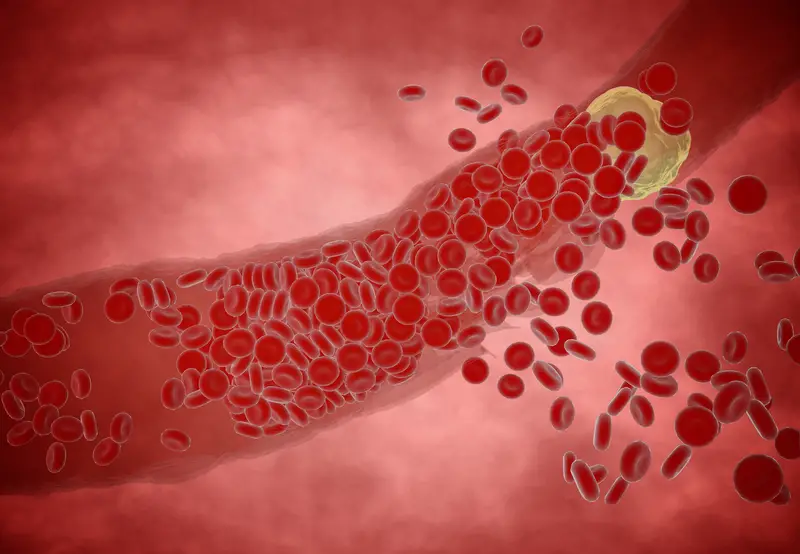
When most people think about clogged arteries, they picture someone clutching their chest and collapsing. That’s the Hollywood version. The real version is way more subtle and way more unsettling — because clogged arteries often announce themselves through symptoms you’d never connect to your heart or blood vessels. We’re talking about back pain, cold feet, leg cramps, and things that happen in the bedroom. Symptoms that most people shrug off, blame on getting older, or ignore entirely until something catastrophic happens.
Here’s the thing that makes this so alarming: by the time many Americans reach their 20s, arterial blockages may already be forming inside their bodies. Ten percent of Americans already have advanced blockages in the arteries leading to their lower back by age 20. That’s not a typo. Twenty years old. And most of them have absolutely no idea.
Atherosclerosis — the medical term for arteries getting clogged with plaque made of fat, cholesterol, calcium, and other gunk — is a slow, silent process. Most people won’t feel a single symptom until an artery is more than 70% blocked. That means your arteries can be more than half-shut before your body even sends up a flare. So let’s talk about the warning signs that most people completely miss.
Your Lower Back Pain Might Not Be What You Think
This one floors people. Chronic lower back pain — the kind that millions of Americans live with every single day — might actually be a signal that arteries are clogged. The arteries leading to the lower back are among the very first in the entire body to accumulate plaque. When blood flow to the back decreases, the disks that cushion your vertebrae weaken. That can lead to herniated disks and pinched nerves. So that nagging back pain you’ve been blaming on your office chair or your mattress? It could be a cardiovascular issue disguised as a musculoskeletal one.
Studies show that people who deal with chronic back pain are far more likely to have clogged lumbar arteries compared to people who don’t. Back pain is the most common form of pain in America. How many of those people have been sent home with ibuprofen and a heating pad when something much bigger was going on? It’s a question worth sitting with.
Erectile Dysfunction Is an Early Red Flag, Not Just an Aging Thing
This is one of the most under-discussed warning signs in all of cardiovascular care, and it affects a staggering number of men. Erectile dysfunction affects 40% of men before age 40 and close to 70% of men by the time they hit 70. Most guys chalk it up to stress, age, or relationship issues. But researchers have found that ED can be an independent predictor for both peripheral artery disease and coronary artery disease.
Think about that for a second. The same plaque buildup that clogs the arteries around the heart also clogs the smaller arteries in the pelvis. And because those arteries are smaller, they often get clogged first. That means ED can show up years before a heart attack does. One study found that screening men with erectile dysfunction for heart disease could prevent a million heart attacks or strokes over the next 20 years. A million. Yet most men don’t make the connection, and many are too embarrassed to bring it up with a doctor in the first place.
In one study, 45% of screened patients had ED, and of that group, 23% also had peripheral artery disease. Here’s the kicker: 66% of those patients reported zero lower extremity symptoms associated with PAD before the study. They had no idea anything was wrong with their arteries.
Leg Pain While Walking Isn’t Just “Getting Old”
If your legs cramp, ache, or feel heavy when you walk or climb stairs — and the discomfort goes away when you stop and rest — that has a name. It’s called claudication, and it’s one of the most common warning signs of clogged arteries in the legs. The pain usually hits in the calf but can also show up in the buttocks, thighs, or feet.
Millions of Americans experience this and blame it on being out of shape, or needing new shoes, or just getting older. And sure, sometimes leg pain is just leg pain. But the pattern matters. Pain during movement that eases with rest? That’s a textbook sign that blood isn’t flowing properly to your muscles. Your legs are literally telling you they’re not getting enough oxygen.
Other leg-related signs include color changes — legs that look pale or bluish when sitting — and one foot feeling noticeably colder than the other. Wounds or sores on the legs that won’t heal are another red flag. When circulation is reduced, the skin doesn’t get enough oxygen and nutrients to repair itself properly.
Exhaustion That Sleep Doesn’t Fix
There’s tired, and then there’s the kind of tired that doesn’t make sense. The kind where you sleep eight hours and still feel wiped out. Where activities that used to be easy suddenly feel like running a marathon. This type of fatigue is different from regular tiredness — it can feel overwhelming and it often shows up in the early stages of heart disease.
What’s happening is that your heart is working harder than it should to push blood through narrowing arteries. When your heart is laboring that hard just to keep up with normal demand, your body feels it. And this symptom hits women harder than men. Women are more likely to experience unexplained fatigue as an early sign, which is one reason heart disease in women gets missed and misdiagnosed so often. The fatigue can appear without warning and last for days. Doctors note that this kind of tiredness can happen when doing activities that never caused exhaustion before.
Shortness of Breath During Simple Activities
Getting winded walking up a flight of stairs when you used to take them two at a time? Feeling breathless while doing laundry or making the bed? That’s not just being out of shape. When arteries are narrowed, the heart can’t pump enough blood to meet your body’s demand. The result is breathlessness during activities that shouldn’t be a problem. In severe cases, people feel short of breath even while lying down or sitting still.
This is one of those symptoms that creeps up on you gradually. You stop taking the stairs. You park closer to the store. You sit down more often. You adjust your life around the symptom without ever questioning why it’s happening.
Stomach Problems That Look Like Indigestion
This is where things get really tricky. When arteries supplying blood to the digestive system get blocked — a condition called mesenteric ischemia — the symptoms look a whole lot like garden-variety stomach problems. Pain or cramping in the abdomen after eating. Bloating. Nausea. Some people develop what doctors call “food fear” — they stop eating because they associate meals with pain afterward. This leads to unintentional weight loss.
And during a heart attack itself, the symptoms can mimic a bad meal. Nausea, heartburn, stomach pain, indigestion — these are all reported symptoms, and they’re the reason many people, especially women, dismiss a cardiac event as something they ate. Women in particular are more likely to experience these atypical symptoms, along with jaw pain, neck discomfort, and fatigue, rather than the classic crushing chest pain.
A Whooshing Sound You Can’t Hear — But a Doctor Can
Here’s a strange one. In the early stages of carotid artery disease — where the arteries supplying blood to the brain are narrowing — there may be zero symptoms that you’d notice on your own. But a doctor listening to your neck with a stethoscope might hear a whooshing sound called a “bruit.” It’s the sound of blood struggling to flow through a narrowed artery. Doctors can also detect a bruit in the belly, which can signal renal artery stenosis.
The problem is that many people don’t get the kind of physical exam where a doctor actually listens to blood flow in the neck or abdomen. Often the first sign of carotid artery disease is a transient ischemic attack — a mini-stroke — or an actual stroke. That means drooping on one side of the face, sudden loss of feeling, slurred speech, severe headache, or vision loss in one eye. By that point, the situation is already an emergency.
The 90% Blockage That Came With Zero Symptoms
There’s a story from Advocate Health Care that perfectly illustrates how sneaky this disease is. A man named Bob Hurdle — a hospital volunteer who lived an active lifestyle and had never experienced a single heart disease symptom — decided to get a heart scan purely because of his family history and age. The scan revealed a 90% blocked artery. Ninety percent. He was walking around, volunteering at a hospital, living his normal life, with an artery that was almost completely shut.
He underwent angioplasty and stenting and was back to his active life in less than two weeks. But what if he hadn’t gotten that scan? His cardiologist, Dr. Thomas Discher, put it bluntly: “If you don’t ask questions of whether you possibly have coronary heart disease, by the time you find out it may be too late.”
That’s the scariest part of all this. Clogged arteries are often called a “silent killer” because the very first symptom for some people is a heart attack or stroke. No warning. No gradual buildup of clues. Just a catastrophic event that comes out of nowhere — except it didn’t come out of nowhere. The plaque had been building for years or decades. The body was sending signals the whole time. They just looked like back pain, or fatigue, or a bad stomach, or something that happens to everyone eventually.
Why the Signals Get Missed So Often
The biggest reason these symptoms get overlooked is that they overlap with a hundred other things. Tired? Must be stress. Legs hurt? Must be out of shape. Back pain? Must be the desk job. Stomach cramping? Must be something you ate. Each symptom in isolation seems benign. It’s the pattern that matters, and most people aren’t connecting the dots.
Women get the worst of it because their symptoms are more likely to be atypical — fatigue, nausea, jaw pain, and breathlessness rather than classic chest pain. Heart disease is the leading killer of women in America, and the symptom gap is a real and documented problem.
The takeaway isn’t to panic every time your leg cramps or your back hurts. But if you’ve got a cluster of these symptoms — especially combined with risk factors like high blood pressure, high cholesterol, smoking, diabetes, or a family history — those puzzle pieces might be forming a picture you don’t want to ignore.

