

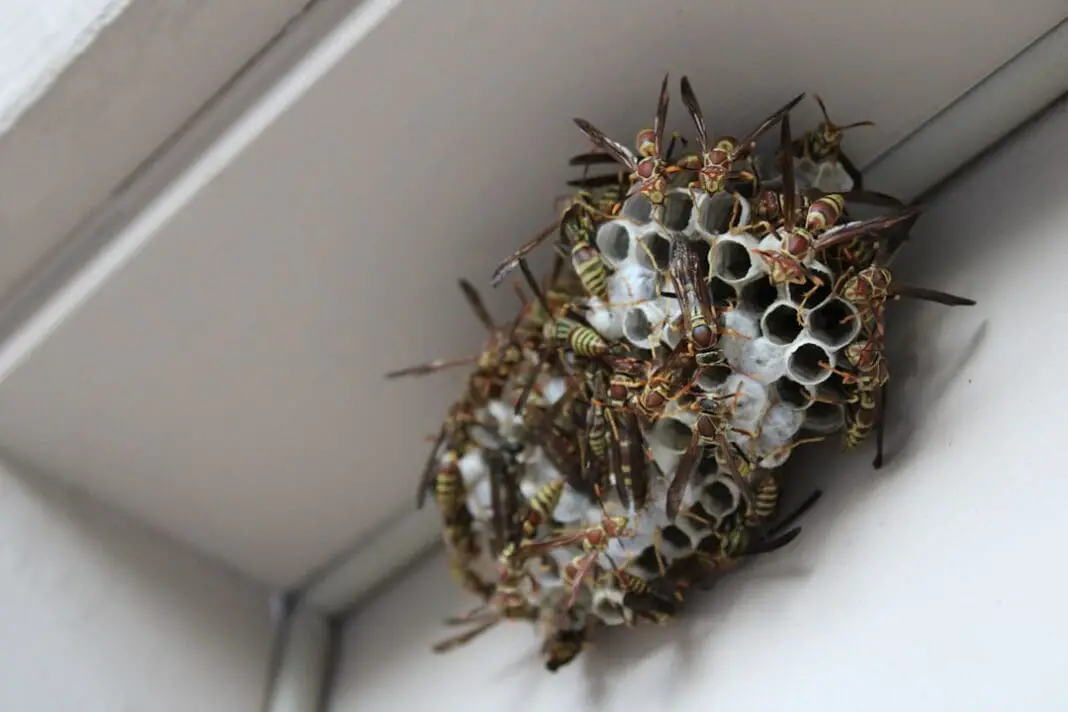
About 72 people a year die in the United States from hornet, wasp and bee stings, an average the CDC drew from death records for 2011 through 2021. That small number sits on top of a much bigger one. Emergency rooms treat an estimated 222,000 sting injuries in this country each year. Most of them walk away with an itchy welt and a foul mood. A few end up on a gurney with an IV in their arm, and usually the bug barely did anything. Their own immune system did the rest.
Vania Landers, DO, an emergency medicine doctor at Mass General Brigham Express Care, said it plainly: “Most bites are mild and can be treated at home.” The trouble starts when they are not. Some of the bugs below can send an ordinary summer afternoon straight to the hospital, and a few facts about them sound flat-out made up.
The Ant That Owns 367 Million Acres
Imported fire ants now infest more than 367 million acres, mostly across the South but reaching California and Puerto Rico. The American College of Allergy, Asthma and Immunology says that where they have taken hold they may be the number one agent of insect stings, though nationally most stings still come from wasps, yellow jackets, hornets and honeybees. They do not just bite you and leave. They grab your skin with their jaws and sting over and over, which is why a run-in with a mound leaves a cluster of welts instead of one.
The weird part is the blister. Almost everyone stung gets an itchy hive that fades in 30 to 60 minutes, then a blister shows up within about four hours. By 8 to 24 hours later it looks full of pus. It is not infected. That white stuff is dead tissue, and the blister usually stays clean as long as you leave it alone. Break it open and you invite bacteria in.
Most fire ant stings are just plain miserable. Rarely they set off anaphylaxis, the full-body allergic reaction that can drop your blood pressure and knock you out. About 2 percent of stings bring on a severe reaction, per the Cleveland Clinic, and a 2025 review of military health records put fire ant anaphylaxis at roughly 48 cases per 100,000 people, rising to 85 per 100,000 in the states the ants have colonized. The only national count of deaths is a 1989 survey of physicians, which found 32. If you ever step on a mound, rub them off briskly with a hand or a cloth, because they hang on with those jaws and do not brush away easily.
The Bug That Bites Your Face While You Sleep
The kissing bug earned its sweet nickname the ugly way. These blood-feeders, also called triatomine bugs, feed on sleeping people, often around the face. Some carry a parasite, Trypanosoma cruzi, that causes Chagas disease. The bite itself does not pass it on. The parasite rides in the bug’s droppings, which get rubbed into the wound or into the eyes and mouth.
For years, Americans treated Chagas as something you only caught in Latin America. In 2025 a group of university researchers argued in the journal Emerging Infectious Diseases that it should now be called endemic here. The CDC published a rebuttal in May 2026 saying locally acquired human cases remain sporadic, not endemic. Both sides agree the bugs are carrying it. Texas A&M has found the parasite in about 55 percent of the kissing bugs sent to its lab.
What makes Chagas sneaky is the clock. Early on it might cause nothing worse than a fever and some fatigue, so most infected people never realize they have it. The CDC estimates about 280,000 people in the United States carry it, nearly all of them infected abroad, and most have no idea. Years or even decades later, it can damage the heart or the digestive tract. Modeling studies project the bug’s range creeping north as the climate warms, though researchers say the data so far cannot prove it is happening. It is the rare case where the danger is not the bite at all, but the passenger the bug leaves behind.
The Spider That Punches Above Its Weight
You will read everywhere that a black widow’s venom is 15 times stronger than a rattlesnake’s. That comes from lab toxicity tests in mice, and it leaves out the part that matters. A rattlesnake injects orders of magnitude more venom than a spider can. Drop for drop the widow is potent. In an actual bite, the snake is far more dangerous. The spider is about the size of a quarter, and only the adult female is the glossy black one with the red hourglass underneath and fangs big enough to break skin.
Black widow and brown recluse bites are the two in this country that doctors agree you should not tough out, and they behave nothing alike. A widow bite brings on muscle cramps, sweating, chills, body aches and real pain. A recluse bite often starts painless, then blisters, and can kill the tissue around it, though only about one in ten does serious damage. Either one is worth a call to Poison Control at 1-800-222-1222, which will tell you whether to go in.
One old piece of advice has fallen out of favor. Do not go hunting for the spider that bit you. Toxicologists now say catching it is unnecessary and risks a second bite, and these bites are diagnosed on symptoms anyway. A photo is plenty if the spider is already dead. Most spider bites in the US are harmless and clear up in a few days. It is these two you do not gamble on.
The Scorpion Hiding Under Your Firewood
Scorpions are not insects. Neither are spiders, ticks, or chiggers. They are arachnids, the eight-legged cousins, which is worth knowing because people file every creepy crawler under “bug.” The Arizona bark scorpion is the most venomous scorpion in the country, and it loves dark, sheltered spots: under rocks, logs, and debris, the exact places you reach into without looking.
Most bark scorpion stings never reach a hospital. Arizona’s poison center handles about 90 percent of the ones reported to it over the phone, and healthy adults rarely need more. Small children are the exception, and so is any sting followed by drooling, heavy sweating, a racing pulse, muscle spasms, slurred speech or trouble breathing. Those are not itch-cream problems. If they show up, it is a 911 call, fast.
Mostly, scorpions want nothing to do with you. They hide, you reach, and everybody loses. The fix is boring and it works: look before you grab, shake out your shoes and gloves, and do not go barefoot in scorpion country after dark.
Why You Should Never Yank A Bee Stinger
Honeybees are the common stinging insect that usually leaves the weapon behind. Their stinger is barbed, so it stays hooked in your skin with the venom sac still attached and still pumping. Wasps, hornets, yellow jackets, and fire ants keep theirs and can sting you again and again.
That leftover stinger is where people waste time. The old rule says never pinch it, because you will squeeze the sac and push more venom in. Entomologists who went looking for evidence of that could not find any, and more than 90 percent of the venom is delivered within 20 seconds. Speed beats technique. Get it out however you can reach it, right now, instead of hunting for a credit card.
There is a bigger reason to respect a sting if one has ever hit you hard. People who have had a whole-body allergic reaction to a sting have about a 60% chance of a similar or worse reaction the next time. So a scary reaction years ago is not behind you. It is a heads-up about the next sting, and it is worth mentioning to a doctor before summer.
The Bug Stain That Won’t Wash Off For Weeks
Mess with the wrong millipede and it fights back with chemistry. Millipedes ooze a caustic liquid from glands along their sides, and it can leave a brown or black stain on your skin that hangs around for days or weeks. Get it in your eye and it is far worse, capable of burning the cornea. Centipedes take a different approach, biting with a structure near the head and leaving two small puncture marks with a burn around them.
Pull back and bugs are basically running the planet. Arthropods, the giant group that covers insects, spiders, centipedes, and millipedes, make up around 80% of all known animal species. Insects on their own make up the bulk of that, with roughly 900,000 species described so far. So when it feels like they outnumber you at a backyard cookout, they do, by a landslide.
Neither the millipede nor the centipede is likely to put you in a hospital bed. They just prove that the word “bug” covers a wild range of creatures, and almost all of them have some trick to make you regret the contact.
When A Bite On Your Ankle Swells Your Whole Leg
The scariest sign after a bite has nothing to do with the wound itself. It is when the reaction spreads far past it. Get bitten on the ankle and watch the entire leg puff up, or see swelling stretch more than 4 inches across, and your body has gone from annoyed to alarmed.
Allergic reactions usually start within about 15 minutes of a bite or sting, though they can hold off for up to six hours. Hives showing up on skin nowhere near the bite, a swelling tongue or throat, trouble breathing or swallowing, dizziness, vomiting: any one of those means the ER, not the medicine cabinet. Anaphylaxis often hits two body systems at once, say itchy skin plus wheezing, but it does not have to. A sudden drop in blood pressure after a sting counts on its own, with no rash and no wheeze. An airway can close in minutes, and allergists say not to wait for a checklist before using epinephrine.
You can tilt the odds before you ever step outside. Skip the sweet-smelling perfume, lotion, and deodorant, which pull insects toward you. Cover your food and drinks at a picnic, dump standing water around the house, and use an EPA-registered repellent. Do not count on daylight for cover. The CDC says mosquitoes bite day and night, and the species behind dengue and Zika are daytime biters. The best bite is the one that never happens.

