

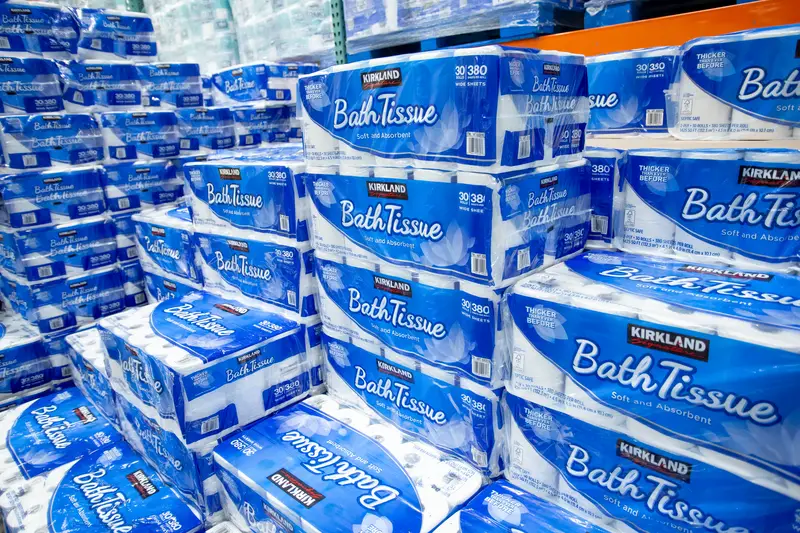
You know those giant packages of Kirkland toilet paper that take up half your Costco cart? Most people assume Costco makes them in some warehouse somewhere, but that’s not quite how it works. The truth is, several well-known companies produce these bathroom essentials, and the manufacturing process might surprise you. Some locations even carry toilet paper from different suppliers at different times, which explains why long-time buyers sometimes notice changes in texture or quality.
Georgia-Pacific handles most of the production work
The same company that makes Angel Soft and Quilted Northern also produces a big chunk of Kirkland toilet paper. Georgia-Pacific is one of the main manufacturers behind those white and red packages you see stacked high in the warehouse aisles. This American company has been in the paper business for decades, so they know what they’re doing when it comes to turning wood pulp into something soft enough for your bathroom.
What makes this interesting is that Georgia-Pacific produces toilet paper at different price points under their own brand names. They make the budget-friendly Angel Soft and the more premium Quilted Northern, which actually costs more than twice as much per sheet as Kirkland. That means when you buy Kirkland brand, you’re essentially getting paper from a trusted manufacturer at a fraction of the cost. The factory equipment and basic processes are similar across their product lines, but Costco’s specifications for their store brand might differ slightly from what they make for their own labels.
Sofidel supplies some stores with European-made paper
Not all Kirkland toilet paper comes from American factories. Sofidel, a European company, also manufactures toilet paper that ends up in Costco stores. This company operates facilities across multiple countries and has built a reputation for producing private-label products for major retailers. Depending on where your local Costco is located and what their current supply agreements look like, you might be buying paper that was made overseas or in one of Sofidel’s North American plants.
The reason Costco works with multiple manufacturers comes down to simple logistics and demand. They sell over one billion rolls each year, which is way more than any single factory could handle. By partnering with several producers, they can keep shelves stocked even when one supplier faces production issues or increased demand. This strategy also gives Costco negotiating power when it comes to pricing, which helps them keep that 21-cent-per-100-sheets price tag that makes Kirkland paper so attractive compared to Charmin’s 40-plus cents per 100 sheets.
Clearwater Paper and Procter & Gamble pitch in too
Two more names show up in the list of Kirkland toilet paper manufacturers. Clearwater Corporation specializes in private-label paper products and supplies several major supermarket chains across America. Procter & Gamble, the company behind Charmin, also produces some Kirkland toilet paper. Yeah, you read that right. The same folks who make one of the priciest toilet papers on the shelf also make one of the cheapest. This happens more often than you’d think in the manufacturing world, where companies run different product lines through the same facilities.
These partnerships shift over time based on contracts, pricing, and production capacity. That’s why different Costco locations might carry toilet paper from different suppliers, or even mix suppliers within the same store. Some people on Facebook and Reddit have noticed these changes when their favorite toilet paper suddenly feels different or performs differently than it used to. The packaging looks identical, but the actual manufacturer might have changed between purchases, leading to slight variations in thickness, softness, or how many sheets you need to use.
The paper starts in Canadian forests before processing
Most Kirkland toilet paper begins its life in Canada’s boreal forest, where trees are harvested specifically for paper products. The wood gets processed into pulp at Canadian facilities before being turned into the rolls you eventually buy. This happens relatively close to Kirkland, Washington, which is where Costco started and how the Kirkland brand got its name. The proximity makes sense from a shipping standpoint, especially for stores on the West Coast.
The manufacturing process turns wood fibers into pulp, which then gets bleached, pressed, and rolled into the two-ply sheets we use. Unlike some brands that use recycled paper, Kirkland toilet paper comes from virgin wood fibers. The Forest Stewardship Council certifies it as FSC mix, which means it contains wood from a combination of sources. Some comes from certified sustainable forests and recycled materials, but some comes from forests without sustainability certification. This certification level sits at the bottom of the FSC’s rating system.
Quality varies depending on who you ask
Consumer Reports tested popular toilet papers in 2025 and described Kirkland as comparatively cheap and linty. A reviewer in Canada’s The Globe and Mail went further, calling it a hard pass. On the other hand, plenty of Costco members swear by it and buy those massive packages every single trip. The difference in opinions might come down to personal preference, or it might reflect the fact that different manufacturers produce the paper at different times.
Some shoppers have complained online that the quality dropped over the years. They say it went from being the best store-brand option to one of the worst, with reports of the paper being flimsy and shredding when you try to tear it off the roll. Others mention paper dust or lint becoming a problem. Still, many people appreciate the combination of price and performance, especially when you consider that Kirkland costs about $0.0027 per sheet compared to other budget options that run slightly cheaper at $0.0025 per sheet. That tiny difference might not seem like much, but it adds up when you’re buying in bulk.
The price looks good until you do the math
A 30-pack of Kirkland toilet paper with 380 sheets per roll costs around $30.99 at most locations. That works out to about a dollar per roll, which sounds reasonable. But when you compare it sheet-by-sheet with other brands, the numbers get more interesting. Purex sells a 60-roll box for $76.44, with each roll containing 506 sheets. Breaking down the per-sheet cost shows that Purex actually edges out Kirkland by a tiny margin.
The real value in buying Kirkland comes from convenience and consistency. You’re getting a known quantity from a store you probably visit regularly anyway. Plus, having a giant pack in your closet means fewer last-minute runs to the store when you’re down to your last roll. The packaging takes up a lot of space, sure, but that’s the trade-off for bulk buying. If you have the storage room and you’re already paying for a Costco membership, picking up toilet paper during your regular shopping trip makes sense for most households.
Costco doesn’t own any manufacturing facilities itself
Here’s something that surprises a lot of people: Costco doesn’t make any of its Kirkland products in its own factories. They don’t have a toilet paper plant or a vodka distillery or a nut-roasting facility. Instead, they partner with established manufacturers who already have the equipment, expertise, and capacity to produce millions of units. This business model keeps Costco’s overhead low and lets them focus on what they do best, which is buying in massive quantities and selling at thin profit margins.
The Kirkland name came about in 1995 when founder Jim Sinegal decided to consolidate all of Costco’s private-label products under one brand. Before that, they had about 30 different store brands, which confused shoppers and made it harder to build brand loyalty. The name Kirkland Signature was inspired by the Washington town where Costco started. That single brand now generates $58 billion in sales each year, covering everything from batteries to bacon. The unified branding helps customers know they’re getting consistent quality, even though dozens of different companies actually make the products.
The packages carry FSC certification marks
If you look at a package of Kirkland toilet paper, you’ll see it’s labeled as FSC mix certified. The Forest Stewardship Council created this certification system to help consumers identify paper products that meet certain forestry standards. The mix designation is their entry-level certification, meaning the product contains wood from multiple sources with varying levels of sustainability. Some of the wood comes from FSC-certified forests managed according to specific standards, some comes from recycled materials, and some comes from conventional forestry operations.
This certification sits below FSC recycled and FSC 100 percent in the organization’s ranking system. For shoppers who care about where their products come from, this information helps with purchasing decisions. Costco introduced a climate action plan in 2022 that mentions promoting regenerative agriculture and avoiding deforestation, though the company hasn’t made major changes to their toilet paper sourcing yet. The toilet paper packaging also carries certification from the Sustainable Forestry Initiative, another organization that works on forest management standards.
It works fine with septic systems
One practical concern for homeowners with septic tanks is whether Kirkland toilet paper will cause problems. The good news is that it’s considered septic safe. The two-ply construction and pulp fiber composition mean it dissolves in water without leaving behind clumps that could clog your system. This matters because some thicker, more absorbent toilet papers can take longer to break down, potentially leading to backups or requiring more frequent tank pumping.
The paper breaks down at a reasonable rate when it hits water, which is what you want in a septic-safe product. Some users have mentioned that it’s not the thickest or most luxurious option out there, but that lighter construction actually helps it dissolve faster. If you’re specifically looking for septic-safe toilet paper and you already shop at Costco, Kirkland checks that box. Just keep in mind that even septic-safe paper can cause issues if you use way too much at once, so regular plumbing rules still apply no matter which brand you buy.
Now you know the real deal behind those massive packages of Kirkland toilet paper. Several major manufacturers produce them, the wood comes from Canadian forests, and the quality depends partly on which supplier made your particular batch. The price makes sense for bulk buyers who value convenience, and the paper works fine for most households. Whether it’s the right choice for your bathroom comes down to your priorities around cost, quality, and how often you want to restock.

