

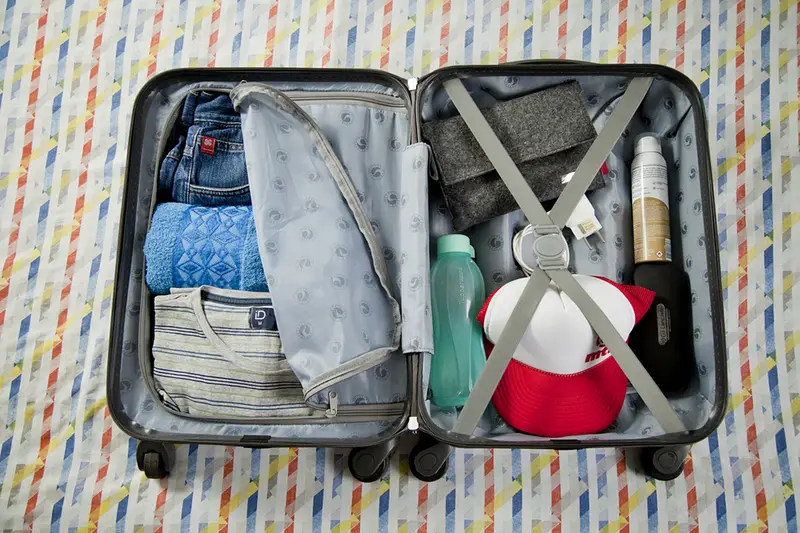
I watched a woman at JFK get her entire carry-on emptied at the TSA checkpoint last summer. Bottle by bottle, tube by tube, the agent pulled out full-size shampoo, conditioner, a massive tube of sunscreen, and what looked like a family-size bottle of mouthwash. She looked genuinely confused. And honestly? A few years ago, that could’ve been me. Most of us think we know how to pack a suitcase. We’ve been doing it since childhood. But the way most Americans pack is quietly costing them money, time, comfort, and sometimes their favorite belongings.
That Viral Ribbon Hack Can Actually Get Your Bag Searched
You’ve probably seen the tip floating around Instagram and TikTok: tie a brightly colored ribbon to your suitcase handle so you can spot it instantly at baggage claim. Sounds clever. But Paul Stewart, founder of MyBaggage, says this is a mistake that can backfire badly. The ribbon can get snagged on the airport’s baggage handling belts, which can delay or damage your bag. Worse, it can catch the attention of security screeners who may flag your luggage for a physical inspection. Suddenly your “smart” hack is the reason a stranger is rifling through your underwear in a back room.
Stewart also warns against another popular trick — wrapping your suitcase in plastic wrap. While a lot of international airports even sell this service, plastic-wrapped bags can set off internal alarms for security screeners, meaning they’ll cut it all off and search your bag anyway. You just paid eight bucks for nothing.
You Probably Won’t Wear Half of What You Pack
This one stings because we all think we’re the exception. But Van Dop DeJesus, a travel expert interviewed by HuffPost, dropped a stat that’s hard to argue with: most people won’t wear 50% of what they packed. Half. That means if you packed ten outfits, five of them just rode around in your suitcase for a week like freeloaders. DeJesus says a five- to seven-day trip can easily be done with just a carry-on. Konrad Waliszewski, co-founder and CEO of travel app Tripscout, agreed that nearly every traveler packs way too much.
One travel blogger who writes about this problem says it used to happen to her because she’d pack brightly colored pieces that didn’t match anything else in the bag. A hot pink top seems like a great idea at home, but if it only goes with one specific pair of pants you also packed, you’re wasting space on a single-use outfit. Her fix was simple: pack mostly neutrals and similarly toned pieces so everything mixes and matches. Suddenly she was using all of it.
TSA Fines Can Hit $17,062 — Yes, Really
Most people know you can’t bring a knife in your carry-on. But the list of banned and restricted items is a lot weirder and more specific than people realize. Portable charging banks — those battery packs everyone has — must never go in checked bags. The lithium batteries pose a real fire and explosion risk in the cargo hold, where no one can deal with a fire. Same goes for vape devices. Those batteries have to stay in your carry-on, period.
Meanwhile, things like baseball bats and kayak paddles have to go in checked luggage and are banned from carry-ons. Certain electric toothbrushes are also prohibited from checked bags. And the penalties for getting this wrong aren’t just an awkward conversation at security — TSA civil fines can reach as high as $17,062 for bringing banned items through a checkpoint. That’s not a typo. That’s more than a lot of people’s vacations cost in total.
Countries have their own rules too. If you’re traveling internationally with a vape, know that Mexico, Thailand, and Qatar all have strict bans with penalties that include fines or even jail time.
Your Shoes Are the Biggest Space Thieves in Your Bag
Phil Dengler, co-founder of The Vacationer, said something that changed how I think about packing: shoes are the single worst offender for wasting luggage space. Unless they’re sandals or flip-flops, every pair of shoes is a space hog. He advises packing the absolute minimum number of shoes your itinerary demands.
Travel stylist Suzanne of Phila Travel Girl takes it a step further with a strict three-pair maximum: everyday shoes, sandals, and dress shoes. That’s it. No “maybe” shoes. No “what if we go hiking” shoes unless you’re actually going hiking. And here’s something a lot of travelers learn the painful way — packing brand-new shoes for a trip is asking for trouble. One writer packed only plastic flip-flops for what was supposed to be a beach trip to St. Augustine, Florida, and ended up walking around cobblestone streets all afternoon. Blisters by hour two.
Dacy Gillespie, a personal stylist in St. Louis, has a clever trick: stuff small items like socks, underwear, or jewelry inside your shoes to reclaim that dead space. Just slip each shoe into a Ziploc bag or plastic grocery bag first so the dirt stays contained.
The “Stuffed Shoes” Hack Has a Gross Downside
Wait — didn’t I just say to stuff things in your shoes? Here’s where it gets interesting. Paul Stewart actually warns against overpacking shoes with socks and underwear, calling it “outright unhygienic.” He also says densely stuffed shoes can create an unusual shape on the X-ray machine, which might prompt TSA to pull your bag for a physical search. So there’s a balance — a pair of clean socks, sure. Cramming seven items into each sneaker like you’re playing Tetris? Maybe not.
Your Carry-On Might Get Weighed and You Don’t Even Know It
A lot of American travelers assume only checked bags get weighed. That’s wrong. Olivia Christine Perez, a travel blogger, warns that airlines absolutely can and do weigh carry-on bags. Qantas and Air New Zealand enforce a 15-pound carry-on weight limit. Air France allows up to 26 pounds total for your carry-on plus personal item combined. Most large U.S. carriers don’t enforce weight limits on carry-ons right now, but they do enforce size limits that keep shrinking. The standard domestic carry-on is 22 x 14 x 9 inches including the handle and wheels. For international flights on any airline, staying at 21 inches or under is the safest bet.
And if you fly Spirit or Frontier — both charge fees for carry-ons, not just checked bags. Paying online in advance is always cheaper than paying at the airport gate, where they know you’re desperate.
The Rolling vs. Folding Debate Is More Complicated Than You Think
Everyone’s heard “roll your clothes, don’t fold them.” And for thin items like t-shirts and tank tops, rolling is genuinely better — it saves space and reduces wrinkles. Phil Dengler recommends using rubber bands to keep rolled clothes tight and secure. Jennifer Walden, director of operations at WikiLawn, says she folded for years before switching to rolling and was shocked by how much more fit in her bag.
But here’s the twist: rolling doesn’t work for everything. You can’t roll a chunky sweater the same way you roll a thin cotton tee. For bulkier items like sweaters and heavy pants, the Marie Kondo folding method actually works better. One Reddit user in a popular travel forum explained that the KonMari fold removes bulk from pants and fills all the available space instead of leaving those annoying triangle gaps that rolling creates. So the real answer isn’t “always roll” or “always fold” — it’s knowing which method works for which garment.
Split Your Stuff Between Suitcases If You’re Traveling With Someone
This is one of those tips that sounds paranoid until you need it. Jeremy Harrison, founder of Hustle Life, recommends that couples or travel partners split their belongings between each other’s suitcases. So instead of “my bag” and “your bag,” each suitcase has half of both people’s clothes. That way, if one bag gets lost — and it happens more than you think — each person still has something to wear.
Multiple readers in travel forums report having checked luggage lost on back-to-back trips. One person lost bags three trips in a row. At that point, it’s not bad luck — it’s a system you need to plan around. Which brings up another non-negotiable: always keep at least one full outfit in your carry-on in case your checked bag doesn’t show up. If you’re heading to a wedding or a business meeting, this isn’t optional. It’s survival.
Leave Room or Pay the Price — Literally
Here’s a number that puts this all in perspective: a YouGov survey found that roughly 65% of American travelers buy a souvenir or keepsake on their trips. That means two out of three of us are coming home with more stuff than we left with. If your suitcase is already bursting at the seams when you leave, you’ve got a problem. Most airlines charge overweight fees starting around $50 for bags over 50 pounds. Nobody wants to be that person at the check-in counter, kneeling on the airport floor, frantically pulling shoes out of their suitcase and stuffing them into their jacket pockets.
Marek Bron, a travel blogger, nailed the real issue: last-minute packing causes both overpacking and underpacking at the same time. You throw in too many “just in case” items and still somehow forget your phone charger. His advice — and honestly, the single best piece of packing advice anyone can follow — is to pack at least a full day before your flight. Then walk away. Come back with fresh eyes, remove three things you don’t actually need, and zip it up. You’ll thank yourself at baggage claim.

