

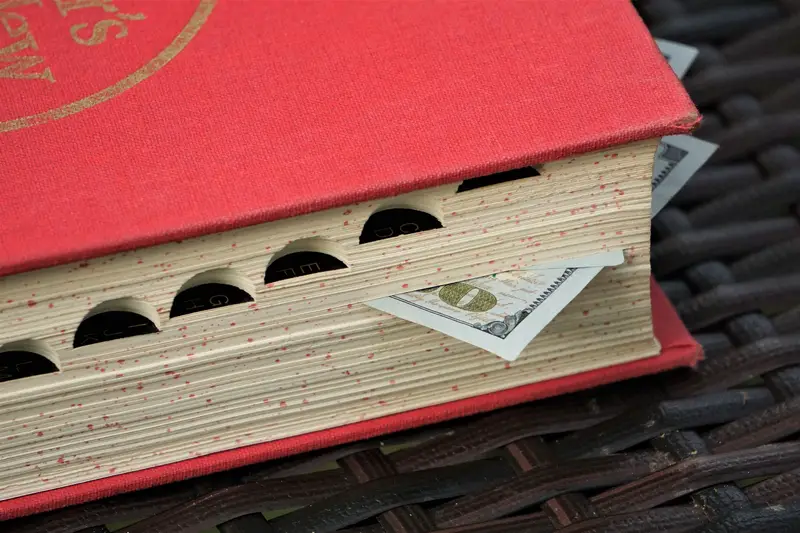
The space under your mattress is the worst place in the house to hide money, and it is not close. Asked where they would look first, about 75 percent of the convicted burglars in a 2016 NBC New York survey named the bedroom. The FBI counted 661,800 burglaries in 2025, a little over half of them residential, and the people doing it are not searching at random.
The pace is steady. That works out to about 1,813 burglaries a day, one every 48 seconds. Cash and jewelry were what the surveyed inmates said they took most often, at about 84 and 81 percent. Ranked below are the most common places people stash valuables, from the ones that practically hand your money to a stranger to the ones actually worth using.
10. Under the Mattress (The Worst)
Shoving cash under the mattress is, as AAA puts it, one of the oldest tricks in the book, which is exactly why it fails. A burglar in the bedroom checks it for jewelry, firearms, prescriptions and extra cash, and flipping a mattress or box spring takes seconds. Most break-ins start at the front door or a ground-floor window, which puts the bedroom a short sprint away.
Thieves in a 2016 KGW investigation in Portland, which polled 86 convicted burglars, said the same. “You always want to hit the bedroom first. You are going to have jewelry. The jewelry is usually in the bedroom,” one said. Another summed up the whole problem: “Most people keep all their valuables close to them where they feel they were most safe but in reality they are not.” Cash left under a mattress is also exposed to fire, water and simple wear, so a thief is not even the only risk.
9. Dresser Drawers and Nightstands
The top drawer of a dresser is almost always the next stop, because that is where people keep watches, rings and passports. Thieves yank drawers all the way out and dump the contents on the floor to sift through socks and shirts in one motion, and they check the back of the drawer and the underside of the unit for taped envelopes. The sock drawer, the underwear drawer and the nightstand are so routine that every thief expects them.
The predictability is the problem. People stash valuables where they can grab them each morning, and that convenience is the same reason a burglar finds them fast. If cash has to live in the bedroom at all, an ordinary box labeled something dull, like old baby clothes, throws a rushing intruder off far better than a drawer ever will.
8. The Freezer and the Pantry
Hiding “cold cash” in a bag of frozen peas has been in too many movies for it to fool anyone. Burglars know the freezer trick and will happily rummage through frozen food, cereal boxes and flour jars. One burglar, interviewed for the personal finance site SavingAdvice, described tipping cereal all over victims’ kitchens because the boxes are another place people hide things. The kitchen has become a popular stash spot, and thieves are a step ahead of it.
Money loses either way here. A freezer that fails or leaks can turn a foil-wrapped roll of bills into a soggy mess before a thief ever shows up. If you insist on the freezer, valuables have to be sealed inside something that genuinely looks like food, but the pantry is far more vulnerable than most people assume.
7. The Home Office Desk
The desk is the identity-theft jackpot, which is why the office is often a burglar’s second stop after the bedroom. Drawers hold checkbooks, tax returns and old laptops with saved passwords, and a locked desk drawer pries open in seconds. The office usually sits on the ground floor with everything else a burglar can reach in a hurry, and everything a criminal needs to drain a bank account can be sitting in one drawer.
Labeled, organized files make it faster still. Neatly sorted paperwork tells a thief precisely what to grab, so sensitive documents belong locked away, not tidy and reachable. Extra cash tucked in with the stationery is a bonus a burglar is glad to pocket on the way out.
6. The Toilet Tank and the Bathroom
The toilet tank feels like a stroke of genius and is anything but. The same burglar said the area around the toilet is where a lot of people hide drugs, so he would search the tank, boxes of tampons, toilet paper rolls and potpourri sitting nearby. Anything in the vicinity that could conceal a stash gets a look.
The medicine cabinet is no better. Prescription painkillers resell, so bathrooms get searched for them, and a thief will dump whole bottles into a bag to sort later. Vanity drawers get searched for small electronics and for jewelry tucked in makeup bags. On top of the theft risk, constant moisture around a tank or sink quietly degrades paper money over time.
5. Vases, Display Shelves and Picture Frames
Decorative containers are built to be knocked over. An empty vase or one with fake flowers looks like a hiding place to you and to the thief, who will tip it or smash it to see what falls out. Trophy cases and display shelves get the same treatment, and the electronics sitting next to them, gaming consoles and tablets, go in the bag too.
Behind the picture frame is just as tired. Sliding cash behind art or a mirror is one of the first things a thorough burglar checks, because frames are easy to lift and often hide wall safes. A burglar in the KGW study said he would look for a hidden wall, floor or ceiling space, so the “in plain sight” theory rarely survives contact with a professional.
4. A Portable Safe
This is the one that surprises people. Buying a safe feels like the responsible move, but a small unit that is not bolted down is just a convenient carrying case for a thief. Rather than crack a code in your bedroom, an intruder picks up the whole box and opens it later somewhere quiet.
Worse, a safe advertises itself. A locked container tells a burglar exactly where the good stuff is kept, so it can draw a search instead of ending one. If a single person can lift it, it offers almost no real protection for cash, documents or heirloom jewelry. The safe idea is right; the portable part ruins it.
3. A Fireproof Safe Inside a Cluttered Closet
Now the rankings turn in your favor. Push a solid fireproof safe deep into a closet packed with clothes, shoes and storage boxes, and you have added the one thing thieves hate: hassle. Most burglaries are over in under ten minutes, so an intruder gravitates to obvious, easy spots and skips anything boring or time-consuming to dig through.
A cluttered, uninviting closet discourages a thorough search, and a quality safe behind all that mess buys real time. It is not embedded in the structure, so it does not match what a bolted or sunken safe offers, but for most homeowners it is a genuine step up from any drawer or vase.
2. A Home Safe Bolted to the Floor
The word that matters is bolted. A quality home safe anchored to the floor cannot simply be scooped up and carried out, which is the failure mode that sinks portable models. Look for a fire rating and pry-resistant construction, and put it somewhere inconspicuous like a basement corner or the back of a closet rather than on display.
Bolting also changes the math for a thief working against the clock. Entry alone can take under a minute, but defeating an anchored safe in the few minutes they allow themselves is a different job entirely. Adding a motion sensor or a camera pointed directly at the safe stacks another obstacle on top.
1. A Safe Sunk Into the Concrete Floor (The Best)
The most secure spot in an ordinary home is a safe set into the concrete foundation. In-floor models sit flush with the slab, so there is nothing for a thief to lift and carry, and tucked under a rug they are almost never found. The catch is convenience: you install it by cutting into the foundation, and you get on your hands and knees to reach it, which is exactly why it stays a fortress.
A wall safe mounted between studs and hidden behind art or a mirror is the runner-up, harder to spot than a floor safe and easier on your knees. For serious sums, though, the honest answer is a bank. There is no legal limit on how much cash you can keep at home, but home is where thieves look.
A few habits protect the rest. Split your cash across several spots so one discovery does not empty the house. Leave a small amount of decoy money somewhere obvious, because a thief who finds something quickly is likelier to leave than to tear every room apart looking for more. And a visible security system does real work: in a 2013 UNC Charlotte study of 422 burglars, paid for by the alarm industry, about 83 percent said they would check for an alarm and about 60 percent would go and find another house if they saw one.

