

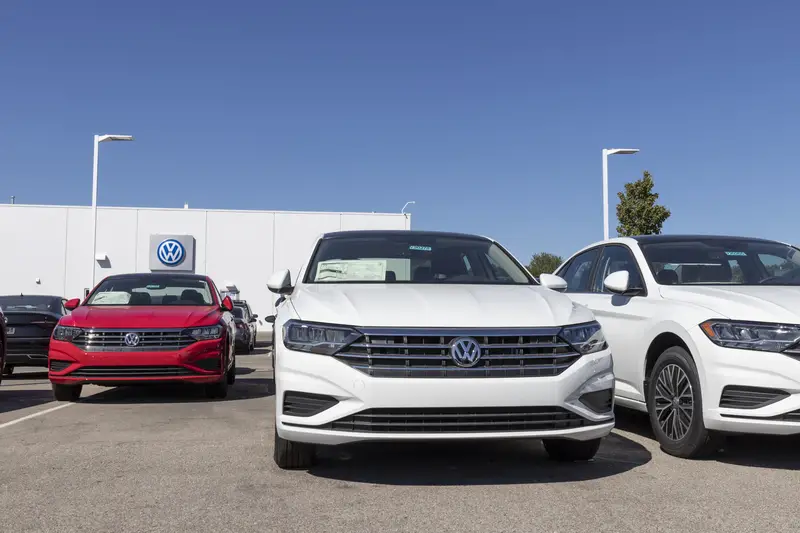
Every year there’s one new car that just sits. It shows up on dealer lots, gets a fresh coat of wax, and then… nothing. Salespeople walk past it. Shoppers glance at it and keep moving. And in 2026, one car is beating everybody else at being ignored. Here’s the twist that surprised me: it’s not some weird little econobox nobody’s heard of. It’s a legendary American muscle car with a name your dad probably yelled at a stoplight. Let’s get into it, because the reasons behind it are wilder than the car itself.
Meet The Car Dealers Can’t Give Away
As of July 2026, the slowest-selling new car in America is the Dodge Charger. Yes, the Charger. The one that used to be the loudest thing in the drive-thru. According to the latest market data, it’s sitting on a Market Day Supply of 385 days. In plain English, that means if dealers stopped ordering more today, it would still take over a year to clear out the ones already parked out front. There are around 10,796 Chargers sitting on lots nationwide, and only about 1,261 of them sold over a recent 45-day stretch. That’s a brutal number for a car that used to fly off shelves.
The Numbers Get Uglier When You Zoom In
Here’s where it goes from bad to almost sad. Dodge moved just 534 of its electric Charger Daytona models in the first half of 2026. The year before, in the same window, they sold 4,299. That’s a drop so steep it barely fits on a chart. And even when you count the gas versions, things look rough. In the first quarter of 2026, the gas Charger outsold the electric one by a 7-to-1 margin, but that’s still only 1,672 gas cars versus 240 electric ones. Now compare that to the good old days. Back in early 2024, the combined Charger and Challenger lineup topped 20,000 units in a single quarter. Twenty thousand. That’s not a slump. That’s a cliff.
Dodge’s Boss Says Everything Is Fine
You’d think somebody at Dodge would be sweating. But CEO Matt McAlear is playing it cool. “I’m still excited. I’m still bullish on this car,” he said in a recent interview. His explanation? The gas Chargers only started shipping to dealers about 15 to 20 days before he sat down to talk, and not every version had even reached showrooms yet. “We don’t even have all of the models across all of our dealers yet,” he told reporters. He also brushed off the idea that dropping the HEMI V8 hurt sales, pointing out the lineup already has a 670-horsepower version. I’ll be honest with you: telling die-hard muscle car fans they don’t need a V8 is a bold move. Dodge has since hinted a HEMI Charger is coming. Fans are counting the days.
It’s Not Just A Dodge Problem
The Charger isn’t sitting on lots alone. It’s got company, and most of that company runs on batteries. The big shift happened when the federal EV tax credit died on September 30, 2025, roughly seven years earlier than expected. That credit was worth thousands of dollars off an electric car. The moment it vanished, so did a huge chunk of buyer interest. New EV sales dropped about 27 to 28 percent in the first quarter of 2026 compared to the year before. People rushed to buy before the deadline, and then the buying just… stopped. Automakers who bet big on going electric got caught flat-footed, and now they’re pausing production and canceling models they already announced.
Some Cars Would Take Years To Sell
The Charger’s 385-day supply sounds terrible until you meet the real bottom of the barrel. The Toyota C-HR has a Market Day Supply of 1,178 days. That’s more than three years to clear the lots. Toyota actually killed off the C-HR name back in 2022 because it sold poorly, brought it back, and now it’s flopping all over again. It starts around $37,000, which is odd because the bigger Toyota bZ starts at $34,900. Why pay more for less car? But even the C-HR looks popular next to the Polestar 4, which has a jaw-dropping Market Day Supply of 1,468 days. That’s four years. Dealers sold just 16 of them in a month and a half. Oh, and the Polestar 4 has no rear window. They replaced it with a camera. Some things sell slow for a reason, and this list makes that clear.
The Expensive Cars Nobody’s Touching
Money doesn’t buy popularity, apparently. The Aston Martin DBX has a 522-day supply, and the DBX707 version starts at $236,000. At that price, the pool of buyers is small to begin with. Then there’s Audi. The Q4 E-Tron Sportback saw its sales crater 99 percent compared to the year before. Audi sold 513 of them in all of 2025, and this year the number is basically zero. The Q6 E-Tron Sportback runs close to $70,000. Lexus gave up entirely and killed its LS sedan, which sold just 691 units in all of 2025. And the little Fiat 500e? Sales collapsed 85 percent down to 68 cars in one quarter. When entry-level electric crossovers push past $60,000, buyers just look elsewhere. Turns out a fancy badge and a big horsepower number don’t matter much if the sticker makes people wince.
Why This Is Actually Great News For You
Here’s the part I actually love. A slow-selling car list isn’t just a wall of shame. It’s a cheat sheet for anyone shopping. When a dealer has a car rotting on the lot for over a year, they are desperate to move it, and that desperation is your best friend. The advice is simple: never pay over sticker price on a slow-seller, shop at the end of the month when dealers are chasing targets, and stack every rebate you can find. Get quotes from a few dealers and let them fight over you. Think about the Jeep Wrangler. For years those things had almost zero wiggle room on price. Now, with inventory piling up, that math has flipped. A car sitting still is leverage sitting still, and it’s yours if you’re willing to walk in and ask.
The Used Car Twist Nobody Saw Coming
While new electric cars gathered dust, something funny happened on the used side. Used EV sales actually rose about 12 percent in the first quarter of 2026. In the spring, roughly a third of used electric listings were priced under $25,000. The average used EV listing hit $34,653 in March, down about 6 percent from the year before. Here’s the kicker: the price gap between a used electric car and a comparable used gas car used to be over $10,000 back in early 2023. Now it’s shrunk to around $1,000. Meanwhile, the average price of a brand-new car of any kind started 2026 at a painful $49,353. So all those unsold EVs are quietly becoming bargains on the used lot. The stuff nobody wanted new is exactly what smart shoppers are grabbing a year later.
So What’s Really Going On Here
Step back and the pattern is easy to spot. Automakers pushed hard into electric cars and pricey niche models, betting Americans would follow fast. Americans didn’t. When the tax credit disappeared and financing costs stayed high, buyers pulled back toward what they know: practical, familiar, gas-powered rides that don’t require a spreadsheet to justify. The Charger’s problem is a mix of everything. It’s new, it’s expensive, it launched as an EV first, and it walked away from the V8 that made its name. A car being slow to sell doesn’t always mean it’s bad. Sometimes it just means the company read the room wrong. And if you’re the one holding the checkbook, that mistake could be the best thing to happen to your driveway all year.
The Charger might be the car nobody’s buying in 2026. But if the price keeps dropping and the HEMI really does come back, don’t be shocked if the same car everyone ignored becomes the one everyone brags about grabbing cheap.

