

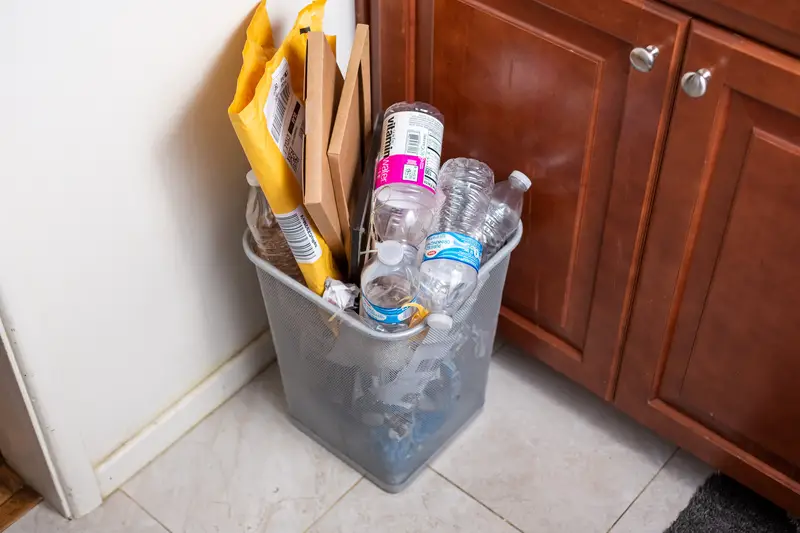
Here’s a dumb thing I did for years. Take out the trash, tie the bag, drop in a clean liner, feel like a responsible adult. Ten minutes later the kitchen still smells like a raccoon moved in and passed away. So I’d blame whatever I just threw out. Wrong, basically every time.
The smell was almost never the fresh garbage. It was the can itself. And a brand new bag does exactly nothing about that. Once I figured that out, the fix turned out to be almost insultingly cheap. It costs about three cents, takes twenty seconds, and it’s probably sitting in your bathroom drawer right now.
It’s Not the Garbage. It’s the Can.
Think about what actually happens inside a trash can. Grease drips down the side of the liner. A yogurt cup leaks out the bottom corner. A little juice from the chicken package pools under the bag. Bacteria find all of that and throw a party. As they eat, they let off gas, and that gas soaks into the plastic walls of the can. You can swap bags all day and the funk stays put, because the funk is living in the can, not the bag. The people at this DIY site put it perfectly: you’re fighting a smell that got baked into the bin, and a fresh liner never touches it.
The Chemistry Is Grosser Than You Think
Nothing you toss in the trash actually smells that bad on its own. The stench shows up later, when stuff starts breaking down. A lot of the worst offenders are sulfur compounds. Hydrogen sulfide is the rotten egg one. Dimethyl sulfide and methanethiol both smell like rotting cabbage. These things have a scary low detection threshold, meaning a few micrograms floating in the air is enough to smack you in the face when you lift the lid.
Then it gets worse. When meat breaks down, it produces two chemicals with names straight out of a horror movie: putrescine and cadaverine. Yes, cadaverine is named after exactly what you think. According to the chemistry behind garbage smell, you’ve also got acetic acid (vinegar), butanoic acid (which smells like vomit), and propanoic acid (rancid) all mixing together into one glorious cloud. And heat speeds every bit of it up, which is why your July trash is a completely different animal than your January trash.
One Cotton Ball, Three Cents, Twenty Seconds
Here’s the whole trick. Take one plain cotton ball, put 5 to 10 drops of essential oil on it, and drop it in the bottom of the empty can. Then put your liner in over the top. The cotton stays outside the bag, doing its job, while your garbage sits inside. Every time you change the liner, throw out the old cotton ball and drop in a fresh one. Once a week is plenty for most kitchens.
Two details actually matter. First, use 100% cotton, not the synthetic puffs and not the pre-scented ones. Real cotton fibers soak up oil and odor way better and hold the scent longer. Second, buy the cheap ones. A bag of 100 runs about $3 at Walmart, Dollar Tree, or any drugstore, which works out to that three cents a ball and makes one bag last most of a year. Folks at this kitchen blog also point out you can stick one to the inside of the lid, which is smart, since that’s where the smell escapes every time you open it.
Not All Oils Do the Same Job
This is where people get it wrong. They grab whatever oil smells nice and call it a day. But different oils pull different weight. Lemongrass is one of the best for actually balancing out bad odors instead of just covering them. Citrus oils like lemon, grapefruit, and sweet orange cut through kitchen funk and cooking smells. Tea tree gets recommended constantly because it fights the bacteria that cause the smell in the first place, so you’re hitting the source and not just the symptom.
One warning from experience: skip the cheap fragrance oils sold for candle making. They’re thinner, and the scent dies within a day. Go with real essential oil. And if you want to get fancy, a step-by-step guide suggests mixing blends for a custom scent, like lemon with a drop of lavender. I mostly rotate between lemongrass and peppermint depending on my mood.
Baking Soda Does Something the Cotton Ball Can’t
Here’s the part nobody tells you, and it changed how I think about the whole thing. The cotton ball covers and masks smells. Baking soda actually pulls them out of the air. Those are two different jobs, and doing both is where the magic happens.
So before you drop in a new liner, sprinkle a thin layer of baking soda across the bottom of the can, then set your scented cotton ball on top. A box of baking soda is under a dollar and lasts forever. If you want to double up, this write-up says you can even add a few drops of oil straight into the baking soda before you sprinkle it. Now you’ve got one thing absorbing the stink and another thing scenting the air. Swap the baking soda when you swap the bag.
The Same Trick Runs Off Mice and Flies
This surprised me the most. The bugs and critters that swarm your trash in summer hate the exact scents you’d want in there anyway. Peppermint, eucalyptus, and citronella do real work against flies and ants, which matters when one open can turns into a fly hotel overnight in August. Peppermint is the famous one for keeping mice away, and pairing it with clove makes the scent even less appealing to them.
The reason it works, according to a recent breakdown, is that these scents are offensive to pests but pleasant to us. Same cotton ball, two jobs. For outdoor cans that attract rodents, lean hard on the mint oils. It’s a lot cheaper than traps and it smells better than whatever chemical spray you’d buy at the hardware store.
This Works Way Beyond the Kitchen
Once you’ve got a bag of cotton balls and a bottle of oil, you’ll start tucking them everywhere. Smelly gym bag? Cotton ball in the side pocket. Musty hall closet? Cotton ball on the shelf. Sneakers that clear a room? One in each shoe overnight. The back of the pantry, under the kitchen sink, in the car cup holder, in a laundry basket that’s seen things.
A good oil rundown by room suggests lemon and eucalyptus for kitchen air, peppermint for entryways and bathrooms, and lavender for bedrooms and living spaces. Same idea every time: a few drops on a cotton ball, tucked out of sight, quietly working. One quick note, keep the oil-soaked cotton balls where a curious dog or cat can’t get to them and chew them up.
Experts Say You’re Probably Emptying It Wrong, Too
The cotton ball handles the smell day to day, but a couple of habits stop the smell from ever building up. Cleaning pros have some blunt advice. Wrap or seal wet stuff like meat, fish, and anything soggy before it goes in the bag. Rinse out food containers before you toss them. And stop waiting until the can is overflowing to take it out.
Here’s the counterintuitive tip from cleaning experts that I actually did: if your trash always sits too long, get a smaller can. A smaller can forces you to empty it more often, which means less time for stuff to break down and stink. Feels backwards, works great.
How Cotton Stacks Up Against Every Other Hack
You’ve probably seen a dozen other tricks floating around. Dryer sheets at the bottom mask smells and soak up goo, but they only cover. Coffee beans give off a sweet, nutty scent while absorbing odors, which is nice until you don’t want your trash smelling like a coffee shop. Citrus peels neutralize and smell fresh but dry out fast. Cat litter at the base soaks up liquid and odor, though you’re basically keeping a litter box in your kitchen.
The heavy hitter on this list of fixes is activated charcoal, which is genuinely great at absorbing strong smells, but it costs more and you have to go buy it. The cotton ball wins on pure value. It masks the smell, pairs with baking soda to actually absorb it, doubles as pest control, and costs three cents. Nothing else does all four.
One last thing, because the cotton ball is maintenance, not a miracle. If your can already smells like a science experiment gone wrong, no amount of oil is going to save it. Every few months, haul the can outside, scrub it with hot soapy water and a long brush, and let it dry all the way before the new liner goes in. Then start the cotton ball routine on a clean can. Do that, and you may never smell your trash again. For twenty seconds a week, that’s a pretty good trade.

