

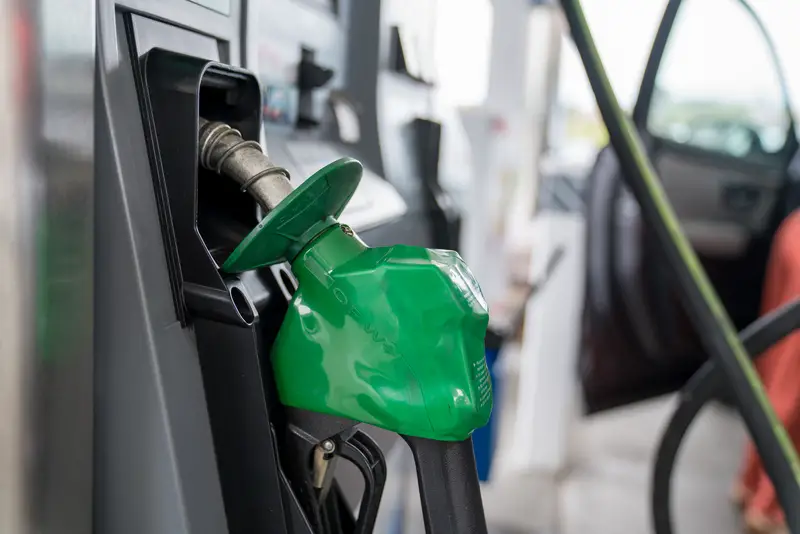
Interstate 80 pushes thousands of drivers, truckers and tourists through Rock Springs, Wyoming, every single day, and most of them stop for fuel without thinking about it for a second. In late May, Rock Springs police said a pump at the Maverik station at 1225 Foothills Blvd., near Exit 101 just off Interstate 80, may have been quietly collecting customers’ financial information with the help of a card skimmer.
It is far from the only one. Departments in Wyoming, Iowa, Texas and Illinois have all flagged pump theft this year, and the skimmer warnings keep landing on the same instruction, the one almost nobody follows while standing there watching the gallons tick up: stop shoving your card into the slot at the pump. Tap it, or walk inside and pay at the counter.
The Device You Cannot See Is Inside The Pump
Skimmers used to sit on top of the machine. They were sloppy overlays glued over the card slot or the keypad, and a careful customer could feel the extra thickness or tug the reader loose. Des Moines police have warned about a newer generation planted deep inside the pump housing at two convenience stores in the city, where no amount of squinting will help you.
Criminals have figured out how to get keys that open the pump cabinets. They unlock the panel, drop the device in, lock it back up and drive off. Weeks later someone returns to collect what it recorded, which includes credit and debit card numbers along with PINs. Police there believe the crews are traveling, organized and not local, and the FBI is assisting the investigation. The devices in Des Moines were discovered during routine state inspections of the pumps, not by customers.
Forty Devices In One City In One Year
San Antonio police found 40 skimmers across the city between Jan. 6, 2025, and Dec. 12, 2025, according to department records. That was down from 51 in 2024, and up from 26 in 2023. The devices turned up on gas pumps, counter keypads, ATMs and store point-of-sale systems, spread across every side of town rather than clustered in one neighborhood.
Some addresses get hit again and again. The first three skimmers of 2025 were reported in January on gas pumps at the Love’s Travel Stop at 11361 Interstate 35 South near Von Ormy, and two more were found on pumps at the same stop in July. On Oct. 16, officers reported six skimmers at six different Family Dollar stores in one day, all on counter point-of-sale systems. In December, Hollywood Park police told anyone who had filled up at a Circle K off Loop 1604 near Stone Oak Parkway to check their statements after three skimmers were found at the pumps.
Those 40 devices are only the ones police located and removed. Nobody knows the number that were installed, harvested and pulled before anyone noticed. The FBI estimates skimming costs financial institutions and consumers more than $1 billion a year. One driver described what it looks like from the customer’s side: “I swiped my card at the pump, and later on, I saw a transaction of $150,” said Javis Richardson, who had fraudulent charges show up after using a pump.
She Took The Fraud Calls. She Will Not Pay At The Pump.
Jaime Stahle, a Rock Springs resident, used to work in a Wells Fargo call center and dealt with skimming victims daily. The news that a device had been found at a station in her own town did not shock her even slightly. Skimming came up in her training, she said, because it is such a common way to steal card information.
She still tells her family not to pay at the pump, with mixed results. Her father has to get a new card every few months because he keeps doing it anyway. What bothers her most is that the hardware does not announce itself. “It’s really hard to visually tell because they look so real,” she said, which is why there is often no telling how long a device has been sitting there. That is also why the standard advice to spot a skimmer by eye only gets you so far. Her own rule is blunt: “just go inside. There, you have constant cameras and there’s always someone there.”
Truck Stop Crews Check The Pumps Three Times A Day
Workers at the TA Express off Exit 104 in Rock Springs inspect the fuel pumps for signs of tampering at least three times a day, manager Tori Walker said. His station has not had a skimmer, but staff routinely deal with counterfeit bills and fraudulent gift cards, and they watch for skimmers because the devices have spread nationwide.
Layout matters more than most drivers realize. Walker said his crew can see the fuel islands clearly from inside the building, which makes it harder for someone to open a cabinet without being spotted, and Wyoming Highway Patrol troopers are frequently around the area. Stations with pumps tucked around a corner, or set far back from the window, are a different proposition. That is the reasoning behind a police tip that sounds like nothing: pick a pump closer to the store entrance, where employees and cameras can see what happens at the machine.
A Screw In The Nozzle Cradle Keeps Your Transaction Open
Northlake, Illinois, police warned about a theft that needs no electronics at all. A small screw jammed into the nozzle cradle blocks the lever from closing when you hang the nozzle back up, so the pump believes you are still fueling. You drive away. A thief waiting nearby pulls in, fills their tank, and the gallons go on your card.
Police said they learned of it on Friday, May 29, when videos started circulating showing Sam’s Club gas pumps with a screw blocking the lever. Detectives visited that store and others in town, and workers at Sam’s Club, BP and other stations said they already knew about it and had started daily checks. Then came the pushback: someone in the industry contacted police to say the alert was wrong, and that stations themselves install those screws as a temporary fix for a broken nozzle flapper.
Police looked into it and said both things are true. A screw drilled in with the flapper lowered is a repair. A screw pinning the flapper up keeps the last customer’s transaction running. Similar incidents have been reported in Texas, Maryland, Pennsylvania and California, and similar claims have also gone around as social media hoaxes. The practical part: glance at the cradle before you start, and do not pull away until the screen asks about a receipt or resets to $0.00. If a pump looks jammed, leave it alone and tell the attendant.
Somebody Is Looking At Your Passenger Seat
While you are focused on the nozzle, the other door of your car is unattended. Police departments from Connecticut to Louisiana to Minnesota, Georgia and Southern California have warned about a theft called sliding, where someone slips into an unlocked vehicle and takes a purse or bag off the seat. Officers in Nashville have said it can be over in under 30 seconds, and that purses and backpacks left on the front seat are the usual target.
The fix feels paranoid and takes one second: lock the doors even though you are standing three feet away. Keep bags off the seat and dash entirely. Stay off your phone so you can see who is walking up. Use well-lit stations with cameras, never leave the keys in the ignition, and take your receipt so you know the transaction actually closed.
Leaving The Engine Running Can Break The Fire Code
Idling at the pump is not just frowned upon in some places, it is written into law. Virginia’s Statewide Fire Prevention Code, section 13VAC5-52-280, bans smoking and open flames within 20 feet of a fuel dispensing device and requires that the engines of vehicles being fueled be shut off during fueling. Not every state spells the rule out that plainly.
Carmakers are not ambiguous about it. A 2026 Kia owner’s manual says to always shut the engine off when refueling because sparks from engine electrical components can ignite fuel vapors. Mazda’s 2016 CX-5 manual says to stop the engine and keep sparks and flames away from the filler neck. Renault’s Trafic manual makes the point that matters for anything with auto stop-start, which is that the engine must be off and not merely on standby. A quiet car is not an off car.
The Fires Start On The Driver, Not The Engine
Here is the counterintuitive part of pump fires. The Petroleum Equipment Institute collected 176 reports of apparently static-related refueling fires from 39 states and Washington, D.C., covering incidents from 1992 onward, and in all of them it could verify that no open flames, running motors or electrical continuity problems were involved. About half followed the driver getting back into the car mid-fill. Where footwear was recorded, 94 percent of the people wore rubber-soled shoes.
The mechanism is boring and human. Clothing rubs against the seat, the driver builds a charge, steps out, reaches for the metal nozzle, and the spark meets vapor. Hold-open latches show up repeatedly in those incident descriptions, usually with the driver sitting in the warm car while the pump runs. Touching bare metal on the body of the car, away from the filler, before you grab the nozzle is the whole countermeasure.
How often does this happen now? Rarely. Fire departments responded to an average of 4,150 fires a year at U.S. service station properties from 2014 through 2018, and 56 percent were vehicle fires, but only 2 percent of those started at the fuel tank or fuel line. In a 2016 note the institute said static refueling fires had declined dramatically since cars got onboard vapor recovery, and that it had received no new reports since 2010. The injuries in the older reports ran from singed hair to third-degree burns, and included at least one death. One more thing worth knowing: if flames appear at the filler opening, do not pull the nozzle out and do not try to drive away. Back off and hit the emergency shutoff if you can reach it.
Never Walk Away From A Running Nozzle
Automatic shutoffs are reliable right up until they are not. One woman said on TikTok that her mother and sister were burned after a faulty pump kept flowing, fuel pooled under the car and caught fire while nobody was watching the nozzle. The latch is a convenience, not permission to go stand by the trash can and scroll. Phones, by the way, have never been documented as the cause of a pump fire in those incident records. The institute still warns against anything that distracts you at the pump, because a distracted person does not notice the puddle forming.
My verdict after reading every one of these warnings: tap to pay, every time, because it is the one habit that defeats a device you cannot see. Then pick a pump in view of the store window, glance at the nozzle cradle, lock your doors, stay out of the driver’s seat, and wait for the screen to clear before you pull out. Check your statements too, since the charge usually shows up long after the card did.

