

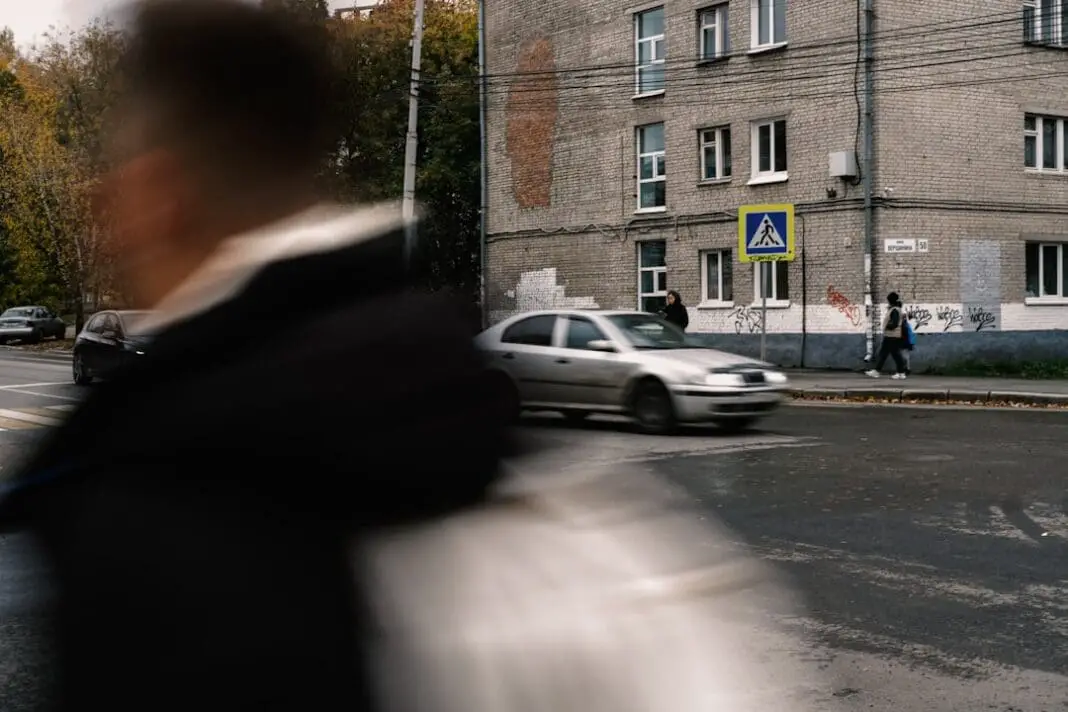
You’re walking home from the store, or doing an after-dinner loop around the block, and a car rolls up beside you and slows to a crawl. The window comes down. Maybe somebody asks for directions, maybe they just stare. Most of us were raised to be helpful, so the gut reaction is to slow down, smile, and lean toward the car.
That reaction is the one thing nearly every police department in America tells you not to do.
The advice is almost too simple: keep moving. But the reasoning behind it, and the other tricks safety experts quietly teach, are sneakier and smarter than you’d ever guess. A lot of this stuff never gets taught in school, and most adults have never heard it either. So let’s run through the surprising parts.
Why Turning Around Beats Speeding Up
When a car creeps next to you, your brain wants to walk faster in a straight line. The pros say do the opposite, literally. The Seattle Police Department’s guidance is blunt: turn and walk in the direction the car is not facing.
Here’s the clever part. A person on foot can spin around in about one second. A car can’t. To keep following you, the driver has to make a U-turn, back up down the street, or circle the whole block. Every one of those moves costs time and makes them obvious to anyone watching. You’ve taken their biggest advantage, speed, and turned it into a headache. The same department adds that if anyone tries to grab you, make a scene. Scream, kick, fight, and do whatever it takes to get away. Quiet and cooperation are what a bad actor wants, so give them the opposite.
Never, Ever Walk Straight Home
This one stops people cold. If you think you’re being followed, the worst place you can go is your own front door.
The USDA Forest Service spells it out in its safety guide: do not go home. Walking to your house while someone trails you hands them your address, and now they know exactly where to find you later. Instead, head for a lit-up store, a police station, a fire house, anywhere with people and witnesses around. Bright and crowded beats familiar and private every single time. Your house feels safe because it’s yours, but leading a stranger right to it is the opposite of safe. Same goes for an apartment lobby with a keypad. You’re better off in the middle of a busy gas station than alone at your own gate.
The Reason You Should Walk Toward Traffic
Most people walk with traffic, the same way cars drive. Turns out that’s backwards, and the research is pretty clear on it.
Studies cited by running safety experts show far fewer car-and-pedestrian crashes when people walk facing oncoming traffic. The logic is dead simple. When you can see cars coming at you, you can react. You can stop short, hop a curb, or jump out of the way. A car creeping up from behind is one you’ll never notice until it’s right on top of you. One law firm’s safety guide tells runners to run against traffic for exactly this reason, so a distracted or drifting driver can’t sneak up unseen. Facing traffic means a slow-rolling car stays in your sightline the entire time, instead of surprising you from your blind spot.
Kick Off Your Shoes and Carry a Whistle
Here’s a detail almost nobody thinks about until it’s too late: your shoes.
The Forest Service guide actually ranks footwear for escape. Sneakers are best, low heels are second, and high heels are a real problem if you ever need to move fast. The advice if you’re chased in heels? Kick them off and run barefoot. Bare feet beat heels every time when speed is the only thing that matters.
It also suggests something cheap and weirdly old-school: a police whistle on your keychain. If you feel threatened, you blow it, scream, do anything loud and embarrassing. The whole point is to draw attention and pull eyes toward you. People who mean harm want silence and privacy. A whistle takes both away in about half a second, and it’s a couple bucks at any hardware store.
Use Car Windows Like Mirrors
This is the spy-movie trick that turns out to be completely real. You don’t have to keep whipping your head around to check behind you.
A well-known self-defense group teaches walkers to use reflections from car windows and building glass to scan for anyone moving toward them. Parked cars, storefronts, even a dark phone screen can show you what’s coming up from behind without you ever looking like you noticed. The same guide says to glance back every so often anyway, because being surprised from behind is how a lot of people get caught flat-footed. It also flags a detail most folks never think about: people are most vulnerable in the first few seconds while getting into or out of a car. That’s the moment to stay sharpest, keys ready, eyes up, not buried in your phone.
Stay an Arm’s Length From Any Car That Stops
When a driver rolls down the window and asks for directions, the polite move is to step closer and lean in. Please don’t.
Safety guides from a Michigan public safety office and a couple of university police departments all say the same thing: if someone in a car asks you a question, keep your distance, at least a full arm’s length back. Why? Because that gap is the difference between helping a lost tourist and being grabbed and pulled through an open window. Most people asking directions really are just lost. But the few who aren’t are counting on you to close that distance for them. Answer if you want, point the way, but plant your feet and stay back. Self-defense trainers add one more thing to watch for: be a little extra careful around vans and cars with more than one person inside.
Walk Like You’re Invisible
There’s a mindset shift that changes everything, and runners tend to learn it first.
One safety guide tells joggers to move like you’re completely invisible, as if not a single driver can see you. Sounds grim, but it flips a switch in your head. The moment you assume nobody is going to protect you, you start protecting yourself. You watch the slow car. You notice the driver staring at his phone. You see the mistake coming before it actually happens.
And the numbers back up the caution. One personal injury firm estimates at least 70,000 pedestrians get hit by cars in the United States every year. You simply can’t count on a driver noticing you, so the smart play is to act like they don’t and stay a step ahead. Walk with your head up, shoulders back, and a purpose in your step. Looking like someone who would make a scene if bothered is a quiet deterrent all by itself.
Trust the Feeling That Something’s Off
The most underrated safety tool isn’t a whistle or a phone. It’s that little voice that says something’s wrong.
The University of Texas at San Antonio’s public safety office hammers this point: trust your gut. If it doesn’t feel right, it probably isn’t. That uneasy feeling when a car slows down, or when a street feels too quiet, is your brain spotting a pattern before you can put it into words. Don’t talk yourself out of it. Cross the street, change direction, duck into a store.
A few more habits that sound boring but actually work: vary your route so you’re not predictable, walk in the middle of the sidewalk away from alleys and bushes, and quit staring at your phone while you walk. One safety office even suggests memorizing the license plates of passing cars as a little game, just to keep your head up and stop you from zoning out on autopilot.
Call It In the Second You’re Safe
Here’s the last surprise, and it’s all about timing. If a car follows you or something feels wrong, report it fast, even if nothing actually happened.
Safety experts say to grab the license plate number and a quick description of the car, then call the police the moment you reach somewhere safe. There’s a reason for the speed. Your account is more believable when you report it right away instead of three days later, and a fresh plate number gives officers something real to work with. It might even match a pattern they’re already tracking. You don’t need proof of a crime to make the call. A car that slowed next to you and then circled back is worth a two-minute phone call, no apology needed.
None of this means you should walk around scared. Most cars that slow down are lost, looking for a parking spot, or texting at a stop sign. But the whole point is that you don’t have to figure out which one is dangerous in the heat of the moment. You just follow the simple rule the pros all agree on. If a car slows down next to you, keep moving, turn the other way, and head toward people. It costs you nothing, and it strips away every advantage a bad actor was counting on.

