

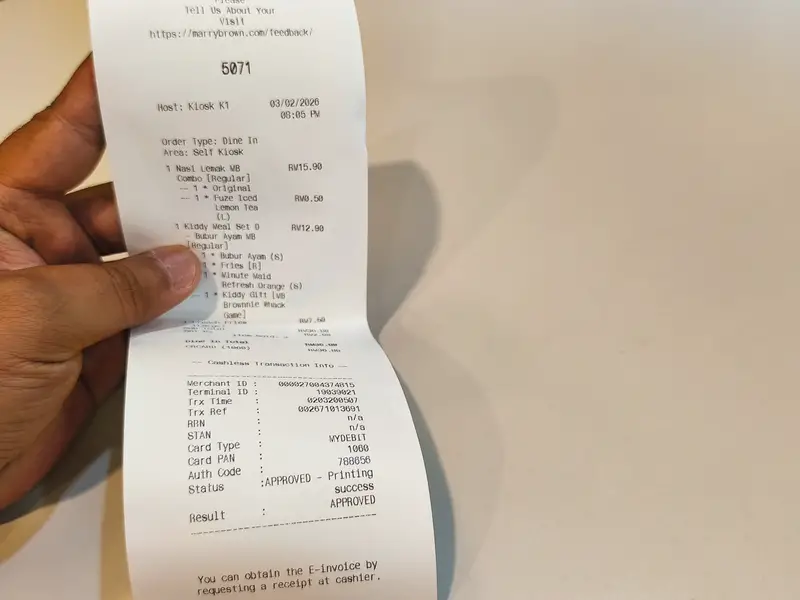
Most of us treat receipts like trash the second they hit our hand. You fill up your tank, the pump spits out a little slip, and you crumple it and shove it in the trash can bolted right there next to the screen. Feels harmless. It’s just paper, right? But that one lazy habit can hand a total stranger enough to empty your account, and almost nobody thinks twice about it.
Security people even have a name for the folks who go looking for those slips. Dumpster divers. And no, they are not after your half-eaten burger. They want the paper you assumed was worthless. That is exactly why experts tell you to take your receipts home with you instead of dropping them at the gas station or ATM. Here is why that advice is smarter than it sounds.
Your Trash Is Not As Private As You Think
Here is the part that makes people genuinely mad. Way back in 1988, the U.S. Supreme Court ruled that trash-picking is legal. Once you toss something into a public can or set your bin out at the curb, courts often treat it as abandoned property. Translation: it no longer belongs to you.
So a stranger can dig through that gas station trash, pull out your receipt, and walk off with your personal info, all without breaking a single law. You can’t call the cops. In the eyes of the court, you threw it away, so it is fair game. That one old ruling is the reason this whole mess still works.
Thieves Play a Puzzle Game With Your Card
You are probably thinking your receipt only shows the last four digits, so who cares. Fair point. But thieves are patient, and they collect. ATM slips, gas station receipts, and other printouts each carry little scraps of usable info that a con artist can gather and reconstruct into full account numbers.
Think of it like a jigsaw puzzle. One slip shows a few digits. Another slip from the same card shows a few more. Stack up enough of them and a crook can build a complete, or nearly complete, number. Most people never even glance at these receipts before tossing them, which is precisely what the bad guys are counting on.
There Is a Law For This, and Big Names Broke It
Congress actually saw this coming. A rule called FACTA, in full effect since 2006, says an electronically printed receipt can show only the last five digits of your card, and it cannot print the expiration date at all. If a receipt shows more than that, the store is breaking federal law. Simple as that.
And plenty of big companies got caught doing it. Retailers that have settled over sloppy receipts include Jimmy Choo, Godiva, Microsoft, LabCorp, and Spirit Airlines. The law even lets a customer sue a merchant for $100 to $1,000 per violation. So the next time a receipt prints more numbers than it should, that is not a harmless typo. That is a lawsuit sitting in your pocket.
The Phone Call That Uses Your Own Receipt Against You
This is where it gets creepy. An ATM slip can show the date, time, and amount of your transaction, the machine or branch ID, the last four digits of your card, and sometimes even your account balance. That last one is wild. A stranger now knows roughly how much money you have and where you bank.
Mix those scraps with what is already floating around on your social media, and a crook can build a believable phone story. They call or text pretending to be your bank, mention a real detail from your receipt, and calmly ask you to “confirm” a code they just sent. Scammers call the phone version vishing and the text version smishing. It sounds obvious until someone repeats your own transaction back to you.
It Is Not Just Receipts in Your Trash
Once you start seeing your garbage the way a thief does, the whole thing changes. Bank statements and tax forms are obvious targets, sure. But crooks cast a much wider net, grabbing anything that helps them pretend to be you.
Utility bills are a favorite because they confirm your address and can get someone past a bank’s security questions. Old pay stubs spill your employer, your income, and sometimes more. And here is a gut punch: thieves also go after kids’ info, because child identity theft can sit undetected for years before anyone notices. That fat stack of paper clutter you keep meaning to deal with is a bigger risk than you think.
The Numbers Are Uglier Than You’d Guess
If this all sounds like paranoid overkill, the stats say otherwise. In 2022, the Federal Trade Commission got over 1.1 million reports of identity theft, with losses jumping 30% from the year before. One research firm pegged the total haul from identity thieves at $52 billion in a single year.
Banks and financial companies are the top targets, since that is where the money and the juicy data live. And a lot of that stolen info does not come from some hooded genius hacking a server. It comes from a person walking up to a recycling bin or a curbside can and grabbing account numbers off paper you tossed. Low tech, high payout.
What to Actually Do About It
None of this means you need to bolt your trash can shut and live in fear. A few small habits knock out most of the risk. First, stop leaving receipts behind. Take that gas or ATM slip with you, even when it feels like a hassle to carry one more piece of paper. Deal with it at home.
Second, destroy anything with your name, address, or numbers on it before it hits the garbage. Rip it, cut it, or run it through a cheap shredder. A ripped receipt in your kitchen trash is a hundred times safer than a whole one sitting in a public can. Third, take advantage of stores that email your receipts instead of printing them. No paper means nothing to dig out later.
Finally, keep an eye on your own records. You are entitled to a free credit report once every 12 months from each of the three big bureaus, Equifax, Experian, and TransUnion. Skim them for accounts you never opened or charges you do not recognize. It takes ten minutes and it is the fastest way to catch a thief before they get comfortable.
So the next time you are at the pump and that receipt slides out, think for one second before you flick it in the trash. That flimsy little slip is worth a lot more to the wrong person than it is to you. Fold it, pocket it, and shred it at home. It is the easiest security upgrade you will ever make, and it costs you nothing but a second of attention.

