

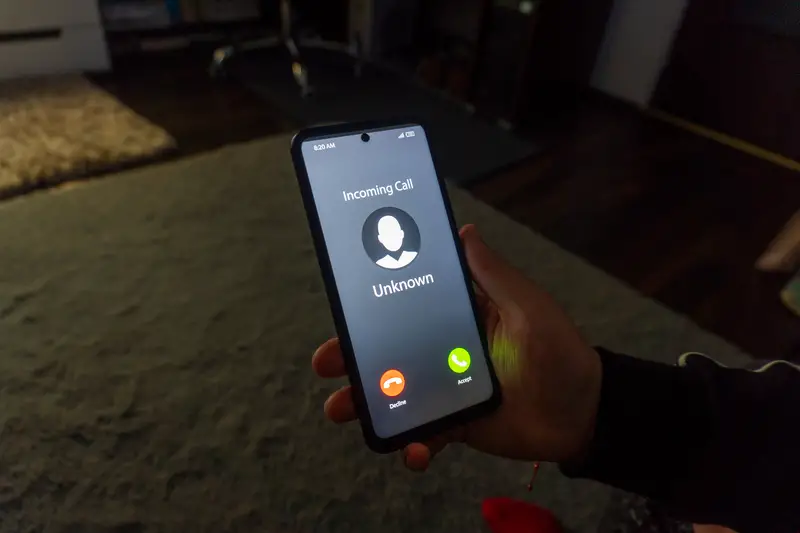
The call always comes at a bad hour. The voice belongs to your son, or your mother, or your sister, and it is panicked, and it needs money moved immediately. It sounds exactly right. That is the point.
Criminals can now build a convincing clone of someone’s voice out of audio scraped from social media, and they can assemble fake video from stolen photos. The FBI’s fix for this is not an app, a subscription or a new phone setting. In a December 2024 public service announcement, the bureau told families to sit down together and agree on a secret word or phrase, then use it to confirm that the person calling is who they say they are.
A Word Only Your Family Knows
The rest of the FBI’s advice on cloning attacks is just as cheap to follow. Listen closely to tone and word choice on an unexpected call. If a caller claims to be from a bank, a police department or a utility, hang up, look up the real number yourself and call back. Never send money, gift cards or cryptocurrency to someone you have only met online or over the phone.
The bureau also lists the small tells in fake images and video: distorted hands or feet, teeth or eyes that look wrong, shadows that do not match, lag time, movement that does not sit right. Locking down your own social accounts matters too, because the raw material for a clone is whatever you have already posted.
Teenagers, young adults and older relatives all need to be in on the plan, not just the person who read the warning. The FBI’s most important advice for parents is to keep up open and ongoing conversations at home.
Internet Crime Just Crossed A Line It Had Never Crossed
The FBI’s Internet Crime Complaint Center took 1,008,597 complaints in 2025, the first year it has ever passed a million. Reported losses hit $20.877 billion, up 26% from 2024. Spread across every complaint filed, that is $20,699 each.
Put that next to 2015, when IC3 logged roughly $1 billion in losses, and the ten-year increase is nearly twentyfold. Since 2000 the center has collected over 10 million complaints, and in 2025 it took in close to 3,000 a day.
AI is now a line item rather than a theory. IC3 received more than 22,000 complaints with an AI connection in 2025, with adjusted losses topping $893 million, including $632 million tied to investment fraud and $19 million tied to romance scams. Investigators note that number is almost certainly low, because most victims have no way of knowing whether a machine wrote the message or faked the voice.
Older Relatives Are Losing The Most Money
Adults 60 and older filed 201,266 complaints in 2025, a 37% jump in a single year. Their reported losses reached $7.748 billion, up 59%. Spread across their complaints, that is $38,500 each, nearly double the overall figure, and 12,444 seniors each lost more than $100,000.
Impersonating the government has become one of the fastest-moving plays. Those complaints nearly doubled across all ages, from 17,367 in 2024 to 32,424 in 2025. Seniors filed 8,628 of them, with $413 million in losses.
The secret word is not only for the kids.
The Typical Sextortion Victim Is A Teenage Boy
Most parents picture a daughter when they hear the word sextortion. In a 2024 study by Thorn and the National Center for Missing & Exploited Children of reports from 2022 and 2023, 90% of financial sextortion victims whose age and gender were known were boys ages 14 to 17, and more than two-thirds of sextortion reports appeared to be about money rather than images.
The volume is hard to absorb. NCMEC’s CyberTipline received 21.3 million reports of suspected child sexual exploitation in 2025, including 1.4 million reports of online enticement, up 158% from 2024. Financial sextortion reports averaged 137 a day. In a 2025 Thorn survey of 1,200 young people ages 13 to 20, one in five said they had been sextorted themselves.
IC3 took in more than 75,000 submissions involving sextortion in 2025 and referred more than 5,700 cases involving minors to NCMEC. Florida alone logged more than 600 sextortion complaints from people under 20. In Thorn’s research, contact often started on Instagram or Snapchat, and the payment ask usually landed on Cash App or gift cards.
The Networks The FBI Calls 764
There is a category of online group that is not after money at all. Jason Hudson, special agent in charge of the FBI’s Houston field office, says these networks go by several names, including 764, Harm Nation and The Com, and that they manipulate, extort and threaten children into escalating acts.
“The ultimate goal for a lot of these groups is to ultimately have a child commit suicide, while also live streaming,” Hudson said. Complaints involving this type of predator encounter have increased 600% nationwide since the bureau started tracking them roughly two years ago.
The part that catches parents off guard: many of the people doing the targeting are minors themselves, using the same slang and rhythm as the kid they are talking to. Victims are typically 10 to 17, though the FBI has seen some as young as nine. Agents have published a list of warning signs for families, including fresh cuts or burns, words or symbols carved into skin, long sleeves in hot weather, and family pets dying under suspicious circumstances.
Your Back To School Photo Is A Research Document
The chalkboard sign on the front porch is a gift to anyone who wants a way into a conversation with your kid. Joe Zadik, a supervisory special agent with the FBI, said a child’s full name, age and teacher’s name are the sort of details visible in back-to-school photos that predators use to learn more about a child. Bus numbers and daily routines go in the same bucket.
Zadik described how the approach starts: “It often starts with what seems like an innocent interaction.” A follow request. A friendly message inside a game. The turn toward blackmail comes later, and it works because of shame. “Sextortion in many ways relies on fear,” he said.
The practical steps the bureau gives parents are unglamorous and specific. Phones stay out of bedrooms overnight. Phones do not go into bathrooms, where private photos get taken. Use parental controls. Know who your child talks to, including inside games. Delay social media as long as you can get away with it.
Swatting Now Comes With A Family Plan
Hoax emergency calls designed to send armed officers to someone’s house or school kept investigators busy through the 2025-2026 school year. The FBI’s advice for parents when a threat hits a school is counterintuitive: stay away from the building unless officials tell you to come, and do not repost unverified rumors, because both of those things slow the response down.
Agents also want families to rehearse what happens if police arrive at their own front door unexpectedly. Everyone in the house should know to stay calm and follow instructions. Kids should know that hoax threats are federal crimes with serious consequences, and that they should report it immediately if they hear someone planning one or fear their own name will be used in one.
Because the people behind these calls build them from publicly available information, the bureau suggests scrubbing home addresses and phone numbers from your family’s online footprint.
Shut The Wi-Fi Off At Night
One suggestion from FBI Jacksonville is easy to overlook: consider turning the Wi-Fi off overnight. Parents are also told to know and keep the passwords to every phone, tablet and computer in the house, spot-check which apps are being downloaded, set privacy settings to the strictest level available and keep track of who is talking to their kids, since offenders often pose as peers.
Jason Carley, FBI Jacksonville’s special agent in charge, put the stakes plainly when the bureau issued its summer warning. “Online threats targeting children are increasing at an alarming rate, with crimes like sextortion, cyberbullying and online exploitation causing real-world harm,” he said.
There is also a free FBI program most families have never heard of. The Safe Online Surfing Internet Challenge is an interactive course built for students in third through eighth grades, covering passwords, personal information and how to spot an online predator. Agents also suggest running a regular internet search on your own child’s name to see what is out there.
If It Already Happened, Do Not Delete Anything
The instinct is to erase the messages and make it disappear. The FBI asks families to do the opposite. Texts, emails and images are evidence, and cases get built on them. Preserve everything, then contact law enforcement.
Parents are warned not to confront the predator themselves. Call local police, call 1-800-CALL-FBI (1-800-225-5324) or file at ic3.gov. Reports of child exploitation go to NCMEC’s CyberTipline at CyberTipline.org or 1-800-843-5678, and the Take It Down tool at takeitdown.ncmec.org exists to stop sexual images of anyone under 18 from spreading. If a child is talking about suicide or self-harm, 988 takes calls and texts at any hour.
Most of this never reaches investigators at all. The bureau is blunt that shame and fear keep victims quiet, which is why the single most useful thing a parent can do costs nothing and takes a minute: make it boringly normal for your kid to tell you when something online goes wrong. Then pick the word.

