

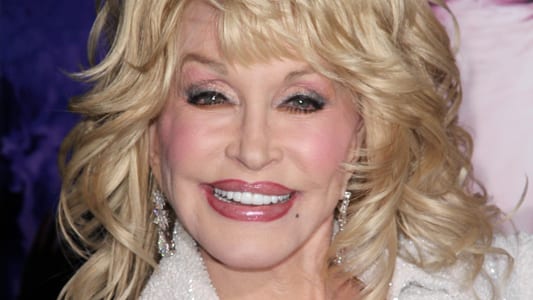
A gay bar on Santa Monica Boulevard in Los Angeles ran a Dolly Parton lookalike contest one Halloween night, and the rules were about as simple as a contest can get. Everybody walked across the stage, the crowd clapped, and whoever pulled the loudest applause drank free the rest of the night. A line of drag queens who had spent weeks sewing their costumes went first, most of them six feet tall before the heels went on. Then a five-foot blonde in an unusually enormous wig traipsed across the stage, and the room barely made a sound. She came in dead last. She was also the only actual Dolly Parton in the building.
The grand prize was free drinks
Parton was 79 when she told the story again on Elvis Duran and the Morning Show on May 22, 2025, and she still thought it was the funniest thing that ever happened to her. Her hairdresser at the time lived near Santa Monica Boulevard. Every Halloween the neighborhood dressed up, and he pointed out that the bar handed out drinks to anybody willing to get on stage.
So he talked her into over-exaggerating herself, which she admitted was a tall order. “You know, bigger beauty mark, bigger hair, bigger whatever,” she said on the air. In an earlier telling she described the field that year as a mix of Chers and Dollys, and said she made the beauty mark bigger, the eyes bigger, the hair bigger, everything.
Other versions of the story skip the hairdresser entirely. Speaking with Ellen DeGeneres, Robin Roberts and ABC’s Nightline, Parton said she entered on a whim because she happened to live up the street. That part holds up: she had rented or owned property in the West Hollywood area since the 1980s.
Nobody clapped for the real one
The crowd did not just prefer somebody else. It gave her the single worst reception of the night. “All these beautiful drag queens had worked for weeks and months getting their clothes. So I just got in the line and I just walked across, and they just thought I was some little short gay guy,” she told Nightline. “I got the least applause.”
Her own description of the applause is better than any summary of it. “Nobody applauded, like a little trickle that was probably David, my hairdresser,” she told Elvis Duran in 2025. “But we laughed so hard. So I always told the story that I entered a Dolly lookalike contest and lost.”
Size had something to do with it. Parton stood five feet tall. Put her in heels next to a row of six-foot performers who are also in heels, and the real thing looks like the scale model. She said she was dying laughing inside the whole time.
The story has exactly one witness
Every version of this tale traces back to the same person: Dolly. She put it in her 2012 memoir “Dream More,” repeated it on Nightline that same year, brought it out again on Harry Connick Jr.’s talk show in 2017, and kept telling it on radio shows for years after.
When the story surged across social media after her death in August 2026, fact-checkers at Snopes went looking for a second source and came up empty. They confirmed the detail really is in the book. They found nothing suggesting she invented it, and the geography checks out. They still declined to rate the claim at all, because nobody else has ever corroborated it on the record.
There is a second wrinkle. In some tellings she lost specifically to a drag queen. In others she simply got the least applause and the winner goes unnamed. The headline version, the one everybody repeats, is the one that cannot be nailed down either way. My read: the contest happened, the last-place finish happened, and the “beaten by a drag queen” framing is a storyteller’s polish on a true story she enjoyed for the rest of her life.
The look was copied from a woman in her hometown
The costume those drag queens spent months building was itself a copy of a copy. Parton modeled her whole appearance on a woman she saw around her small East Tennessee town as a kid, and she never dressed it up as anything loftier.
“I kind of patterned my look after the town tramp. I didn’t know what she was, just this woman who was blonde and piled her hair up, wore high heels and tight skirts, and, boy, she was the prettiest thing I’d ever seen,” she said. Her mother called the woman trash. Dolly decided that was exactly what she wanted to be when she grew up.
She used the phrase “town tramp” to describe her own signature style for decades. She never hid the wigs or the plastic surgery either, which is part of why the joke of losing a contest about herself never stung.
She sang ‘drag queen’ instead of ‘Jolene’ on stage
Parton did not just tolerate the impersonators. She sometimes swapped the name in “Jolene,” singing “drag queen” in place of the title, which turns a song about a woman stealing your man into something else entirely.
Her line about the whole phenomenon, delivered after the lookalike story in a 2012 interview, was this: “I say it’s a good thing I was a girl or I’d be a drag queen.”
Asked on radio in 2025 why she talked about drag performers so openly when people kept telling her she shouldn’t, she brushed it off with a one-liner. “Look, I don’t care what they’re draggin’ as long as they drag it to my show,” she said. She also pointed out the obvious physics problem she faced that Halloween night: those guys were six feet tall before the heels.
She backed AIDS work when it cost a country star something
Parton’s production company, Sandollar Productions, co-produced “Common Threads: Stories from the Quilt,” a 1989 documentary about the NAMES Project AIDS Memorial Quilt. It won the Academy Award for Best Documentary Feature Film. It also took a GLAAD Media Award, a Peabody Award, and the Interfilm Award at the 40th Berlin International Film Festival.
That was 1989, when a country star attaching her name to AIDS work was a real risk with her own audience. In 1994 she went further, joining 34 other country music stars in an awareness campaign called “Break the Silence,” which ran with the slogan “AIDS Ain’t Just Some Big City Problem.” She also contributed the song “You Gotta Be My Baby” to the charity album “Red Hot + Country” that year.
Her second Best Original Song nomination at the Academy Awards, at the 78th ceremony, came for “Travelin’ Thru,” written for the film “Transamerica.” Fifteen years before that, her 1991 album “Eagle When She Flies” included a track called “Family” with the line “Some are preachers, some are gay … But not a one is turned away when it’s family.” The Academy gave her an Oscar of her own in November 2025, the Jean Hersholt Humanitarian Award.
Gay Days at Dollywood ended in lawyers and Klan threats
From 2003 to 2008, fans loosely organized their own Gay Days at Dollywood in East Tennessee, modeled on Gay Days at Walt Disney World. It went badly. Organizers dealt with legal threats over trademark infringement, a Ku Klux Klan protest, and shrinking turnout. By 2008, attendance was less than half the event’s record of about 3,000 people, and in early 2009 the organizer quit, having moved to Nashville and run out of patience with police, lawyers and Klan death threats.
Parton rarely spoke about the events, though she told Nightline in 2012 that she still got threats. She apologized publicly in 2011 after hearing that a lesbian guest had been made to turn her marriage equality T-shirt inside out at Dollywood’s Splash Country water park.
Her stance on same-sex marriage, given to Joy Behar on HLN in 2009, was pure Dolly: sure, why can’t they get married, they should suffer like the rest of us do.
Forty-eight people flew to New York to audition as her
The lookalike problem followed her to Broadway. For “DOLLY: An Original Musical,” the production flew 48 people to New York City to audition for the parts, because the show needs three Dollys: a little one, a middle one, and an older one who narrates and carries the story.
The three actresses cast in Nashville were Katie Rose Clarke, Carrie St. Louis and Quinn Titcomb. Bartlett Sher directed. The show premiered at the Fisher Center for the Performing Arts at Belmont University in Nashville, running July 18 through August 31, 2025, before heading to Broadway, where previews begin Dec. 7, 2026. The New York company came down to Tennessee to build it because Parton’s husband, Carl Dean, was ill and she would not leave town. He died in March 2025.
Watching strangers play her, she said, was very bizarre and very emotional, and always hard.
The résumé underneath the wig
Parton released 49 studio albums and charted 25 No. 1 hits on the Billboard Hot Country Songs chart. She also cut a run of duet albums with Porter Wagoner, 9 live albums and 6 soundtrack albums, and wrote “Coat of Many Colors,” “I Will Always Love You,” “Jolene” and “9 to 5” along the way.
She died on Aug. 25, 2026, at 80. In a video 11 days before she died she was still listing projects: the SongTeller hotel, the Life of Many Colors museum in Nashville, the Broadway show. Dollywood had just marked its 40th anniversary.
The woman invented a look so specific that other people got better at it than she was, then she went to a bar and proved it, then she told everybody. Forty years of impersonators, and the only Dolly Parton who ever came in last at being Dolly Parton was the original.

