

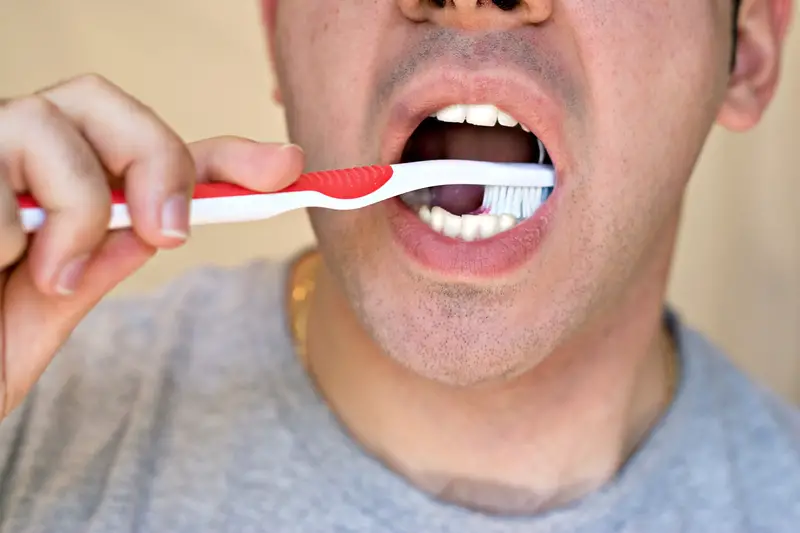
Here’s something that will probably annoy you: that thing you do every single morning and night after brushing your teeth? The rinse? The big swig of water, swish it around, spit it out? Yeah, that’s wrong. You’ve been doing it wrong. I’ve been doing it wrong. Basically everyone in America has been doing it wrong since they were old enough to hold a toothbrush.
Dentists are now loudly and clearly telling patients to stop rinsing with water after brushing. And the reasoning, once you hear it, is so obvious you’ll wonder why nobody told you sooner.
The Rinse That’s Ruining Everything
The whole point of toothpaste is fluoride. That’s the active ingredient doing the heavy lifting — it strengthens enamel, repairs weak spots, and fights cavities. When you rinse your mouth with water right after brushing, you’re literally washing all of that fluoride straight down the drain before it gets a chance to work. It’s like putting sunscreen on and then immediately jumping in the pool.
According to guidance from UCSF’s oral health team, this one change — just not rinsing — can reduce tooth decay by up to 25 percent. Twenty-five percent! From doing literally nothing. From doing less than what you’re currently doing. That’s the kind of health advice I can get behind.
Dr. Brittany Seymour, an ADA spokeswoman and associate professor at the Harvard School of Dental Medicine, put it simply: spit out the extra toothpaste, but skip the water. If you absolutely can’t stand the feeling, she says to use just a tiny sip — like cupping a small amount from your hand — or wait about 20 minutes before rinsing.
What You Should Actually Do Instead
The correct move is called “spit, don’t rinse.” You brush for two minutes, spit out the foam, and then just… walk away. Leave that thin film of toothpaste on your teeth. I know. It feels weird. It feels incomplete. But that residual layer is basically a fluoride treatment sitting on your enamel, sealing off tiny channels in your teeth called dentin tubules — the ones responsible for that sharp, electric pain you feel when you drink something ice cold.
People who adopt this method often notice a real difference in tooth sensitivity within just a few weeks. That iced coffee that used to make you wince? It becomes tolerable again because the fluoride is actually getting time to do its job.
This works especially well at night. Think about it: when you sleep, your mouth produces way less saliva than during the day. Less saliva means less natural protection against acid attacks. So if you brush before bed and leave that fluoride layer intact, you’re giving your teeth maximum protection during their most vulnerable hours. Don’t eat or drink anything after nighttime brushing. Just brush, spit, and go to sleep.
Mouthwash After Brushing Is Also a Mistake
This one got me. I always assumed that hitting my mouth with Listerine or ACT right after brushing was the gold standard. Double the clean, right? Nope. Even if your mouthwash contains fluoride, it has a lower concentration than your toothpaste. So swishing with mouthwash right after brushing is essentially replacing a stronger fluoride coating with a weaker one.
The fix is simple: use mouthwash at a completely different time. Rinse with it after lunch, for example, or in the mid-afternoon. That way you’re getting the fluoride benefits from both your toothpaste and your mouthwash, instead of one canceling out the other.
And here’s the correct order for your routine, according to dental professionals: floss first to clear out the junk between your teeth, then optionally use mouthwash and wait about 10 minutes, then brush with fluoride toothpaste, spit, and don’t rinse. Flossing before brushing matters because if you floss after, you’ll need to rinse out the debris — and there goes your fluoride again.
That Morning Coffee Is Doing More Damage Than You Think
So you brush your teeth, you do the right thing and skip the rinse — then you pour yourself a cup of coffee. Bad move. Brushing temporarily weakens your enamel slightly, and when you immediately expose it to something acidic like coffee, tea, orange juice, or soda, you’re hitting your teeth with an acid attack when they’re at their most vulnerable.
The recommendation? Wait at least 30 minutes after brushing before having anything acidic. If you’re someone who physically cannot function without coffee within five minutes of waking up, try drinking it through a straw to minimize contact with your teeth. It looks a little ridiculous, sure, but your enamel doesn’t care about aesthetics.
Never Brush Right After Eating — Yes, Really
This is the one that seems completely backwards. You eat breakfast, your mouth feels gross, so you brush. Logical, right? Wrong. A TikTok video from Dr. Shaadi Manouchehri, a dentist in the UK, racked up more than 12 million views for explaining why you should never brush right after eating — whether it’s breakfast, candy, fruit, whatever.
When you eat, bacteria in your mouth feed on the food and produce acid. That acid softens your enamel temporarily. If you grab your toothbrush during that window, you’re not cleaning your teeth — you’re scrubbing acid into them and physically stripping away softened enamel. Over time, this causes erosion and can actually make your teeth look more yellow.
Dr. Ezzard Rolle at Columbia University puts it bluntly: even the softest toothbrush is too abrasive to use on acid-weakened enamel. The American Dental Association officially recommends waiting a full 60 minutes after eating before brushing. Most dentists will tell you 30 minutes is the minimum.
During that waiting period, your saliva does the work for you. It naturally neutralizes the acid, washes away food particles, and delivers minerals like calcium and phosphate back to your enamel. If you want to speed things up, chew sugar-free gum. It ramps up saliva production and helps your mouth return to a neutral pH faster.
The Vomiting Rule Nobody Talks About
Whether it’s a stomach bug, morning sickness, or a rough night out — when you throw up, every instinct in your body screams “BRUSH YOUR TEETH RIGHT NOW.” Don’t. Vomit contains stomach acid, which is incredibly harsh on enamel. If you brush immediately, you’re spreading that acid across every surface of every tooth and scraping away softened enamel in the process.
Instead, mix a teaspoon of baking soda into a cup of water, swish it around, and spit it out. The baking soda neutralizes the acid immediately. Then wait at least 30 minutes before brushing. Dr. Lucynda Raben, a dentist in Wichita, Kansas, also suggests using alcohol-free mouthwash to rinse the acid away without the abrasion of a toothbrush. Sugar-free gum works here too — anything that gets your saliva going.
A Radical Idea: Brush Before You Eat
Some dentists are pushing an idea that sounds strange but actually makes a lot of sense: brush your teeth before breakfast, not after. Dr. Martin Addy, a researcher out of Bristol, England, has been arguing this for years. His logic is straightforward. Plaque bacteria plus food equals acid. If you remove the plaque before you eat, you remove the bacteria’s ability to produce the acid that damages teeth in the first place. Brushing after the acid has already formed isn’t prevention — it’s damage control.
So the move might be: wake up, brush (spit, don’t rinse), wait 30 minutes, then have your breakfast and coffee. After eating, just rinse with water or chew sugar-free gum.
The Small Details That Actually Matter
A few more things worth knowing since we’re rethinking everything we thought we knew about brushing:
Your toothpaste should have a fluoride concentration between 1,350 and 1,500 ppm (parts per million). Check the back of the tube. Not all toothpastes are created equal, and a lot of children’s toothpastes are actually too weak to give kids the full benefit. For kids under six, a pea-sized smear of fluoride toothpaste is plenty — just make sure they spit and don’t swallow.
Use a soft-bristled toothbrush. Hard bristles don’t clean better. They wear down enamel and cause gums to recede, which leads to sensitivity. Hold the brush at a 45-degree angle to your gums and use gentle, circular motions. Replace the brush every three to four months, or sooner if the bristles start looking like they’ve been through a war.
And here’s a number that might surprise you: teeth can handle about four exposures to sugar per day without suffering irreversible damage. But a single can of Coke contains 35 grams of sugar — which already exceeds the World Health Organization’s recommended daily limit of 30 grams for adults. So that one soda at lunch might be doing more than you’d expect.
Plaque takes at least 12 hours to mature and start causing real damage, which is why brushing twice a day — once in the morning, once at night — actually makes scientific sense. It’s not just a guideline someone made up. It maps to the biology of how plaque develops.
So the short version: spit, don’t rinse. Wait before you eat or drink. Use mouthwash at a separate time. And stop brushing right after meals. It’s all surprisingly simple — and it’s all stuff most of us have been getting wrong for decades.

