

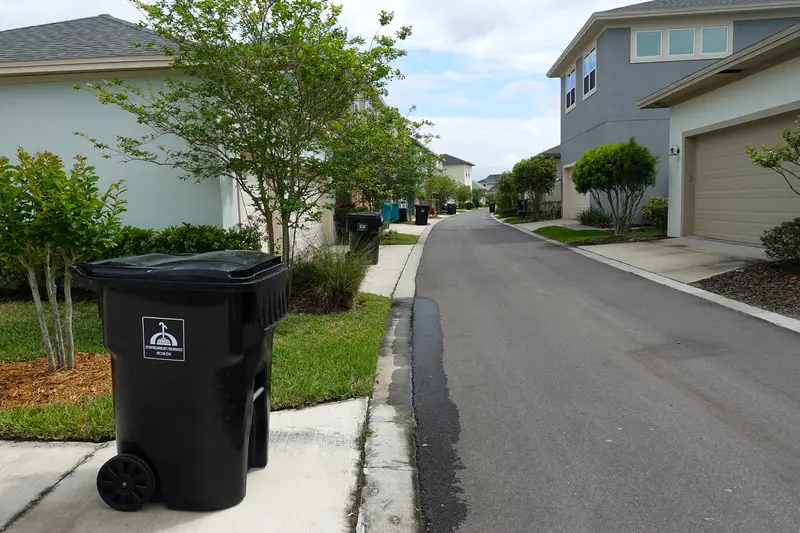
Your garbage can is basically a diary you drag to the curb once a week. What you buy, what you toss, what you shred, it all quietly records how you live and when you are home. Most of us treat the bin as the end of the line. Something goes in, the lid closes, and it feels gone forever. It is not. Sitting out front, that bin is one of the only parts of your home a total stranger can read without breaking a single law.
People will drop hundreds on a doorbell camera and a smart lock, then leave a giant clue leaning against the mailbox. A camera hides what is inside your house. A cardboard box announces it. That backwards logic is exactly what makes trash so useful to the wrong people, and once you see it, you cannot unsee it.
That empty TV box is a billboard
The week after Christmas is one of the busiest stretches of the year for burglars, and the reason sits in your recycling. Police in Minnesota flat out said thieves drive up and down alleys after the holidays hunting for box clues and writing down addresses. St. Paul officer Rob Zink put it in a way that stuck with me: whether they come back in a day, a week, or three months, they now know exactly what is in the house.
A crime prevention specialist there said victims kept saying the same thing after break-ins. I just got that for Christmas. A new laptop, camera gear, a TV. The problem got bad enough that police departments started fighting back with cardboard. St. Paul set up a dumpster at their Western District office where people could dump boxes any hour of the day. In Florida, the Orange County Sheriff put out bins for TV and console boxes, and Clearwater placed nine big blue containers around the city just for electronics packaging. When cops are handing out dumpsters, you know the threat is real.
And it is not only a night thing. A shocking 62% of burglaries happen during daylight, when the same guy who spotted your 65-inch box can stroll by in the afternoon and check whether the car is gone.
It is not just what you throw out, it is when
This one almost nobody thinks about. Say your pickup day is Monday, but you drag the cans out on Thursday night because you are heading out of town. To anyone casing your street, that early bin practically shouts that the house is empty for the weekend. You did not post it on Facebook. You did not tell a soul. Your trash schedule told on you.
Flip it around and it still gives you away. A can that never gets brought back in for days after pickup says nobody has been home to grab it. Burglars are pattern readers. They are not looking for one dramatic mistake. They are looking for a rhythm, and an off-schedule bin breaks the rhythm in a way that is easy to spot from a slow-rolling car.
The white van that cruised for bank statements
In East Meadow on Long Island, residents got a warning that sounds like a movie plot. A white van was going house to house, and the people inside were grabbing whole recycling bins full of paper. They were not after the plastic. A county legislator said they were specifically hunting credit card statements, bank mail, anything with an account number. They took what they wanted, dumped the rest, and did not even bother putting the bins back where they found them.
A police lieutenant summed it up perfectly. Your trash can be treasure for identity theft thieves. What gets me about this story is how organized it was. This was not one desperate person digging through a can at 2 a.m. It was a crew with a vehicle, working an entire neighborhood like a route. That is the part that should make you rethink tearing a statement in half and calling it done.
Your Amazon boxes name names
A branded shipping box left at the curb reads like a public announcement. It tells a stranger you shop online, you get frequent deliveries, and something worth having may have just landed inside. Now add the shipping label, which usually carries your name and address printed right there for anyone who walks by.
Apartment dwellers have it worse. Those labels often list your exact unit number. So a box that once held a pricey gadget, sitting in a shared trash room with your apartment number on it, means a thief does not even have to guess which door to try. The smarter move is boring but works. Peel every label off inside your place, flatten the box completely, and bury the cardboard deep in the bin instead of propping it up like a trophy.
Burglars literally use your bin as a ladder
This detail sounds made up, but experienced burglars have described using a rolling trash bin to climb over garden fences and reach sheds, garages, and outbuildings. Some have even wheeled a bin against a wall to boost themselves onto a roof and slip in through an upstairs window that nobody bothers to lock. The container you leave sitting out is doing double duty as furniture for a break-in.
The yard tells its own story too. Bikes, scooters, and toys scattered on the lawn hint at how many people live there and roughly when they come and go. Tools left in an unlocked shed can become the crowbar that opens your actual house. And a package sitting untouched on the porch for hours signals two things at once: nobody is home, and the neighbors are not watching.
The numbers are worse than the crime feels
Break-ins have actually been trending down for years. Burglaries dropped 8.6% in 2024 compared to 2023, and residential reports fell 19% in the first half of 2025. Good news, sure. But a break-in still happens somewhere in the country every 26 seconds, and the FBI counted 847,522 burglaries in its 2022 data. Down does not mean gone.
Here is the stat that ties it all back to the curb. Around 72% of burglaries happen when nobody is home. Empty houses are the whole game, which is exactly why trash intel is so valuable. It reveals when you just bought something worth grabbing, and it hints at when you will be gone. Two more numbers worth chewing on: homes without a security system are 300% more likely to get hit, and roughly 47% of American households do not have one installed. Signs help too. In one study, 60% of burglars said they would move on to another house if they spotted evidence of an alarm.
How to make your bin boring again
None of this requires a bunker. It requires making your trash say nothing interesting. Start with paper, because more than half of fraud cases start with documents pulled from trash, mailboxes, or recycling. If it has your name and address on it, shred it. That means bank statements, tax records, medical mail, insurance mailers, and yes, those pre-approved credit card offers that feel like junk. Tearing once or twice is not enough. A determined person can piece that back together at a kitchen table.
For boxes, break down anything from a big purchase, turn it inside out so the product photos face in, and cut it into pieces so it is not obvious what came out of it. After a holiday, spread the disposal over a few weeks instead of stacking every box on the curb the same morning. And the simplest habit of all, back it with a few more: keep the cans in the garage or a locked area until pickup morning, never leave them out overnight, and go paperless with bills wherever you can. It feels like overkill until you remember there is a white van out there somewhere treating recycling bins like an ATM.
The takeaway is oddly freeing. You control almost every clue in that bin. Flatten the box, shred the paper, roll the cans out on the right morning, and the stranger driving your street learns exactly what you want them to learn, which is nothing at all.

