

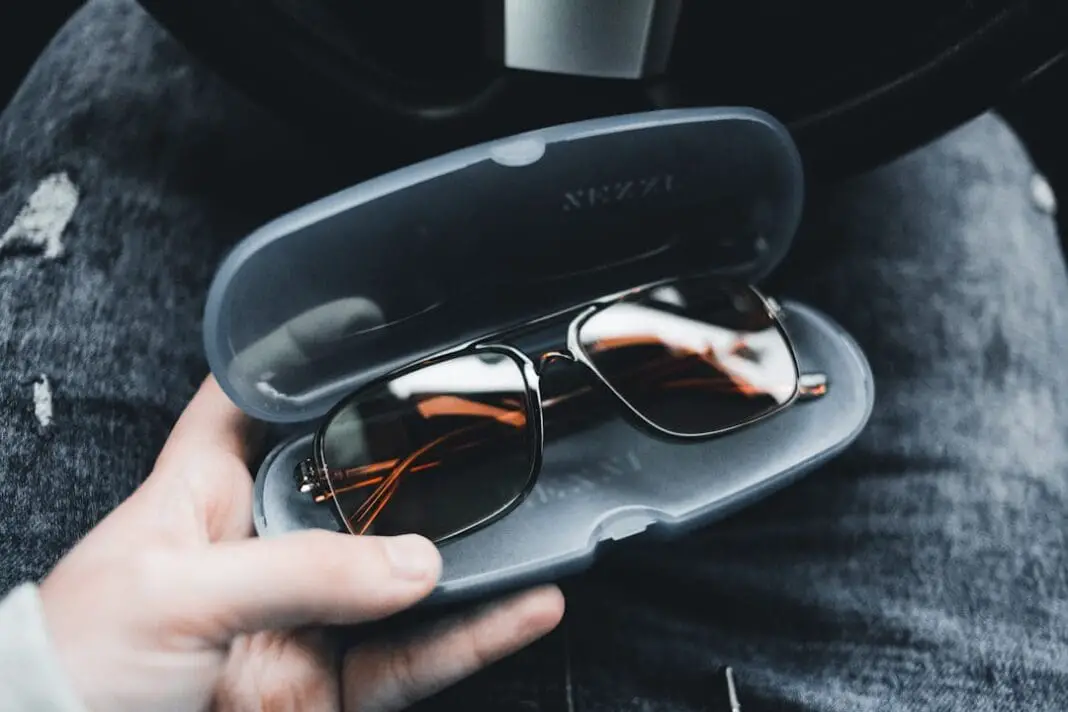
Your car dashboard is doing something to your sunglasses that you almost never think about. You toss them up there when you park, run into Target for twenty minutes, and come back to what looks like the exact same pair. They are not the same pair. The dashboard is quietly the worst spot in your whole car for anything with a lens, and millions of us do it every single day without a second thought. I did it for years. Then I read about a van in England, and I have never left my sunglasses up there again.
A Pair Of Sunglasses Once Set A Car On Fire
This is not a scare story someone made up. On Saturday, May 27, 2023, at 5:05 PM, a crew from Stockhill Fire Station rushed to a van fire in Nuthall. When investigators picked through the wreckage, they landed on one cause: a pair of prescription sunglasses left in direct sunlight on the dashboard. The lenses acted like a magnifying glass, focusing the sun into a hot little beam that melted most of the dash and burned a hole clean through the windshield. The fire service put out a warning afterward asking people to stop leaving glass objects in direct sun. Yes, your sunglasses count as a glass object. That curved lens does the same trick a kid does frying an ant on the sidewalk, except now it is pointed at your dashboard for hours.
Is a full car fire rare? Absolutely. But the fact that it can happen at all should tell you something about how much energy is getting concentrated right where you like to park your shades.
The Dashboard Is The Hottest Surface In Your Car
Here is what shocked me the most. Researchers at Arizona State University parked six cars around Tempe on summer days when it was over 100 degrees outside, then measured everything. The air inside the sunny cars hit 116 degrees after an hour. Bad, sure. But the surfaces were on another level. Seats averaged 123 degrees. Steering wheels hit 127. And the dashboard? It averaged a blistering 157 degrees. Even the lead researcher admitted the surface numbers surprised him, and this is a guy who studies heat for a living.
The National Weather Service says a dark dashboard can easily push past 180 degrees and climb toward 200 on the worst days. To put that in plain terms, the ASU folks pointed out that at 160 degrees you can fry an egg and give human skin third-degree burns. Your dashboard reaches roughly that in about an hour on a hot day. Your sunglasses are basically sitting on a griddle.
It Does Not Even Have To Be That Hot Out
People assume this is only a Phoenix-in-July problem. It is not. On a pleasant 80-degree day, the kind where you would happily eat lunch outside, the inside of a parked car hits 109 degrees after just 20 minutes. Wait 40 minutes and it is 118. Give it an hour and you are at 123 degrees, per data reported by CBS News. Cracking a window barely helps, either. So the grocery run, the quick coffee stop, the hour at your kid’s soccer game, all of those are long enough to cook your lenses on a totally ordinary spring afternoon.
The CEO of a British watch company put a number on it that stuck with me. He said cars turn into greenhouses and can soar past 122 degrees on a merely warm day, and that is plenty to melt, warp, or weaken materials before you even realize it happened.
What The Heat Actually Does To Your Shades
Let me get specific, because “heat damage” sounds vague until you see how it plays out. Plastic and acetate frames soften and lose the shape they were adjusted to. An eye care clinic in Mississippi describes it perfectly: the heat tends to flatten the frames out and make them wider, so suddenly your favorite pair keeps sliding down your nose and will not stay put no matter what. That warping is usually permanent. You cannot just bend them back and call it fixed.
The lenses take a hit too. Heat can change the curvature of the lens ever so slightly, and even a tiny deformation makes straight lines look a little off, makes objects seem slightly distorted, and leaves your eyes feeling tired faster. Cloudy or dull spots can show up. Little stress cracks form around the edges. And if you paid extra for anti-reflective or mirror coatings, the heat can cook those right off, leaving a hazy film where a clean coating used to be.
Polarized Lenses Are Especially Fragile
If you shelled out for polarized sunglasses, and a lot of us have, this one stings. The glare-blocking magic in a polarized lens comes from a delicate film layered inside the lens. Heat makes that film shrink and warp, which creates weird distortion and blotchy patches you can actually see when you tilt them in the light. According to an optical industry guide, that polarized film is one of the first things to fail when a car gets hot. Those are often the priciest sunglasses you own, and they are the least able to survive the dashboard. The layered construction that makes them work so well is exactly what makes them fall apart in the heat.
The Scary Part Is You Might Not Even Notice
This is what changed how I think about the whole thing. Sunglasses can look totally fine on the outside while quietly failing at the one job they have. When the lenses warp or the coating gets compromised, they can stop blocking UV the way you think they do. That watch company CEO said it flat out in a piece for National World: if the coating is damaged, your lenses might not give you the protection you assume they are giving you. So you are out there squinting less because your eyes are shaded, but the invisible protection is gone. There is no warning light, no beep. They just look like sunglasses while doing half the work.
There is a sneaky twist with coatings, too. A damaged anti-reflective coating can actually bounce UV rays off the back of the lens and into your eye, the opposite of what you paid for.
Winter Is Not A Free Pass Either
People think this is strictly a summer thing and get lazy the rest of the year. Bad idea. Extreme cold makes eyewear materials brittle, so frames and lenses crack or snap more easily. Cold also messes with the adhesives and coatings, which can lead to delamination, a fancy way of saying the lens starts separating from the frame or the layers start peeling apart. One optical blog lays it out clearly: both extremes wreck your glasses, just in different ways. A car in a Minnesota January is its own kind of danger zone. The lesson holds all year: your car is not a safe home for your shades.
So Where Should They Actually Go?
The honest best answer is to just bring them inside with you. Treat it like your phone or your wallet, something that leaves the car when you do. When that is not realistic, there is a clear ranking for spots inside the car. The winner is a hard case tucked low and out of the sun, like inside the center console bin, a closed compartment, or under a seat. The key idea is heat rises and the dashboard bakes in direct sun, so getting your glasses low and shaded matters a lot.
One catch worth knowing: a case is not a magic force field. It protects against scratches, crushing, and drops, but it will not stop the temperature inside the case from climbing if the whole cabin is an oven. A hard shell with a soft microfiber lining is the gold standard, and a flimsy soft pouch offers basically zero protection from pressure or bending. So pair the good case with a cool, shaded spot, or better yet, take them with you.
Two More Reasons To Get Them Off The Dash
Beyond the heat, there is theft. Sunglasses sitting in plain view, especially pricey or sporty-looking ones, are an easy target. A pair visible on the dashboard is basically a small billboard telling anyone walking by that there is something worth grabbing. Tucking them out of sight solves two problems at once. And if your glasses have already spent time roasting, do a quick check in bright, indirect light for haze, warping, or loose hardware. When you clean them, skip the dry shirt wipe and use a gentle rinse with a little soap instead, since a dry wipe drags grit across the lens and adds micro-scratches. If they sit crooked or pinch, an optical shop can usually adjust them for free.
None of this requires buying anything new or changing your life. It just means breaking one lazy little habit. The dashboard feels like the natural home for sunglasses because it is right there and it is convenient. It is also a 157-degree griddle in the sun that warps frames, kills polarization, fries coatings, quietly steals your UV protection, and, on a truly unlucky day, can start a fire. Your next pair will last a whole lot longer if you just stop tossing them up there.

