

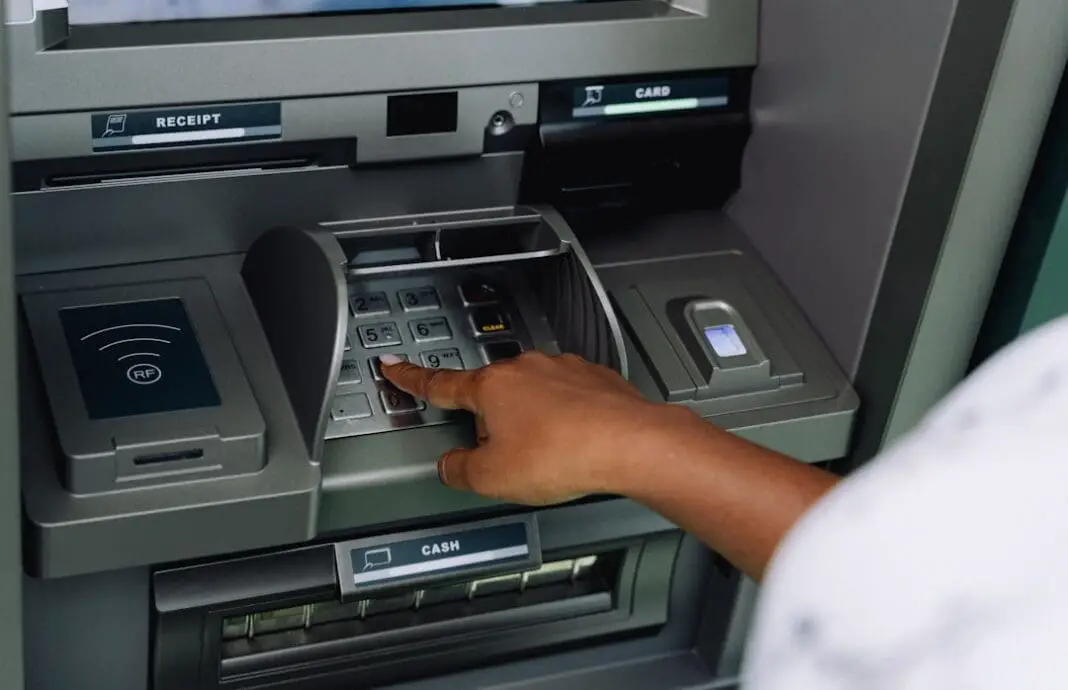
That machine near the grocery store entrance, the one glowing next to the gumball dispensers and the rented carpet cleaner, looks about as threatening as a vending machine. Pull out two twenties, though, and you could pay seven to ten dollars for the honor. The average out-of-network withdrawal in the United States now runs about $4.86, which is close to 150 percent higher than it was ten years ago. And that number keeps creeping up every single year.
The Double Fee Nobody Warns You About
Most people assume one fee comes out and that is that. Nope. That $4.86 is really two charges stacked on top of each other. The company that owns the ATM takes around $3.22, and then your own bank quietly adds another $1.64 for the crime of using a machine outside its network. According to a 2025 study, the total varies by city too. Atlanta had the highest average at $5.37, while Boston came in cheapest at $4.37. Neither is what I would call a bargain.
Grocery store machines can look even uglier when you break it down. The in-store operator might grab $2 to $5, and your bank piles $1.50 to $2.50 on top, a classic double-fee situation. Here is the annoying part: the fee is flat. It hits the same whether you take out $20 or $200. Some banks even charge you for a balance inquiry or a declined transaction. Take cash out once a week and you are shoveling more than $250 a year straight into the void.
Where That Fee Money Actually Goes
The ATM by the deli counter probably is not owned by a bank at all. These privately owned machines are scattered across convenience stores, bars, restaurants, and independent grocers, and they are run by outfits called Independent Sales Organizations. Some are big operators. Some are one guy with a single machine sitting in a shop he controls.
What surprised me is how little oversight there is. Most states do not register, monitor, examine, or limit who owns these things. That means so-called sub-ISOs can quietly run machines that are basically invisible to regulators. When you swipe, the money routes to the customer’s bank, debits your account, and eventually lands in the operator’s account, which could be sitting at a bank anywhere in the world. Nobody is really checking who maintains the machine, how often it is inspected, or whether anyone tampered with it.
A Skimmer Really Was Found Inside a Grocery Store
This is not a hypothetical scare story. FICO reports that 60 percent of card skimming happens at privately owned ATMs, the exact kind you find in convenience stores and grocery aisles, not the bank-owned machines you would trust.
In Chelmsford, Massachusetts, a maintenance worker doing a routine check on an ATM inside a Hannaford Supermarket at 66 Drum Hill Road found a skimming device attached to it. Along with the skimmer, there was a hidden camera positioned to record people typing their PINs. Police could not even say how long the setup had been sitting there. Anyone who used that machine was told to change their PIN and watch their statements closely. That store is busy, legitimate, and the kind of place you would never think twice about. “Inside the grocery store” clearly does not mean safe.
Chip Cards Don’t Save You Anymore
You might figure your chip card protects you. It used to help. Then criminals invented the shimmer, a paper-thin device slipped between the chip and the chip reader inside the machine. It captures your card data and PIN right off the chip, and it is quietly replacing the old-school skimmer as more people use chip cards. A good one can sit inside a machine for days or weeks, beaming information to a thief wirelessly in real time.
The damage adds up fast. In March 2025, an EBT card scheme in Rhode Island drained around half a million dollars from more than 1,800 families. Security experts suggest one quick habit before you insert a card: give the card reader a little wiggle. If it feels loose, wobbly, or like there is an extra layer over it, walk away. And at grocery store checkout terminals, employees themselves have occasionally been caught helping install these devices, so the register is not automatically clean either.
Some of These Machines Came Off eBay
Want a genuinely weird detail? Decommissioned ATMs get scooped up from junkyards and online marketplaces like eBay and Craigslist. Criminals buy old machines to study their security and sharpen their skimming tricks. In some cases they buy a used ATM, plug it into a wall outlet or run it off a car battery, and drop it in a spot with heavy foot traffic. Grocery stores and convenience stores are prime real estate for this.
These attempts spike during the holidays and travel season, when foot traffic jumps and shoppers are rushed and distracted. Crowded stores, more cash withdrawals, and people using unfamiliar machines create perfect cover. So the sketchy standalone box near the entrance is exactly where a scammer wants you looking away while you punch in your PIN.
Just Ask for Cash Back at Checkout
The fix is almost embarrassingly simple, and you are probably already standing 40 feet from it. When you buy groceries, ask for cash back at the register. Many debit cards let you take $20 to $100 back with no extra charge, which makes it one of the most reliable ways to skip an ATM fee entirely. You are using a monitored, staffed checkout lane instead of a mystery machine no one inspects.
One heads-up: a few retailers do charge a small amount for cash back. Places like Dollar General, Dollar Tree, and Kroger may ask for $0.50 to $3.50 depending on the store and how much you want. Even the high end of that is way better than seven to ten bucks, and you are not exposing your card to a device that could be sitting there for weeks.
The Free ATM Networks You Might Already Have
If you genuinely need an ATM, you probably have access to a fee-free one and do not know it. Allpoint runs more than 55,000 machines across the country, including inside Walgreens locations. Co-op, the biggest credit union network, has around 32,000. Just double check that a specific machine is actually in your bank’s network, because being surcharge-free does not always stop your own bank from charging its side of the fee.
Bigger banks lean on this hard. Capital One offers 70,000-plus free ATMs, Ally has 43,000-plus through Allpoint, and Chime covers 60,000-plus locations at no charge. Charles Schwab Bank and Fidelity Cash Management go further and reimburse ATM fees with no monthly cap, so you can use almost any machine and get your money back. Online banks like Ally, Connexus, and Axos also refund fees up to a monthly limit. With that many free options tucked inside pharmacies and big retailers, the random box by the produce section is rarely your only choice.
What the Secret Service Actually Recommends
The U.S. Secret Service investigates this stuff, and their advice is refreshingly plain. Use ATMs inside financial institutions, in interior bays with security cameras, or the machine closest to a bank drive-up window. Those are the hardest targets because they are watched and maintained. Standalone machines in high-traffic retail spots are the soft targets, and grocery store entrances are near the top of that list.
They also suggest reaching for a credit card at checkout terminals instead of a debit card. A compromised credit card is a headache, but a compromised debit card gives a thief a direct line into your actual checking account and your PIN. And always cover the keypad with your other hand when you enter your PIN, because that hidden camera trick is exactly how the Massachusetts crew planned to cash in.
So next time you are grabbing milk and eggs and that machine near the door catches your eye, keep walking. Ask the cashier for cash back, pull from a network ATM you trust, or use a bank that refunds the fee. The convenience of that blinking box costs more than money. It costs you the peace of mind that comes with knowing exactly who is watching your card.

