

Your shower is probably the most-used spot in your entire house. You stumble in half-asleep, crank the heat, zone out for a while, and step out feeling like a brand-new person. Nobody thinks twice about it. But the way you shower can quietly cost you thousands in plumbing repairs, and most of the trouble happens in places you never see. Behind the wall. Under the floor. Deep inside the pipes.
The wild part is how ordinary these habits are. We’re not talking about anything reckless here. Just the normal stuff you do every single morning without a second thought. Here’s what’s actually going on when you turn that handle, and why some of these facts genuinely surprised me.
That 20-Minute Hot Shower Is Aging Your Water Heater
I love a long, steamy shower as much as anyone. Turns out my water heater does not feel the same way. Every time hot water runs through your pipes, the metal expands. When it cools, it contracts. Plumbers call this thermal cycling, and it’s basically your plumbing doing tiny push-ups all day long. In newer homes it’s no big deal. But in older houses with aging copper joints or mixed-material pipes, all that expanding and shrinking slowly loosens the connections over time.
Here’s the number that stopped me. The average water heater lasts between 8 and 12 years. Daily long, hot showers can shorten that a lot. You might start hearing banging or knocking sounds in the walls after you use hot water, or notice a faucet that only drips right after the heater kicks on. Those little clues are easy to ignore because they come and go. Meanwhile, all that heat and steam also creates a warm, damp environment where mold moves into corners and grout lines and stays there. A shower under 10 minutes with the heat dialed back a notch is easier on everything, and it stretches the life of your heater too.
Your Hair Is Building a Net Down There
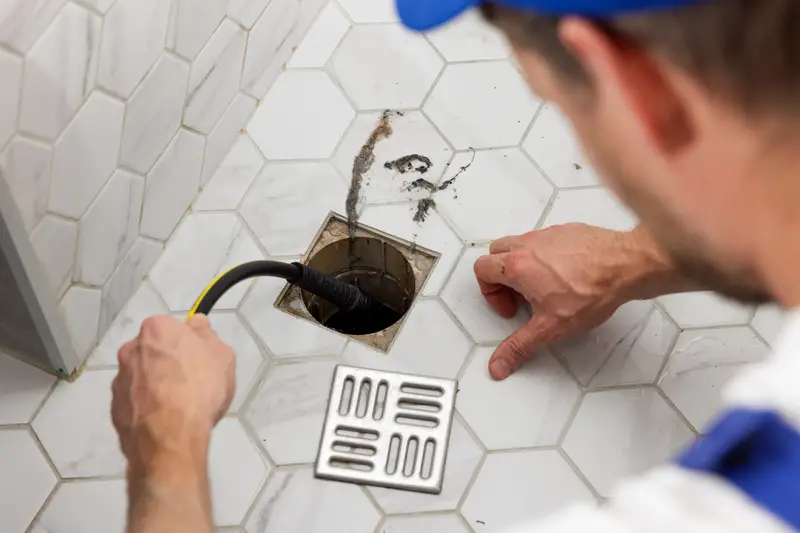
You lose hair in the shower every day. A few strands here, a few there. It seems like nothing. But those strands catch on rough edges, screw threads, and the little cross-pieces inside your drain assembly, and then they do something genuinely gross. They form a net-like structure that traps everything else that comes down after it.
And what comes down after it? Soap scum, for starters, which is a sticky, wax-like residue that forms when soap mixes with minerals in your water. It coats the inside walls of your pipes and slowly shrinks the opening. Thick conditioner, body wash, and skin oils don’t fully rinse out either. The real villains are baby oil and oil-based scrubs, because oils harden as they cool inside the pipe. Stuff like that turns your drain into a slow-motion trap. Once hair builds that net, everything else grabs on and stays.
The Shower Caddy Trick That Totally Backfires
This one I was completely guilty of, and I bet you are too. You know those caddies that hook right over the showerhead so you can stash your shampoo, conditioner, soap, and razors? Super convenient. Also a slow disaster. Showerheads simply are not built to carry weight. When you load a caddy up with several full bottles, you put constant pressure on the connection between the showerhead and the pipe hidden inside your wall.
Over time that stress weakens the joint and can cause leaks. And in the really bad cases, the weight can snap the showerhead clean off. Now you’ve got water spraying everywhere and possible damage to the plumbing behind your wall, which is exactly the kind of repair you can’t just patch yourself. A cheap tension pole caddy that stands in the corner and rests on the tub floor takes all that weight off your pipe. Simple swap, big payoff.
Why Plumbers Beg You to Skip the Drain Cleaner
Your shower drains slow, so you grab a bottle of drain cleaner from under the sink and pour it in. Feels like the responsible thing to do. It’s actually one of the worst things you can do to your pipes. Those cleaners rely on strong acids or lye to eat through clogs. When a drain is fully blocked, the cleaner often can’t even reach the clog, so it just sits in the pipe and starts corroding the pipe itself from the inside out.
Make it a monthly habit and you’re looking at leaks, cracked pipes, and repairs that cost way more than a plumber’s visit ever would. So what works instead? Pull the visible gunk out by hand first (wear gloves, trust me). Then pour half a cup of baking soda down the drain, followed by half a cup of white vinegar. Let it fizz for about 15 minutes, then flush with hot water. For tougher clogs, a $7 plastic drain snake from Home Depot, the kind with the little barbs on it, grabs hair out of the drain without hurting your pipes at all. Just know that a basic snake only punches a narrow hole through the middle of a thick clog. Water runs fine for a few days, then the gap closes back up as hair catches on whatever’s left. That’s when it’s time to actually call someone.
Hard Water Is the Silent Budget Killer
If your showerhead has crusty white buildup around the nozzles, you’ve got hard water. That crust is mostly calcium and magnesium, and it’s doing a lot more than blocking a few holes. Those minerals leave deposits everywhere, building up sediment in fixtures, drain pipes, and appliances, and slowly choking your water flow.
Here’s the fact that got me. Hard water cuts the service life of major appliances by 3 to 4 years on average. A water heater that should give you 15 good years might quit at 10, thanks to minerals piling up in the tank and insulating the water from the heating element. That forces the heater to work harder to keep up with your long showers, which wears it out even faster. The quick fix for a clogged showerhead is easy and basically free. Unscrew it, drop it in a bowl of white vinegar, and let it soak overnight to dissolve the buildup. For the whole house, a water softener is the real answer, and it protects every pipe and appliance you own.
Strong Water Pressure Feels Great and Costs You
Everybody loves a shower with power behind it. A weak trickle is one of life’s small annoyances. But strong pressure has a ceiling, and most people blow right past it without knowing. The recommended range for a home is 40 to 60 psi, and most fixtures can only handle up to 80 psi before things start to break down. When pressure runs consistently higher, it wears on your pipes until they can’t hold the water back anymore.
That’s how you end up with pinhole leaks behind walls, worn-out seals, and that banging, shuddering sound in the pipes known as water hammer. Standard plumbing repairs run $175 to $450, and a burst pipe averages around $500. High pressure can also quietly bump your water bill by as much as 30 percent, since you’re just blasting more water down the drain. The good news is you can check it yourself. A pressure gauge costs under $10, screws right onto a faucet, and tells you your number in seconds. If it reads high, a plumber can install a pressure regulator and you’ll never think about it again.
Those Puddles on the Floor Aren’t Harmless
You step out, dry off, and leave a little water pooled on the bathroom floor. It’ll evaporate, right? Sure, some of it. But water that sneaks into grout lines and edges doesn’t just disappear. Over time it eats away at the grout and lets mold grow inside those lines and behind the walls where you’ll never spot it. If there’s a wooden subfloor under your bathroom, water working its way past the flooring can damage the subfloor, and that’s one of the pricier repairs a homeowner can run into.
The fix could not be simpler. Keep a towel nearby and wipe up the puddles after every shower. Ten seconds of effort protects your floor, your grout, and the structure hiding underneath. It also cuts down on the slip risk that comes with a wet tile floor. Small habit, real difference.
The Cheap Fixes That Actually Work
What surprised me most digging into all this is how much of the damage is slow, invisible, and totally preventable. You don’t notice any of it until a wall is soaked or a heater dies early, and by then the bill is ugly. But almost every fix here costs next to nothing.
Shorten your shower and ease off the max heat. Move your caddy off the showerhead. Pull hair out of the drain instead of reaching for chemicals. Soak your showerhead in vinegar. Wipe up the water on the floor. Spend $10 on a pressure gauge and check your water quality once a year, especially if you just moved into an older place. None of it is hard. It’s just stuff nobody ever told you mattered. Now you know, and your pipes will thank you for years.

