

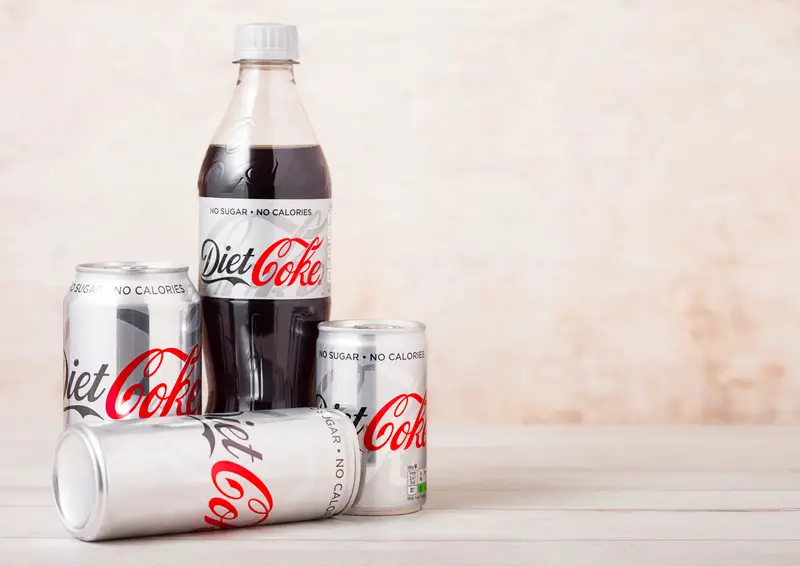
For decades, Diet Coke has been the subject of countless warnings from well-meaning friends, family members, and even some questionable health books. You have probably heard someone say that aspartame will give you cancer or that drinking diet soda is basically drinking poison. These claims have spread so widely that many people genuinely believe their occasional Diet Coke habit is slowly killing them. The truth is actually much less scary, and understanding the real science behind artificial sweeteners might just change how you think about that silver can in your refrigerator.
The cancer scare started with bad information
Walk into any break room in America, and you will likely hear someone warn a coworker about the dangers of their Diet Coke. These warnings usually mention cancer risks and vague references to studies that supposedly proved aspartame is dangerous. The problem is that most of these warnings come from outdated information or studies that were later proven to have serious flaws. Over the years, the fear around aspartame grew so large that it became accepted as common knowledge, even though the scientific community has repeatedly found otherwise.
In 2023, major health organizations took another close look at all the research. The Food and Agriculture Organization and World Health Organization’s Joint Expert Committee on Food Additives released a statement saying that the evidence linking aspartame to cancer in humans is simply not convincing. They also noted that better studies are needed, but current research does not support the scary claims that have been floating around for years. This was not the first time these organizations looked at aspartame either, having evaluated it multiple times since 1981.
There is actually a safe daily limit for aspartame
Most people do not realize that there are official guidelines for how much aspartame a person can safely consume each day. Just like with medications, supplements, and even vitamins, there is a recommended amount that keeps you in the safe zone. The World Health Organization has set what they call an Acceptable Daily Intake for aspartame. This number represents the amount that a person can consume every single day over their lifetime without any expected negative effects. Knowing this number puts a lot of the fear into perspective.
According to international guidelines, the Acceptable Daily Intake for aspartame is between 0 and 40 milligrams per kilogram of body weight for adults. The FDA in the United States is actually a bit more relaxed about it. They say that consuming up to 50 milligrams per kilogram of body weight per day is perfectly acceptable. These numbers might sound technical, but when you break them down into real-world terms, they become much easier to understand and a lot less frightening than you might expect.
A single can of Diet Coke has very little aspartame
Here is where things get really interesting. When you look at how much aspartame is actually in a can of Diet Coke, the numbers are surprisingly low. A standard 12-ounce can contains less than 200 milligrams of aspartame. That might sound like a lot until you compare it to those daily limits we just talked about. Even if you are a regular Diet Coke drinker, you are probably consuming far less aspartame than the amount that health organizations consider safe for daily consumption.
Let us put this into real terms that actually make sense. If you weigh around 150 pounds, you would need to drink about 14 cans of Diet Coke in a single day to reach the World Health Organization’s maximum daily limit. That is a lot of soda. Unless you are somehow drinking more than a dozen cans every day, you are well within the safe range. Most people have one or two cans at most, which is nowhere close to being a problem according to the official guidelines.
The dose makes the poison is actually true
There is an old saying in the science of how substances affect the body: the dose makes the poison. This means that almost anything can be harmful if you consume too much of it, but most things are perfectly safe at normal amounts. Think about Tylenol for a moment. Taking the recommended dose when you have a headache is totally fine and helps you feel better. But taking 50,000 milligrams of the active ingredient could seriously damage your liver. The same principle applies to aspartame and many other things we consume daily.
This concept is a basic part of toxicology, which is the study of how chemicals and other substances affect living things. Water can be dangerous if you drink way too much of it. Even vitamins can cause problems if you take massive doses. The point is that labeling something as simply good or bad ignores how our bodies actually work. When it comes to aspartame safety, the amounts found in diet sodas are well below any level that would cause concern for the average person enjoying an occasional drink.
Those old diet books got it completely wrong
Remember those diet books from the mid-2000s that called diet sodas things like liquid Satan? Those dramatic claims scared a lot of people away from artificial sweeteners entirely. The problem is that these books often cherry-picked information or relied on studies that have since been questioned or outright debunked. They made bold claims that sounded scary but were not backed up by solid science. Unfortunately, those claims stuck around in popular culture long after the books faded from bestseller lists.
The good news is that more accurate information is finally becoming common knowledge. People are starting to understand that the toxic warnings from those self-help books were overblown. Diet sodas and products containing aspartame can be safely enjoyed in moderation by most people. This does not mean you should drink unlimited amounts, but it does mean that having a Diet Coke when you want one is not the dangerous choice those old books made it out to be.
Moderation is the real key to enjoying Diet Coke
Like most things in life, the secret to enjoying Diet Coke without worry comes down to moderation. Having a can or two is not going to cause any problems for the vast majority of people. The research supports this, and the official guidelines give you plenty of room to enjoy your favorite diet soda without stress. The key is not to go overboard, which is advice that applies to pretty much everything we eat and drink anyway.
Think about how you approach other things in your diet. You probably do not eat pizza for every meal or drink coffee all day long. The same reasonable approach works for diet sodas. Enjoying them as part of a normal routine is perfectly fine. The moderation principle is not about fear or restriction. It is about being sensible and not consuming huge amounts of any single thing. When you keep that in mind, having a Diet Coke becomes a lot less stressful.
One group of people should actually avoid aspartame
While aspartame is safe for most people, there is one important exception that deserves attention. People with a condition called phenylketonuria, often shortened to PKU, need to avoid aspartame completely. This is an inherited disorder that affects how the body processes certain amino acids. It is relatively rare, but for those who have it, consuming aspartame can lead to serious problems. This is why diet sodas and other products containing aspartame include warnings on their labels.
Aspartame contains an amino acid called phenylalanine, which people with PKU have a very hard time breaking down in their bodies. When phenylalanine builds up, it can cause brain damage and seizures. This is why every can of Diet Coke and similar products includes a notice about phenylalanine content. If you have PKU or know someone who does, avoiding aspartame entirely is absolutely necessary. For everyone else, this warning does not apply, and moderate consumption remains perfectly acceptable.
Diet Coke actually has more caffeine than regular Coke
Here is a fun fact that surprises a lot of people. When you are choosing between Diet Coke and regular Coca-Cola, there is more to consider than just the sugar content. Diet Coke actually contains more caffeine than its regular counterpart. This might matter to you if you are sensitive to caffeine or trying to cut back on your intake. It is one of those little details that most people do not think about when reaching for a can from the refrigerator.
The caffeine difference between Diet Coke and regular Coke is worth knowing about, especially if you drink several sodas throughout the day. If you are looking for a lower caffeine option, regular Coke might actually be the better choice in that specific regard. Of course, then you are dealing with sugar instead of artificial sweeteners. Neither option is perfect, but knowing these details helps you make whatever choice works best for your situation and preferences.
Skip the diet soda when cooking certain recipes
While drinking Diet Coke is perfectly fine, there is one situation where reaching for the regular stuff makes more sense. If you have ever seen those recipes that call for cola in cooking, like slow-cooked pot roasts, diet soda is not the best substitute. The artificial sweeteners in diet drinks behave differently than real sugar when exposed to heat over long periods. This can affect how your dish turns out, and not usually in a good way.
The real sugar in regular sodas plays an important role in recipes that involve slow cooking. It helps create that nice caramelization and adds to the overall taste of the final dish. When you use diet soda instead, you miss out on those results. So while your daily Diet Coke habit is perfectly safe, keep a few cans of regular Coke around for when you want to try one of those soda-based cooking recipes. Your pot roast will thank you for using the sugary version.
The bottom line is that the scary warnings about Diet Coke and aspartame have been greatly exaggerated over the years. Major health organizations have repeatedly found that aspartame is safe when consumed in reasonable amounts, and the average Diet Coke drinker is nowhere near the daily limits. So the next time someone tells you that your diet soda is going to cause problems, you can feel confident knowing that the science simply does not support those dramatic claims. Enjoy your Diet Coke in moderation and stop worrying about outdated myths.

