

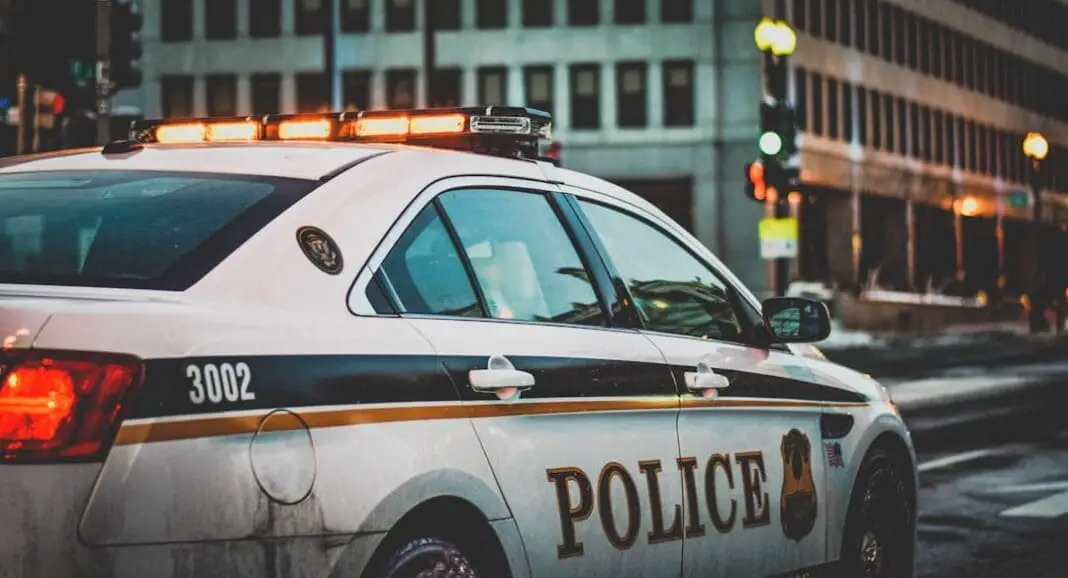
You’re driving home on a Saturday night. Maybe you went a little fast through that last yellow light. Red and blue lights fill your rearview mirror, and you pull over. The officer walks up, shines a flashlight around, and within seconds hits you with a question that sounds completely casual: “So, where are you coming from tonight?”
It feels like small talk. Like the officer is just making conversation to pass the time while running your plates. But that question is anything but casual. It’s one of the most strategically loaded things a cop can ask you, and most drivers answer it without a second thought. Here’s what’s actually happening when an officer drops that line on you.
It’s Not a Friendly Question. It’s an Interrogation Technique.
Let’s get this out of the way first. Police officers are not asking where you’re coming from because they’re curious about your evening or trying to be nice. According to law enforcement training materials, this question is a classic traffic stop opener specifically designed to catch drivers off guard before they have time to think about their constitutional rights. It’s filed under what defense attorneys call “trick questions,” and it works incredibly well because almost everyone just blurts out an honest answer.
Think about it. If you say “I’m coming from a friend’s barbecue” or “I was at a bar downtown,” you’ve just handed the officer a piece of evidence. If they suspect you might be impaired, knowing you were at a location where alcohol is served gives them a reason to push harder. That answer alone doesn’t prove anything, but it shifts the entire tone of the encounter in a direction that’s not in your favor.
They’re Watching HOW You Answer, Not Just What You Say
Here’s the part that surprises most people. One Virginia law firm pointed out something that changes how you think about the whole interaction: the officer may not even care what your answer actually is. What they really want to see is how you deliver that answer.
Are you slurring? Are your eyes glassy? Did you fumble with your words while trying to dig your registration out of the glove box at the same time? Officers are trained to observe whether you can handle two tasks simultaneously, because someone who is impaired often can’t. The question is a cognitive test disguised as conversation. They’ll ask you something while you’re flipping through your wallet looking for your insurance card, and the whole time they’re watching to see if your brain can keep up with both tasks.
That’s actually a formal part of police training. The American Bar Association describes the DWI detection process as having three distinct phases, and the second phase, called “Personal Contact,” is specifically about the face-to-face interview. During this phase, officers are taught to use three senses: sight, hearing, and smell. Every single word you say during that window is being evaluated as potential evidence of impairment.
The “Open-Ended Question” Strategy Comes Straight From Training Manuals
If you’ve ever noticed that cops don’t ask yes-or-no questions during a stop, that’s by design. Law enforcement training publications teach officers to use open-ended questions that force you to talk more. “Where are you coming from?” can’t be answered with a simple yes or no. You have to construct a sentence. You have to recall details. And the more you talk, the more opportunities the officer has to observe your speech, your coordination, and your general state of mind.
Training materials actually suggest specific phrasing like “Tell me what you’ve been doing today” or “Other than being stopped by me, how’s your day been going?” These sound friendly. They sound like the officer is just being a normal human being making conversation. But the entire technique, sometimes called “conversational interrogation,” is taught as a way to build what one training publication describes as an “iron-clad DWI case” that won’t even go to trial. The goal is to get you relaxed and talking freely so you volunteer information you’d never share if you were thinking clearly about your rights.
Your Answer Can Be Used as a “Statement Against Interest”
In legal terms, what you say during a traffic stop can fall into a category called “statements against interest” or “admissions to crimes.” These are things you say voluntarily that later become evidence against you if you’re charged. And the critical thing is this: if you get charged, those statements will almost certainly show up in court.
Say you tell the officer you’re coming from a brewery. Later that night, you’re arrested for DWI. In court, the prosecutor doesn’t need to prove you were drinking at the brewery. They just need to show that you admitted to being at a place that serves alcohol, which supports the officer’s observations about your behavior. It becomes one more brick in the wall of the case against you. Your own words, given freely during what felt like small talk, become prosecution evidence.
You Don’t Actually Have to Answer
This is the part most Americans don’t know, or at least don’t think about in the moment. The Fifth Amendment protects you from self-incrimination, and that protection applies during a traffic stop. You are legally required to hand over your driver’s license, registration, and proof of insurance when asked. But beyond that? You do not have to answer questions about where you’ve been, where you’re going, or what you’ve been doing.
There’s an important catch, though. A 2013 Supreme Court case called Salinas v. Texas established that just staying quiet isn’t enough. You can’t simply sit there silently and assume the Fifth Amendment is covering you. You need to actually say something like “I am exercising my right to remain silent.” That sounds awkward. It feels weird. But legally, it matters.
Here’s a stat that should make you think twice about chatting with police: one study found that suspects who answered police questions without an attorney present were three times more likely to be charged compared to those who stayed quiet. Three times. That’s not a small difference.
Miranda Rights Don’t Apply Here (And That’s On Purpose)
A lot of people assume that if a cop is asking them questions, Miranda rights should have been read. “You have the right to remain silent, anything you say can and will be used against you,” the whole thing. But here’s the reality: Miranda warnings are only required during custodial interrogations. A routine traffic stop doesn’t count as custodial interrogation under the law. So the officer can ask you anything they want without reading you your rights first, and your answers are still admissible in court.
This is a massive blind spot for most people. They assume they’re protected because they’ve seen enough cop shows to know about Miranda. But during a traffic stop, those protections simply don’t kick in the way people expect. The officer can ask you where you were, what you drank, where you’re headed, and use every single answer against you later. All without ever saying the words “you have the right to remain silent.”
The “Do You Know Why I Pulled You Over” Trap
While we’re at it, “Where are you coming from” isn’t the only loaded question in the playbook. The other classic, “Do you know why I pulled you over?” is designed to get you to confess to a traffic violation before the officer even has to state one. If you say “Because I was going 50 in a 35,” congratulations. You just handed over a confession on the officer’s dashcam. That won’t automatically convict you, but it certainly doesn’t help your case.
The smartest response, according to multiple defense attorneys, is simply: “No, officer. Could you please tell me why you stopped me?” It’s polite, it’s cooperative in tone, and it doesn’t give away a thing.
They’re Also Doing a Visual Search of Your Car
While all this conversation is happening, the officer isn’t just listening. They’re conducting what’s called a “plain view search.” Once you’ve been pulled over for a legitimate reason, the officer is legally allowed to look around and inside your vehicle from where they’re standing. They’ll shine a flashlight around. They’ll position themselves at your window in a way that gives them the widest possible view of your car’s interior. They’re looking for open containers, anything suspicious on the seats or floorboards, or items that might give them probable cause to search further.
The ACLU of Northern California actually advises people to keep their car interiors clear of unnecessary objects, because clutter can give police a reason to look more closely. They also recommend not having objects hanging from your rearview mirror, since that alone can be enough for an officer to justify the initial stop in some jurisdictions.
What You Should Actually Do
None of this means you should be rude or confrontational with police. That’s terrible advice and will only make things worse. But knowing what’s actually happening during a traffic stop changes the way you think about those seemingly innocent questions.
Here’s the short version. Be polite. Hand over your license, registration, and insurance without being asked twice. If the officer asks where you’re coming from, you can politely say, “I’d rather not answer that question, officer.” Or you can ask, “Am I being detained, or am I free to go?” Both are completely legal responses. You can also record the interaction with your phone or a dashcam, which is legal in all 50 states during a traffic stop.
More than 50 million Americans interact with police every year, according to the Bureau of Justice Statistics. A huge portion of those interactions start with a traffic stop and a question that sounds like nothing. Now you know it’s not nothing. It’s one of the most carefully designed questions in law enforcement, and you have every right to not answer it.

