

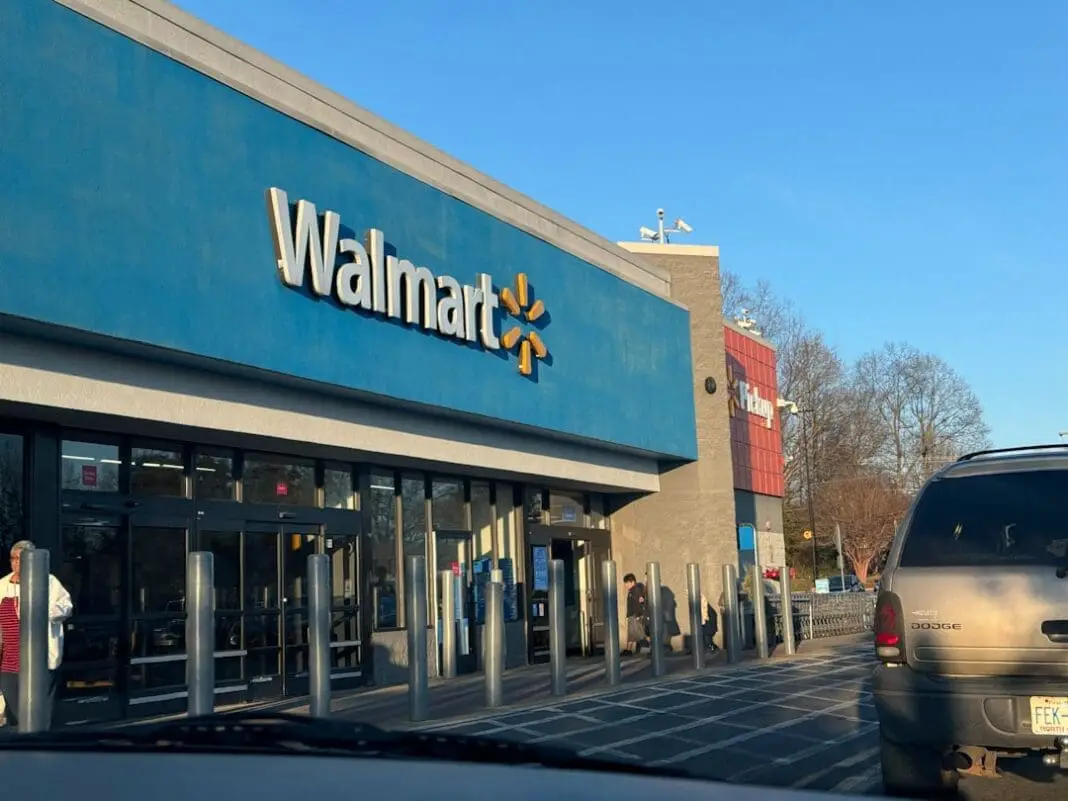
You know the drill. You just spent 45 minutes wandering through Walmart, waited in line, paid for everything in your cart, and now you’re walking toward the exit. Then someone in a blue vest steps into your path and asks to see your receipt. Most people hand it over without thinking. Some people dig through their bags looking for it. A few get annoyed but comply anyway.
Here’s the thing almost nobody realizes: you don’t actually have to show it.
Walmart Can Ask, But You Can Say No
Walmart has never publicly confirmed an official policy that requires customers to show their receipt at the door. When consumer advocates reached out to Walmart for clarification on this exact question, the company didn’t even respond. That silence says a lot.
In most states, a store cannot legally force you to produce your receipt just because you’re walking out the door. Employees can ask. That’s their right. But you’re allowed to say “no thank you” and keep walking. The only exception? If there’s a reasonable suspicion of theft. That’s a specific legal standard, not just a vibe or a hunch. Without it, Walmart employees cannot physically stop you, block your path, or detain you.
This is where Walmart is fundamentally different from Costco. At Costco, you sign a membership agreement when you join. Part of that agreement says you’ll submit to receipt checks. It’s in the contract. You literally agreed to it. Walmart customers have no such agreement. There’s no membership. There’s no contract. You walked in, bought your stuff, and you’re free to leave.
What Actually Happens When You Refuse
So what goes down if you actually decline? According to a detailed breakdown of real customer experiences, about 60% of the time, the employee just says “okay” and lets you pass. That’s it. No drama, no confrontation. That response is apparently consistent with what Walmart’s internal guidelines actually say.
About 30% of the time, it gets a little more awkward. The employee calls over a manager who tries to pressure you into showing the receipt. These interactions can drag on for five to fifteen minutes, but they end the same way: you leave. Nobody touches you. Nobody arrests you.
Then there’s the other 10%. Multiple employees get involved. Somebody threatens to call the police. It gets genuinely uncomfortable. But even in those situations, the outcome is the same unless there’s actual evidence of theft. The key word there is “evidence,” not suspicion based on the fact that you didn’t want to be checked.
This whole topic has turned into a massive conversation online. Videos tagged #WalmartReceiptCheck have racked up over 50 million views on TikTok. On Reddit, a community called r/ReceiptRefusal grew from 500 members to over 45,000 in just eight months. Clearly, a lot of people feel strongly about this.
Walmart Already Has the Tech to Make Receipt Checks Pointless
Here’s where it gets even more interesting. Walmart already has systems in place that can track which items were purchased at which self-checkout station, complete with video footage and full transaction records. They can match your cart to your payment in real time. So why are they still stopping people at the door?
The answer comes down to theft prevention theater mixed with some genuinely advanced technology. Walmart uses something called “Missed Scan Detection,” and it’s been in place since 2017. AI-powered cameras at self-checkout watch everything you scan. If an item goes into the bag without being scanned, the system flags it instantly. A pop-up appears on the screen reading “Associate is on the way” followed by “Missed Scan Detected.” In some cases, the system provides an overhead video replay of the exact moment a barcode scan was supposedly skipped.
A TikTok user named Nesha posted a video showing this AI system in action, and it racked up over 2.2 million views. People were stunned. Most had no idea the cameras were that sophisticated.
Beyond AI cameras, Walmart now requires RFID tags on every product sold in its stores. These tags contain unique identifiers and real-time inventory data. Invisible barcodes are also being applied to products, making it harder to swap price tags or skip scanning. In theory, this RFID system could eliminate the need for manual receipt checks entirely.
Get Caught Once and You Might Be Banned From Every Walmart in America
While the receipt check rule might be toothless, Walmart’s consequences for actual theft are anything but. The company’s shoplifting policy went through some serious upgrades in 2025, and repeat offenders are no longer getting second chances.
If you’ve been caught before, even for a low-value item, you are now automatically reported to local authorities. No warnings, no “just put it back and we’ll forget about it.” On top of criminal charges, Walmart can send you a civil demand letter seeking restitution for the stolen items, legal fees, and administrative costs. So you could end up paying far more than whatever you tried to walk out with.
And the bans are nationwide. A woman named Ashley Cross in Memphis, Tennessee was arrested after using the barcode from a cheap watch battery to scan items at self-checkout. She paid $1 each for jeans, a t-shirt, boots, and multiple packs of ramen noodles. The total should have been $137.34. Because of her history of theft, Walmart banned her from every single store in the country. That’s over 4,600 locations.
Walmart’s AI surveillance systems have reduced theft by over 30% in high-risk locations. Cloud-based systems store evidence for up to 90 days, so even if police are slow to respond, the footage is sitting there waiting. That said, Walmart’s security staff (called Asset Protection Associates) are told not to physically engage with shoplifters. They can’t touch, chase, or restrain anyone unless they’re certified law enforcement or there’s an immediate physical threat. For anything above $25 in value, or for any repeat offender, they call the police.
The Coupon Rule Walmart Quietly Changed Without Telling Anyone
Receipt checks aren’t the only policy Walmart keeps quiet about. In October 2025, Walmart updated its coupon policy with some changes that caught even seasoned couponers off guard.
The biggest one: if you return an item you bought with a manufacturer’s coupon, the refund no longer includes the coupon value. Under the old policy, if you bought a $5 item with a $1 coupon and returned it, you got $5 back. Now you get $4. The logic from Walmart’s side is fraud prevention, but critics point out something interesting. Walmart has already submitted that coupon to the manufacturer for reimbursement. So when you return the item, Walmart keeps the coupon value that the manufacturer already paid out. The customer loses a dollar. Walmart doesn’t.
The policy was also backdated to July 2025 without any public explanation. So if you made returns between July and October thinking the old rules applied, you may have already been affected without knowing it.
Another change: digital coupon barcodes of any kind are now banned. Not just coupons displayed on phones, but any digital barcode format. And using coupons to buy gift cards is now explicitly prohibited. That last one targets a specific fraud scheme where people were using counterfeit coupons to buy gift cards, essentially converting fake paper into real money. In one case, two men in Virginia bought ten cases of Red Bull for $220 using $200 in counterfeit coupons.
The Return Policy Has a Secret Electronics Trick Most People Miss
Most people know Walmart gives you 90 days to return stuff. Fewer people know the exceptions, and almost nobody understands the holiday return rules correctly.
Electronics (TVs, laptops, tablets, headphones, smartwatches, e-readers, camcorders) only get a 30-day return window. Smartphones and prepaid phones? Fourteen days. Miss that deadline and you’re stuck with it. And here’s a detail that trips people up: if you’re missing a single remote or cable from an electronics return, Walmart can deduct from your refund. Every accessory needs to come back.
But here’s the part that most guides get wrong. During the holiday season, items purchased between October 1 and December 31 can be returned through January 31 of the following year. That’s well known. What’s not well known is that for electronics bought during this window, the 30-day return clock doesn’t start until December 26. Not the date of purchase. So if you buy a TV on October 5, you don’t have until November 4 to return it. You have until late January. That’s a massive difference, and Walmart doesn’t exactly advertise it.
One more thing: Walmart’s refund system tracks no-receipt returns using your ID. If you make too many returns without a receipt in a short period, the system flags you and blocks returns across all stores. Store managers can override this, but they don’t always want to.
Big Changes Coming to the Store Floor
Walmart is also in the middle of rolling out digital shelf labels to 2,300 U.S. locations. These replace the paper price tags you’re used to seeing. The upside for Walmart is speed. Updating paper tags across a single store used to take an employee about two days. Digital labels can be updated in minutes.
The concern? Dynamic pricing. That’s when stores change prices based on time of day, demand, or other factors, similar to what Uber does with surge pricing. There’s been no official announcement that Walmart plans to do this, but CNBC reports that workers have been spotted installing the labels in stores, and there are claims dynamic pricing could arrive by the end of 2026. If that happens, the price you see at 10 a.m. might not be the price you see at 5 p.m.
Walmart is also reducing the number of self-checkout lanes in many stores while adding more employees to oversee the remaining ones. If you’ve noticed longer lines at self-checkout recently, that’s by design. More eyes on fewer lanes means less theft, but it also means more waiting for everyone else.
So the next time you’re walking out of Walmart and someone asks for your receipt, just know: you have options. Whether you choose to hand it over for the sake of avoiding an awkward moment or politely decline because you know your rights, that’s entirely up to you. But now you know the rule most people don’t.

