

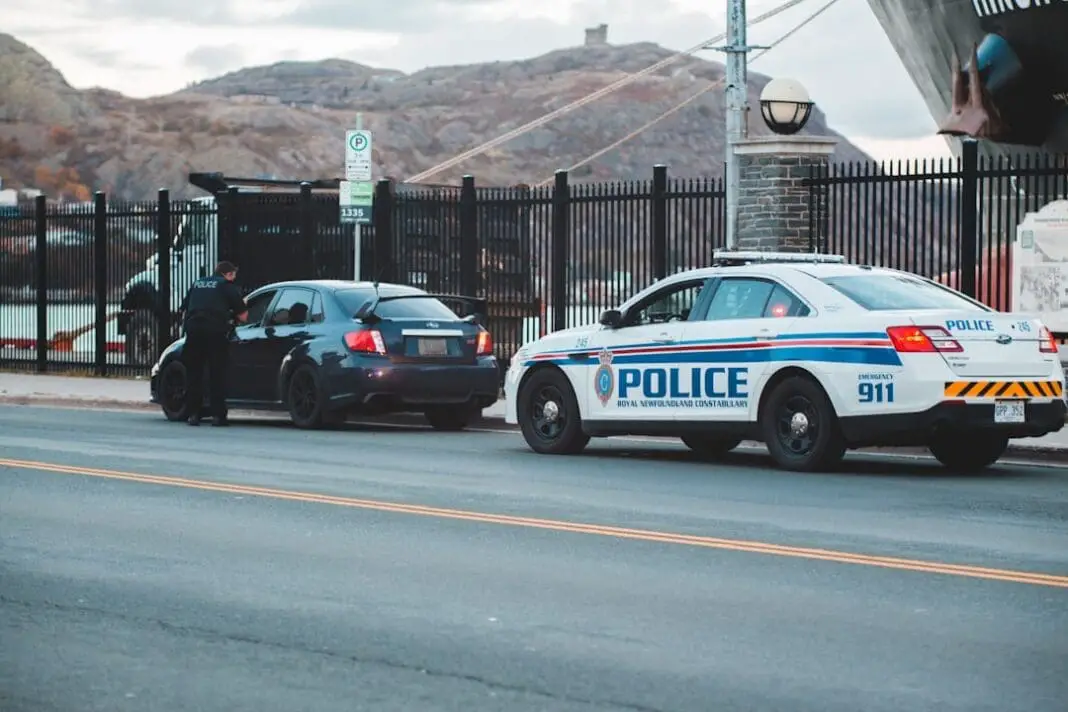
You see the flashing lights in your rearview mirror. Your stomach drops. You pull over, roll down the window, and the officer walks up and says the six words almost every American has heard at least once: “Do you know why I pulled you over?”
Most people answer. Most people shouldn’t. That question is not small talk. It’s not a conversation starter. It is, according to criminal defense attorneys across the country, a carefully designed trap. And the way you respond in those first few seconds can determine whether you drive away with a warning or end up building a legal case against yourself.
It’s a Trick Question, and There’s No Right Answer
Think about it. If an officer asks “Do you know why I pulled you over?” and you say “Yeah, I was probably going a little fast,” you just handed them a confession on a silver platter. You admitted to speeding. On camera. With your own mouth. That admission can be used in court, and it often is.
But here’s the thing most people don’t realize: saying “No, I have no idea” isn’t great either. According to legal experts, if you were pulled over for doing 10 over the speed limit and you claim ignorance, the officer can note that you were apparently unaware of how fast you were going. That doesn’t help you. It can suggest carelessness or inattention, and it gives the officer more to write in their report.
So you can’t say yes. You can’t say no. What do you say? The best response, according to multiple defense attorneys, is simple: “Officer, please tell me why I was stopped.” That’s it. You’re not admitting anything. You’re not lying. You’re politely putting the ball back in their court, which is exactly where it belongs.
Traffic Stops Are Not Conversations
Here’s something that might change the way you think about getting pulled over. A traffic stop feels like a chat. The officer is standing at your window, maybe leaning in a little, maybe making casual small talk. It feels like you’re supposed to be cooperative and friendly. And you should be polite, absolutely. But you need to understand that what’s happening is not a friendly exchange. It’s a structured legal encounter that is almost certainly being recorded by a body camera.
Officers are trained investigators. They are taught specific questioning techniques to confirm or dispel suspicion and to gather admissible evidence. Every word you say, every hesitation, even the tone of your voice, gets captured. Prosecutors can replay those seconds in a courtroom months later. That casual “Yeah, I had a beer at dinner” becomes Exhibit A.
Most drivers incriminate themselves within the first 60 seconds. Not because they’re guilty. Because they’re nervous and trying to be helpful. That instinct to explain yourself, to fill the awkward silence, to show you’re a good person who has nothing to hide? That’s exactly what the training is designed to exploit.
The “Have You Been Drinking?” Trap
The second most dangerous question at a traffic stop is “Have you been drinking tonight?” This one trips people up constantly because they think honesty is the best policy. It’s not. Not here.
If you say “I had one glass of wine with dinner two hours ago,” you have just given the officer probable cause to escalate the stop. Now they can ask you to step out of the car. Now field sobriety tests are on the table. Now a breathalyzer is in your future. All because you tried to be honest about something that, on its own, wasn’t even illegal.
One real case illustrates this perfectly. A driver was pulled over for nothing more than a broken taillight. During the stop, the driver casually mentioned having a few drinks at dinner. That single statement led to a field sobriety test, then criminal charges. The prosecutor used the driver’s own admission in court. The driver lost the case. Without that offhand comment, the officer had no probable cause for anything beyond a fix-it ticket for the taillight.
Staying Silent Is Not the Same as Invoking Your Rights
This is the part that messes up even people who think they know the law. You’ve heard the phrase “You have the right to remain silent” a thousand times in movies and TV shows. So you figure if a cop asks you something, you can just say nothing and you’re protected. Wrong.
In 2013, the Supreme Court decided a case called Salinas v. Texas that changed everything. Genovevo Salinas went to a police station voluntarily. He wasn’t under arrest. He hadn’t been read his Miranda rights. He answered questions willingly, but when officers asked whether shotgun shells from a crime scene would match his gun, he just went quiet. He didn’t say a word.
At trial, prosecutors pointed to that silence as evidence of guilt. The case went all the way to the Supreme Court, which ruled 5 to 4 that because Salinas never explicitly invoked his Fifth Amendment right, his silence could absolutely be used against him. He was convicted and sentenced to 20 years in prison.
Read that again. Just staying quiet was not enough. The court said you have to actually say the words. You have to verbally invoke the right. Otherwise, prosecutors can stand in front of a jury and say, “Look, he went silent when we asked the hard question. That tells you something.”
The Exact Words You Should Use
So what are you supposed to say? According to criminal defense attorneys, you need to be explicit. Here are phrases that hold up legally:
“I am invoking my Fifth Amendment right to remain silent.”
“I am exercising my constitutional right against self-incrimination.”
“I invoke my right to remain silent and I want a lawyer.”
That last one is the strongest option by far. When you ask for a lawyer, you’re invoking your Sixth Amendment right to counsel. Once you do that, police must stop questioning you immediately. They can’t circle back later and try again unless you initiate contact first. If you only invoke the Fifth Amendment without mentioning a lawyer, some courts have ruled that officers can come back after a period of time, give you fresh Miranda warnings, and start questioning all over again.
After you say those words, stop talking. Completely. No small talk, no trying to explain your situation, no nervous chatter. Anything you say after invoking your rights can weaken those protections. Just be quiet.
What You Do Have to Provide
Let’s be clear about what you can’t refuse. You are legally required to hand over your driver’s license, registration, and proof of insurance when an officer asks. In 24 states, there are “stop and identify” laws that require you to provide your name when asked. In Texas, if an officer asks whether you have a firearm in the car, you have to answer truthfully. Wisconsin has a similar requirement about disclosing weapons and showing your permit when prompted.
But beyond those specific legal obligations? You don’t have to answer a single question. You don’t have to tell them where you’re going, where you’ve been, what you were doing, or anything else. “Where are you headed tonight?” is another one of those questions that feels harmless but is designed to fish for inconsistencies. You can politely decline.
California Actually Banned the Question
Here’s something most Americans don’t know. As of January 1, 2024, it is illegal in California for a police officer to ask “Do you know why I pulled you over?” before telling you why they stopped you.
Assembly Bill 2773, sponsored by Assemblymember Chris Holden, now requires officers to state the reason for the stop before asking any questions. That reason also has to be documented in the officer’s report. The law applies to pedestrian stops too.
Why did California pass this? Largely to address pretext stops, where an officer pulls someone over for something minor (a cracked taillight, an air freshener hanging from the mirror) and then uses the stop as an excuse to search the vehicle. A 2022 report from the Racial and Identity Profiling Advisory found that Black individuals made up nearly 13% of traffic stops in California, despite making up only 5% of the state’s population. The law is an attempt to add accountability and transparency to those encounters.
As of right now, California is one of the only states with a law like this. In the other 49, “Do you know why I pulled you over?” is still perfectly legal for officers to ask. Which means the burden is on you to know how to handle it.
They Can’t Hold You Forever, Either
One more thing worth knowing. In Rodriguez v. United States, the Supreme Court ruled that police cannot drag out a traffic stop beyond its original purpose without additional reasonable suspicion. Once the ticket is written and the traffic-related business is done, the stop is supposed to be over. If the officer keeps asking questions after that point, they may need new legal justification to keep you there.
Also, if police ask to search your car and you say yes, you’ve just waived your Fourth Amendment protection. If they already had probable cause, they wouldn’t need to ask your permission. The fact that they’re asking usually means they don’t have enough to search without your consent. The correct response: “I do not consent to searches.” If they search anyway after you’ve refused, that refusal gives your attorney something to challenge in court.
Innocent People Are the Most Vulnerable
Here’s the part that really gets me. The people most likely to hurt themselves during a traffic stop aren’t the ones with something to hide. It’s the innocent ones. People who haven’t done anything wrong desperately want to explain themselves. They want to clear things up right there on the spot. And that impulse leads to rambling, misremembering details under stress, getting confused about times and dates, and giving statements that sound suspicious even when they’re completely truthful.
Statistics show that suspects with legal representation are 40% less likely to be convicted than those who waive the right to an attorney. Forty percent. That number alone should tell you everything about the value of keeping your mouth shut and asking for a lawyer.
Next time you see those lights in your mirror, take a breath. Hand over your license and registration. Be polite. And when they ask if you know why you were pulled over, remember: the only winning move is not to play that game. Say “Please tell me why I was stopped,” and let the officer do the talking. Your future self will thank you.

